FamilyMart's latest Ryuji collaboration is a useful reminder that a food launch announcement and the label on a meal answer different questions. The announcement tells you what the retailer plans to offer. The label helps you check the particular product in front of you, including its ingredients, date, storage instructions and nutrition information.
On 26 October 2026, FamilyMart announced a third collaboration with cooking creator Ryuji, scheduled to begin on 27 October. The official release describes nine products and warns that availability, specifications, prices or release timing may vary by region, with some stores not carrying particular items. This is therefore a preview of an announced launch, not confirmation of stock at a particular branch. [FamilyMart announcement](https://www.family.co.jp/company/news_releases/2026/20261026_01.html)
This guide has not taste-tested the products. It combines the verified announcement with official food-label guidance to help English-speaking readers choose deliberately, compare information correctly and avoid mistaking promotional descriptions for answers to dietary questions. It does not reproduce the collaboration's recipes or claim that a generic illustration shows the finished products.
What is in the announced range?
The release lists a pepper tuna-mayonnaise rice ball, ginger pork bento, garlic-butter chicken pasta, lemon-scented salted yakisoba, chicken with chive sauce, spicy jjigae soup, potato salad, frozen peperoncino and a beef-sukiyaki-style steamed bun with an egg-yolk-style sauce. These are plain-English descriptions for orientation, not official translated product names. Consult the original listing and the actual pack to identify a specific item. [Official product list](https://www.family.co.jp/company/news_releases/2026/20261026_01.html)
The range spans different meal formats. Before choosing, decide what job the purchase needs to do: provide a meal now, accompany something already at home, or be prepared later. A food that looks appealing in a photograph may still be inconvenient if its preparation or storage instructions do not fit your plans.
For example, a traveller buying lunch before a long appointment faces a different practical question from someone taking groceries straight home. The first needs to think about when the food will be eaten and how it must be kept until then. The second may have suitable storage but still needs to check the preparation directions. These are planning examples, not claims about how long any product can safely remain unrefrigerated.
Use the launch page to identify, not to assume
A collaboration name can help you locate the right range, but it is not a substitute for matching the full product name. Two items can share a creator's name while having different ingredients, portion sizes and instructions. Save the name of the item you want rather than relying only on a colour or a promotional photograph.
If you cannot find it in a store, distinguish the possible explanations. The item may not be stocked at that branch, may not yet be on sale there, or may be temporarily unavailable. Those possibilities should not be collapsed into a claim that the whole collaboration has sold out. This article has not checked branch inventory and does not offer a stock alert service.
The same care applies to dates. The publication date of an announcement and the planned first sale date are separate fields. A headline published the day before a launch does not mean the products are already available. When sharing an article, retain the date context so that a preview is not accidentally presented as a report from a shop visit.
Read the package as a separate source of information
FamilyMart's own product-information guidance says specifications can change with inventory transitions and that regional differences may occur. It asks customers to check package labels and in-store information. The retailer also explains that nutrition figures describe standard products and can vary with individual products or preparation conditions. [FamilyMart product-information guidance](https://www.family.co.jp/goods/safety.html)
That makes the physical pack an important final check. An old screenshot can help you remember a product, but it may not describe the item currently offered. Compare the complete name and the relevant label details rather than assuming a familiar collaboration badge guarantees an unchanged formulation.
A practical way to organise the check is to separate three questions. First, is this the item you intended to buy? Second, does its information meet your particular requirements? Third, can you follow its storage and preparation instructions? Keeping those questions separate prevents enthusiasm about the first from crowding out the other two.
If a label is difficult to read, ask for help with the specific field. “Where is the storage instruction?” or “Can you show me the ingredient information?” is more precise than asking whether the food is generally “okay.” A general reassurance may not address the actual concern, especially when a reader has a specific dietary restriction.
Understand the date before deciding when to eat it
Japan's Consumer Affairs Agency distinguishes best-before dates, which concern expected quality under the specified storage conditions, from use-by dates, after which a product may no longer be safe to consume. Its examples place rapidly deteriorating prepared foods and longer-lasting foods in different contexts. The distinction depends on the type of date and the storage instructions, not simply the printed numbers. [CAA date-labelling explanation](https://www.caa.go.jp/en/policy/food_labeling/pdf/food_labeling_cms201_200109_01.pdf)
The CAA's English consumer guide identifies 賞味期限 as best-before and 消費期限 as use-by. It also illustrates Japanese date formats and reminds readers to follow storage directions. Use that guide to understand the label rather than interpreting a date in isolation. [Japan's food-labelling guide](https://www.caa.go.jp/en/policy/food_labeling/assets/food_labeling_cms204_240425_01.pdf)
For a fictional example, imagine two packs with the same printed calendar date but different date labels. It would be a mistake to give both exactly the same interpretation without reading the accompanying words and instructions. The example does not establish a safe extension for either product; it shows why the label heading matters.
Do not infer storage requirements from the container's appearance. A pouch, tray or box is a format, not a complete handling instruction. Read the actual directions and plan the trip accordingly. This guide deliberately supplies no universal time outside refrigeration or improvised reheating method for the collaboration's products, because those details must be appropriate to the actual item.
Compare nutrition figures on the same basis
The CAA's nutrition-label explanation describes the usual sequence of energy, protein, fat, carbohydrate and sodium, with sodium expressed as salt equivalent. Its worked label example specifies the quantity represented by the figures. That quantity is essential when making a comparison. [CAA nutrition information](https://www.caa.go.jp/en/policy/food_labeling/assets/food_labeling_cms206_20210318_02.pdf)
Before comparing two numbers, check whether each refers to a whole pack, a stated serving or a specified weight. A lower figure can be a smaller portion rather than a lower concentration. Reading the unit first is more useful than immediately deciding which number looks better.
Consider this fictional arithmetic exercise: Pack A states 200 calories for its whole contents. Pack B states 150 calories per serving and contains two servings. If all of Pack B is eaten, the corresponding total is 300 calories. Comparing 200 with 150 would therefore compare different amounts of food. These invented values do not describe any Ryuji product and do not prescribe an appropriate intake.
Keep the purpose of the comparison clear. Comparing package totals answers a different question from comparing equal weights. Neither calculation alone establishes that one meal is suitable for an individual. This article does not assign nutritional scores to products whose complete current labels have not been examined.
A flavour description is not an ingredient declaration
Words such as garlic, lemon or ginger describe a food's advertised character. They do not necessarily enumerate every ingredient, sauce component or processing aid. A reader should not turn a short product name into a complete ingredient list.
This is especially important when a familiar dish name creates an expectation. A convenience-food version is a particular manufactured or prepared product. Its actual information matters more than a recipe remembered from home or a video featuring a similar dish. The collaboration announcement is not a claim that every version of a named dish has the same formulation.
FamilyMart's guidance also warns that allergen information is not a guarantee against an allergic reaction and that products may share manufacturing, preparation or sales processes with other allergen-containing items. Its current label guidance should be consulted alongside the actual product information. [FamilyMart allergen guidance](https://www.family.co.jp/goods/safety.html)
If you have a food allergy, use your established medical advice and seek clear product-specific information. Do not rely on this preview to declare an item safe for you. The CAA publishes English-language food-labelling resources and an allergy communication sheet, which can help with communicating a question; they do not certify any particular meal. [CAA consumer resources](https://www.caa.go.jp/en/policy/food_labeling/)
Make a purchase plan that survives a missing item
A useful shopping plan identifies a preferred item and the requirement it needs to meet, rather than requiring a particular promotional product at any cost. For example, a reader might need something that can be eaten at a planned time with the facilities available. If the preferred product is absent, an alternative still needs its own label and preparation check.
Avoid transferring conclusions between products. If you checked one rice ball's information, that check does not automatically cover another rice ball. If a friend can eat a particular pasta, that does not answer your own dietary question. Similar appearance is a reason to compare carefully, not a reason to skip the comparison.
A short note can make the process easier:
- Write the full name of the preferred item.
- Record the practical requirement, such as preparation facilities.
- Leave space to check the actual pack's instructions.
- Treat any substitute as a new item requiring its own checks.
This is not an instruction to buy multiple products or complete the entire collection. A launch can be interesting without turning a single meal into a shopping challenge. Choosing one suitable item is a reasonable outcome, and choosing none is also reasonable when the necessary information remains unclear.
Keep promotional claims separate from a review
A retailer's launch page can verify what the retailer announced. It does not provide an independent taste test. Enthusiastic comments from a collaborator or product developer should remain attributed opinions, not become the writer's own experience.
For that reason, this guide does not rank the nine products, invent texture descriptions from photographs or declare one the best. A genuine tasting review would need an actual tasting and enough context for readers to understand it. A researched preview has a different job: explain the announcement, identify relevant information and make its limits visible.
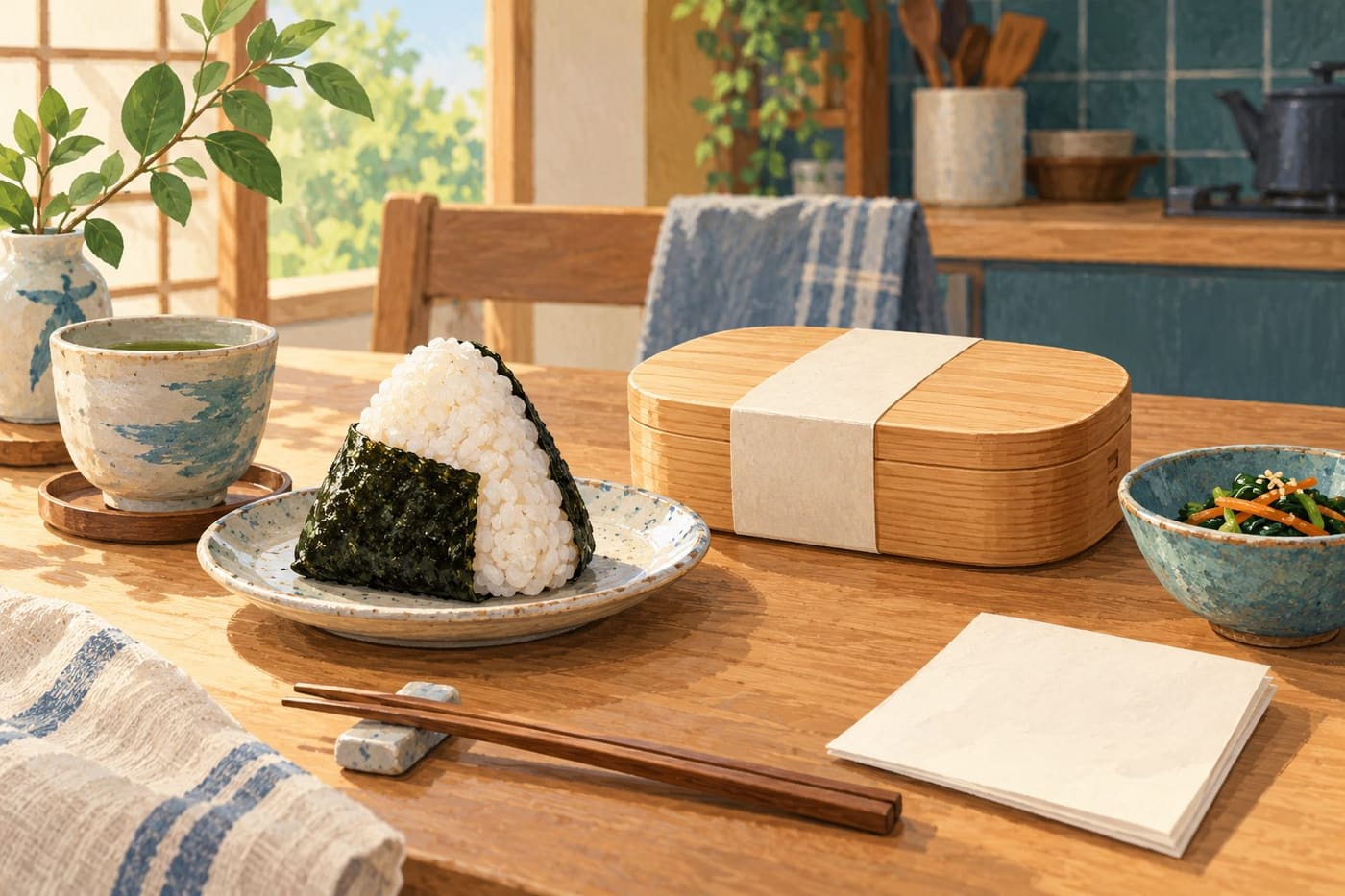
The illustration follows the same rule. It is an original generated conceptual scene with generic food and tableware. It does not show a purchased meal, reproduce FamilyMart packaging or document the appearance of one of the launch products. Readers should use the official product listing and the real package for identification.
A final check before buying
At the shelf or counter, take a moment to connect the information you researched with the item actually being offered. Check the full name, the relevant ingredients and dietary information, the type of date, and the storage or preparation instructions. If you are comparing nutrition figures, retain their units and serving basis.
Where a detail remains unresolved, ask a specific question. If it cannot be answered clearly enough for your requirements, do not convert uncertainty into an assumption just because the product is part of a popular launch. The collaboration name is an invitation to look more closely, not a replacement for the information needed to make your own choice.
Conclusion
The Ryuji collaboration gives readers a timely reason to explore a new convenience-food range, while the package remains the place to check the particular item they may buy. Keep announced availability separate from local stock, marketing descriptions separate from ingredient information, and a researched preview separate from a first-hand review.
Those distinctions make the launch easier to navigate without exaggerating what is known. The most useful outcome is a suitable, clearly understood purchase, supported by the current label and the reader's own requirements rather than the excitement of a headline.
Sources and research note
Researched 26 October 2026. Japan Google Trends listed リュウジ with 200+ traffic and a 06:00 UTC start timestamp in the saved discovery feed. The cluster linked directly to FamilyMart's announcement. The announcement initially failed direct retrieval, then opened successfully through the official 2026 news index; its product details and availability qualifications were read directly.
FamilyMart's product-information page and the CAA resources linked above were also retrieved. PDF text supported the date and nutrition explanations; the allergy communication sheet is linked only as an available resource, not as a product assessment. No store visit, purchase, tasting, inventory check or individual allergy assessment was performed. Fictional examples are expressly labelled and contain no actual product nutrition measurements.