You recognise a brand in a food-recall headline. There may be a similar packet in your kitchen, but the picture on your phone is small and the headline does not show a batch number. Before sharing the warning or deciding what it means for your household, the useful next step is to open the actual notice and compare it with the package you have.
This is a practical guide to organising that check. It is not a new recall announcement, a complete list of affected products or a medical assessment. The topic was selected after product-recall searches appeared in a U.S. trend snapshot. No particular brand or batch is declared affected here: a current official notice, with its product-specific instructions, is the source to follow for that decision.
Begin with the notice, not the cropped headline
The FDA's consumer guidance explains that recall information can identify products through names, package details, codes, dates and distribution information. It also points readers to its Enforcement Report and public warning pages, noting that not every recall appears on the public-alert page. That distinction matters when a quick search does not return the exact item you expected.
Save the original notice address in your working note. Record the date shown on the notice and any update date. A screenshot from a messaging group can help you locate a warning, but it can also omit the section that defines the affected products or explains what consumers should do. Treat the screenshot as a lead until you can inspect the full source.
If the notice is difficult to read on a phone, enlarge the page or ask someone to help read the actual text. Do not guess a blurry digit because the rest of the package looks familiar. The most useful result is a correctly identified product, not a fast answer based on resemblance. An unresolved detail belongs in the question you send to the listed company contact.
Make a simple side-by-side comparison
Put the notice and your package information next to each other in a note. Use one line for each field rather than a paragraph containing several numbers. That makes a mismatch or missing detail easier to notice. Keep the notice's wording for each field so that you do not accidentally compare a product code with a different kind of identifier.
A working sheet might contain the product name, package size, code, date and place of purchase. Add a separate line for anything you cannot read. A photograph of the package label can be useful for your own reference, provided you do not open a product to inspect its contents. When taking the photograph, check that the relevant print is legible rather than merely capturing the front design.
This comparison sheet is an organisational aid, not an independent safety test. If the notice covers several products or a range of codes, read that structure carefully. Do not reduce a multi-item notice to the first photograph or the first row. When the match remains uncertain, use the contact information in the official notice instead of treating your own incomplete table as clearance.
Keep similar-looking identifiers separate
Packaging can contain several strings that look equally important at first glance. The challenge is not simply to find a number but to identify the number the notice asks you to compare. Copy the field label along with the value. If the notice explains where the code appears, use that explanation rather than assuming that the largest printed number is the relevant one.
Imagine a fictional worksheet with three blank fields labelled product code, batch code and date. If someone writes the same value into every box because it is the only number they can see, the worksheet is complete in appearance only. A useful worksheet would leave two boxes unresolved and record the need for clarification. This example is about careful transcription, not a description of an actual recall.
Avoid silently correcting a character that looks unusual. A letter and a digit can be easy to confuse in a photograph or small print. Preserve what you can read, mark what you cannot and include a clear image when asking the official contact for help. Confidence in your handwriting should not exceed confidence in the package information itself.
Use the product-specific action instructions
FoodSafety.gov advises consumers not to eat or open recalled food and to consult the recall notice for the required action. Its guidance also says not to pass recalled food to other people or pets. The notice may direct a return or disposal; follow its specific instructions rather than assuming that every recall uses the same process.
For a household checklist, separate “identified the notice” from “completed the instructed action.” These are different stages. Someone may have read the warning but not yet dealt with the package, while another household member assumes the task is finished. A short status note can prevent that misunderstanding without turning an ordinary kitchen task into an elaborate tracking system.
Keep the note factual: the notice checked, the package information recorded, the instruction followed and any unresolved question. Do not write that you personally tested the food or proved it harmless. This guide provides no method for doing that. If the official instructions are unclear for your situation, the appropriate next step is clarification from the contact listed in the notice.
Coordinate with the people sharing the kitchen
In a shared household, the person who sees a recall alert may not be the person who bought the food. Before assuming that an item came from a particular shop or delivery, ask the person who made the purchase. A brief conversation can supply details that guessing from the package design cannot.
Use a message that points to the official notice and says what you are checking. For example: “I found this notice and am comparing the package details. Please check with me before using the item while I clarify the code.” This is an example of household coordination, not a substitute for the notice's handling instructions. Keep the actual source available to anyone who needs to read it.
Avoid sending a vague message such as “all food from this brand is dangerous” when the notice does not say that. Broadening the scope can confuse other people and make the useful details harder to find. The aim is to communicate the action accurately, including what remains uncertain, without either minimising the warning or expanding it beyond the evidence.
Prepare a useful question for the company
When you need clarification, organise your question before contacting the company named in the recall notice. State which notice you are referring to, describe the package and explain the particular field you cannot match. A focused question is easier to answer than a long account that never identifies the product.
For example, you might explain that the size matches but part of the printed code is unreadable. Ask how to establish whether the package is included and what to do while that remains unresolved. Do not turn a partial match into a statement that the item is definitely included or definitely excluded. Let the uncertainty remain explicit in the question.
Keep a short record of the response and when you received it. If you later share the answer with another household member, include the conditions that applied to your inquiry. Guidance about one particular package should not be rewritten as a universal answer for everyone who bought a similarly named product. The details that make an answer useful are also the details that limit its scope.
Keep health questions separate from refund questions
If someone thinks a food has made them ill, a customer-service exchange about returning the package is not a medical evaluation. The FDA's guidance directs people with symptoms to a healthcare provider and provides a route for reporting a complaint or adverse event. Do not wait for a refund discussion to resolve a health concern or use this article to diagnose it.
For record-keeping, distinguish what you know from what you suspect. You may know which product was purchased and when it was used, while not knowing whether it caused a symptom. Writing those facts separately helps avoid turning a concern into a confirmed causal claim. Share relevant information with the appropriate professional rather than drawing a conclusion from a social-media thread.
This guide does not offer treatment instructions, estimate an individual's risk or recommend a home test. Its purpose is to help organise product information and locate the applicable notice. A medical question deserves the relevant professional advice; a product-identification question deserves the recall issuer's clarification. Neither is reliably answered by how reassuring or alarming a headline sounds.
Check whether the information you saved is still current
A saved image is a record of what you saw at one moment. Before acting on an old screenshot, return to its source and look for an update. Compare the product list and action instructions rather than merely checking whether the headline still looks familiar. Your earlier note can help you see what has changed.
If you discover an updated notice after sharing an earlier one, send the update to the same people. Make clear which version they should now consult. Do not leave them to infer that a new message supersedes the old one, especially when both contain similar photographs. A simple “please use this updated notice” is more helpful than forwarding another unexplained image.
Keep the distinction between a current source and an old article visible in your own reading. A news story can provide background, but it may not reflect every later clarification. For the package decision, prioritise the applicable current instructions. If you cannot establish which version applies, record that as a question rather than resolving it by choosing whichever account is most convenient.
Write a useful recall summary without inventing details
If you publish a community update or newsletter, lead with the exact scope supported by the notice. Identify the source and date, then direct readers to the complete product list and instructions. Avoid retyping a long table of codes unless you can carefully check every entry; a transcription error can make an otherwise responsible summary less useful.
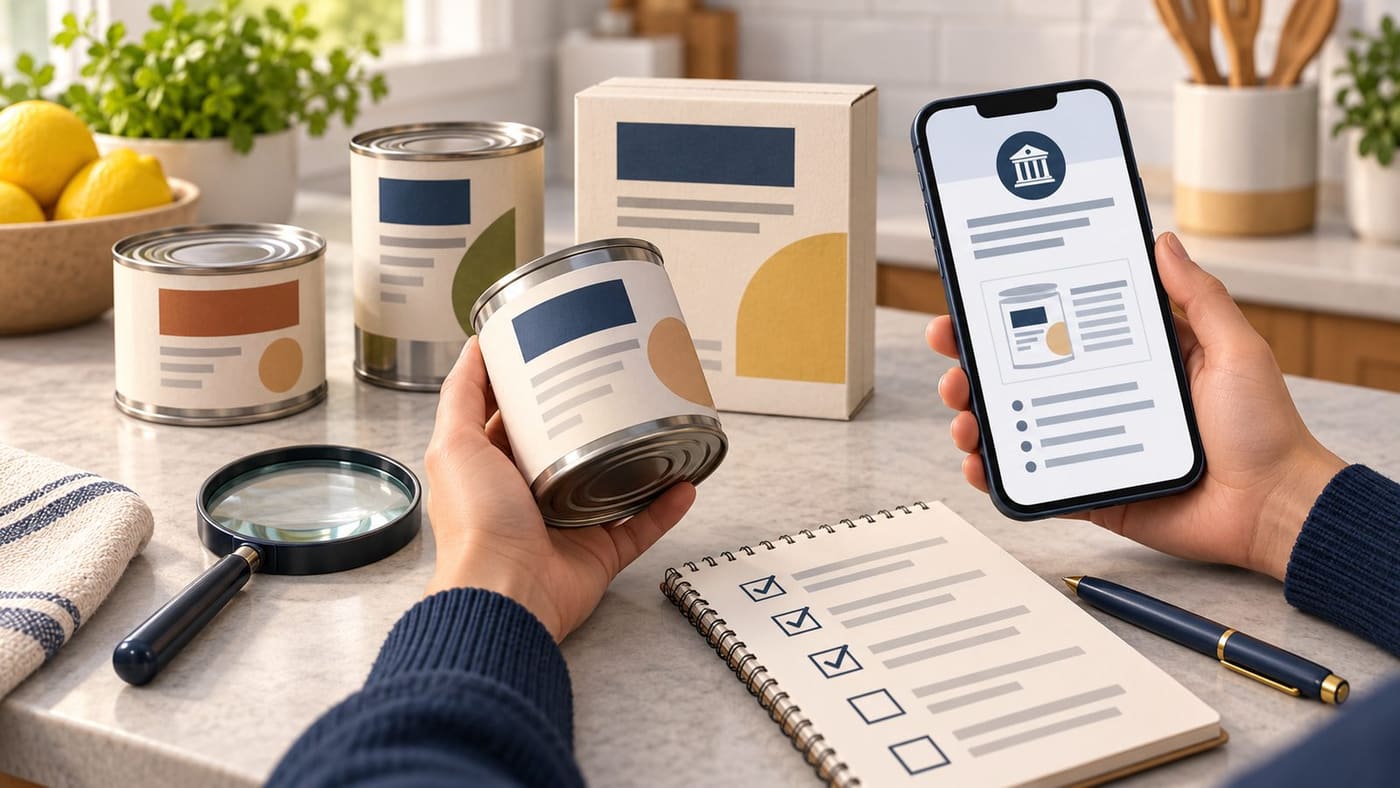
Do not use a generated package image as though it identifies a recalled item. The cover for this guide shows generic illustrated packaging and a conceptual document screen. It is not evidence of a specific product, company or notice. When exact identification matters, readers need the package details in the official notice, not a visually similar editorial illustration.
Keep speculation out of the summary. A notice about a possible problem is not automatically evidence that every purchaser became ill, and a headline's audience interest does not establish the scale of harm. Report only what the source supports. If you cannot verify the headline's numbers, leave them out rather than presenting the absence of verification as a minor footnote.
A manageable household record
The following record is a practical writing template. It is not a replacement for any official instruction, and it should not delay action the notice requires. Use only the fields that help you keep the facts clear.
- Official notice title, address and date checked.
- Product details transcribed from the package.
- Fields that match and fields that remain uncertain.
- The notice's action instructions, kept with their source.
- Any question sent to the listed contact and the response received.
- The action completed and who in the household was informed.
There is no need to build a permanent database of every item you buy to use this template. Its value is in one focused check when a relevant warning appears. When the task is resolved, retain whatever documentation you need for the stated return or reporting process and your own reference. Avoid collecting unnecessary personal information from other household members just to make the note look thorough.
The goal is a clear next action
A food-recall headline can create urgency without giving you enough information to identify the package in front of you. The response is not to ignore the warning or to guess. Find the applicable official notice, compare the requested details carefully and follow the product-specific instructions. Where a detail remains unclear, ask the listed contact rather than inventing an answer.
Good household communication makes that process easier: one clear source, a legible record and an explicit next action. You do not need a dramatic social post or a confident theory about what happened. You need to know what the notice says, how it relates to the item you have and which instruction applies. That is the useful work behind a responsible recall check.
Sources and editorial context
FDA, Food Recalls: What You Need to Know: https://www.fda.gov/food/buy-store-serve-safe-food/food-recalls-what-you-need-know
FoodSafety.gov, What Do You Do If You Have a Recalled Product?: https://www.foodsafety.gov/blog/what-do-you-do-if-you-have-recalled-product
FDA, product recalls overview: https://www.fda.gov/ForConsumers/ConsumerUpdates/ucm049070.htm
Researched on 25 October 2026. This is a general U.S. consumer-information explainer prompted by a product-recall trend, not verification of the specific fruit-product headlines in the trend feed. The worksheet and communication examples are original editorial suggestions. AI-assisted writing and an original generated illustration; no clinical assessment or comprehensive recall search is claimed. Follow current official instructions for the specific product.