A useful TV Licence check starts with what everyone in the home actually watches. The size of the television, the number of streaming subscriptions and the person who usually pays the bills do not give a complete picture. One person may select films from a catalogue while another opens a live television channel on the same screen. A household decision needs to account for both.
This guide brings together official information checked on 26 October 2026 and a practical way to organise that decision. It covers ordinary UK household questions, rather than business premises or an assessment of an individual tenancy. The examples and worksheets below are editorial suggestions, not forms approved by TV Licensing. Where accommodation or eligibility is uncertain, take the details to the official service before relying on a general summary.
Start with the viewing activity
TV Licensing says coverage is needed to watch or record live television on any channel or service, including television delivered through streaming platforms. This includes recorded broadcasts and delayed viewing of them. BBC programmes on iPlayer also require coverage when watched on demand or downloaded. Its general guidance explicitly excludes S4C programmes watched on demand from that requirement.
Other services' on-demand programmes, and on-demand YouTube clips, do not by themselves require a licence. A platform name therefore cannot settle the question: the same service may contain both a catalogue and live television. Read the [official viewing guidance](https://www.tvlicensing.co.uk/check-if-you-need-one) against the activity you intend to use, rather than assuming an internet connection changes the rule.
For your household notes, avoid the single entry “streaming”. Record the programme or channel, the app and whether it is a scheduled transmission or a title selected on demand. That small amount of detail makes a later enquiry much easier to answer. Do not use the list to collect anyone's passwords, viewing account credentials or private browsing history; a short conversation about the relevant activity is enough.
Make a short household inventory
Choose a time when the people who use the screens can contribute. A bill payer working from memory may overlook a service used by someone else, especially on a phone or games console. Ask each person to identify their usual viewing activities and any occasional events they are planning to watch. An annual final or seasonal programme belongs in the conversation even if it is absent from a typical week's routine.
A simple note can use these columns:
- Person or shared room, without unnecessary personal details.
- Programme, channel or service being considered.
- How the programme is selected and watched.
- Question that remains unresolved.
- Official page or reply used to resolve it.
- Date on which the household will check again.
The purpose is to produce an accurate question, not a complicated monitoring system. Leave an uncertain entry marked uncertain until you have checked it. Guessing in order to finish the worksheet defeats the reason for making it. If someone cannot describe the viewing mode, look at the relevant programme listing together and use that description when seeking clarification.
Keep a separate note of existing licence details. Confusing the viewing inventory with payment information makes both harder to maintain. The first describes the household's activities; the second helps the responsible person find the account and check its address, dates and payment arrangement.
What the current price does and does not tell you
The government announced a colour TV Licence fee of £180 from 1 April 2026, with a black-and-white licence costing £60.50. Those are the published 2026–27 amounts, rather than a promise about future years. The [government fee announcement](https://www.gov.uk/government/news/cost-of-tv-licence-fee-set-for-202627) also discusses longer-term funding work. Discussion of future arrangements should not be treated as an implemented replacement for the present system.
For budgeting, distinguish the annual fee from the dates and amounts of individual payments. Dividing an annual bill into twelve equal parts can be a useful private savings exercise, but it is not evidence that a provider will collect that amount from the first month. Before choosing an arrangement, write down the first payment, subsequent payments and any additional charges shown in the actual offer.
TV Licensing's [ways to pay page](https://www.tvlicensing.co.uk/pay-for-your-tv-licence/ways-to-pay) says monthly Direct Debit payments for a first licence are initially higher: approximately £30 for the first six payments, then approximately £15 from month seven. Quarterly payments include a £1.25 charge each; annual Direct Debit has no additional fee. The page also describes card and other payment methods. Check the schedule offered to you rather than copying these illustrative monthly amounts into a standing instruction.
Compare payment arrangements on a calendar
A practical comparison needs more than the smallest advertised instalment. Make a calendar of the payments you expect under each available arrangement and compare it with the dates on which money normally arrives in your account. Mark unusually expensive months, rather than looking only at an annual average that hides them.
For example, a fictional household moving into a flat might have furniture, transport and utility expenses in the same month. Its budget should show the licence payment beside those commitments. This is a planning example, not a recommendation to choose a particular payment method. The right question is whether the documented schedule fits the household's circumstances and whether the person responsible understands it.
Before confirming an arrangement, check:
- Who will receive account communications and keep the payment record?
- Does the account show the intended address and licence holder?
- What is due initially, and when does the amount change?
- Are there charges associated with the selected frequency?
- Where will the household find official help if its circumstances change?
Keep the confirmation somewhere the responsible person can retrieve it. Do not infer that cancelling a bank instruction has completed a separate licensing enquiry, cancellation or refund process. This article has not tested those application processes and does not assess anyone's refund entitlement.
Check concessions using the complete conditions
The [government's free and reduced-fee guidance](https://www.gov.uk/free-discount-tv-licence) describes a free licence for people aged 75 or over when they, or a partner living with them, receive Pension Credit. It requires an application; age alone is not the full eligibility test. The same guidance describes a £7.50 arrangement for qualifying residents of eligible residential care or supported sheltered accommodation, with the manager handling the application. Eligibility includes being retired and at least 60, or disabled.
Those are different routes. Do not combine an age threshold from one with an accommodation condition from another to create a supposed general discount. If helping a relative, identify which route might apply before assembling documents. Ask the service or accommodation manager what evidence is needed for that route, and avoid sending sensitive information to an unofficial advice page.
A useful assistance note has three parts: the concession being explored, the condition that still needs confirmation and the person who will follow up. It need not contain copies of benefit letters or medical records. Keep those documents separately and share them only through the appropriate application process. Helping someone organise an enquiry does not mean making eligibility claims on their behalf without checking the details.
Blindness and sight impairment are not interchangeable labels
TV Licensing's [blind concession guidance](https://www.tvlicensing.co.uk/check-if-you-need-one/for-your-home/blindseverely-sight-impaired-aud5) specifies a 50% reduction for people who are blind, meaning severely sight impaired, with supporting evidence. The published reduced prices are £90 for colour and £30.25 for black-and-white. The licence must be in the eligible person's name. Being partially sighted, described as sight impaired, does not qualify for this particular concession.
Use the official wording when checking documents or asking for assistance. Everyday descriptions such as “poor eyesight” are too imprecise to establish this eligibility. The linked page lists accepted evidence and explains the position when a current licence is held in someone else's name. Reading that list is preferable to guessing that a particular letter will be accepted.
When assisting someone, make the process accessible to them: use a readable format, explain what information is being requested and let them review the application details. Do not treat administrative help as permission to circulate their health information. If a question remains about evidence, write down that specific question and seek an answer before submitting unrelated documents.
Shared homes need an accommodation check
The [GOV.UK TV Licence page](https://www.gov.uk/find-licences/tv-licence) distinguishes separate tenancy agreements from joint tenancy arrangements. In particular, separate tenants watching in their own rooms can need their own licences. It also addresses shared areas and student circumstances. A statement that a property “has a licence” is therefore not enough to establish coverage for every arrangement inside it.
For a shared home, gather the tenancy description, the room in which viewing happens and the details of any licence said to cover it. Ask the landlord or household organiser a precise question rather than assuming that broadband, a furnished room or a television supplied with the property settles the matter. This guide cannot determine coverage from a property's marketing description.
An original move-in checklist might include:
- Find the tenancy agreement and identify whether the arrangement is joint or separate.
- Note which room or communal space the question concerns.
- Ask who holds any existing licence and what coverage has actually been confirmed.
- Record the unresolved question for TV Licensing if the documents do not settle it.
Avoid turning a housemate's informal answer into a permanent record of legal certainty. Accommodation changes, occupants move and assumptions are easily passed from one tenant to another without anyone checking their origin.
Treat viewing away from home as a separate question
TV Licensing's [iPlayer guidance](https://www.tvlicensing.co.uk/check-if-you-need-one/topics/bbc-iplayer-and-the-tv-licence) describes coverage from a licensed home for a person's own device running on internal batteries away from home. Plugging a device into the mains at another address changes the coverage question: that address needs a licence. Student circumstances have additional guidance, so do not reduce the issue to owning a phone or having parents with a licence.
For an enquiry about travel or a second address, describe the situation accurately. Include where the device will be used and how it will be powered, rather than asking simply whether a mobile device is exempt. The goal is to obtain guidance that matches the actual arrangement. Do not use a short general explanation as a workaround for circumstances it does not address.
This article does not assess hotels, business premises, overseas access or every accommodation exception. Follow the relevant official guidance for those settings. A household worksheet is most useful when it identifies the boundary of what you have checked, instead of making unfamiliar situations look settled.
Turn the check into a small, maintainable record
Once the questions are resolved, keep a short decision note dated with the review. Record which official pages were used, what remained uncertain and what action was completed. Avoid a vague statement such as “all sorted” if an application or reply is still outstanding. A pending enquiry and a confirmed account change are different things.
Revisit the note after a move, a change in household membership, a different viewing service or a change relevant to a concession. These are suggested review triggers, not official reporting deadlines. They help a household notice when its previous assumptions may no longer describe its situation.
If two people share responsibility, agree who will perform each action and where the confirmation will be stored. A short record with one clear owner is more useful than several reminders nobody has accepted. Remove unnecessary personal information from shared notes, while retaining the references the responsible person needs.
Conclusion
A careful TV Licence decision connects the household's viewing activities, accommodation and any concession with current official guidance. Start by describing the situation accurately, resolve the uncertain parts and check the actual payment schedule before relying on a budget estimate. Keep a dated record that another household member can understand. That approach is more dependable than a slogan about age, streaming subscriptions or the type of screen on the table.
Sources and research note
Research checked on 26 October 2026 using the official TV Licensing and GOV.UK pages linked above. The separate TV Licensing tenants-and-lodgers page returned an access error; the shared-home summary uses GOV.UK guidance instead. No application, cancellation, payment or eligibility decision was performed for this article. The worksheets and organisational suggestions are original editorial guidance, not official procedures or individual legal advice.
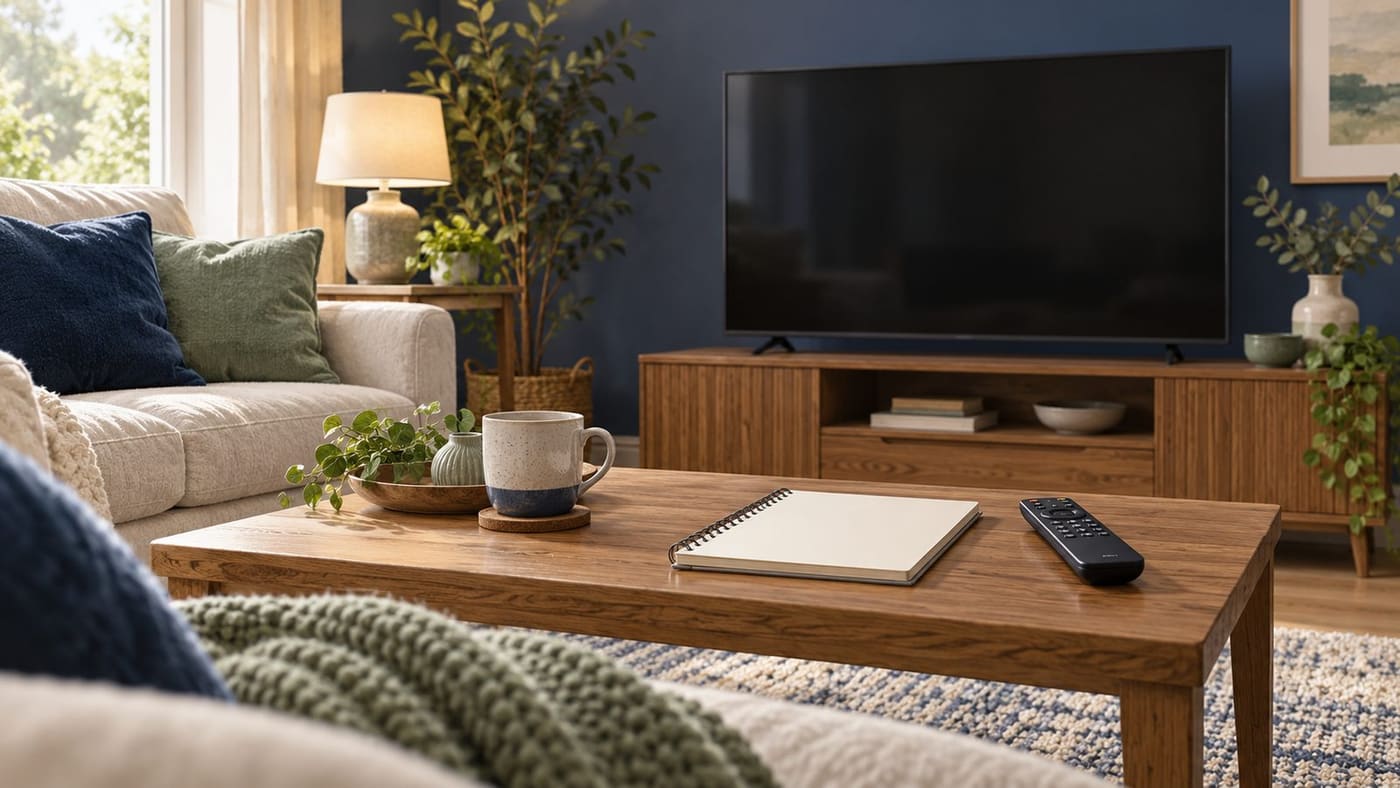
The accompanying original AI-generated conceptual illustration shows an imagined living room with an unbranded television and notebook. It is not a real household photograph, an official document or an image supplied by TV Licensing. A limited web-search similarity review was performed; it is not a comprehensive plagiarism scan or a uniqueness certification.