
 Simple Morning Routines That Boost Productivity and Happiness
The way you start your morning often determines how the rest of your day unfolds. If your mornings are rushed, filled with distractions, or begin with checking social media, you may feel stressed and unproductive before the day has even begun. On the other hand, a calm and intentional morning routine can improve your mindset, increase your energy, and help you accomplish more throughout the day.
Many successful entrepreneurs, athletes, writers, and business leaders share one common habit—they value their mornings. While you don't need to wake up at 5 AM or follow an intense schedule, creating a simple morning routine can significantly improve both your productivity and your happiness.
The good news is that anyone can build an effective morning routine. It doesn't require expensive equipment or several hours of free time. Small, consistent habits practiced every morning can lead to remarkable long-term results.
Why Morning Routines Matter
Your brain is fresh after a good night's sleep. This is the perfect time to set your intentions before emails, phone calls, and daily responsibilities begin demanding your attention.
A healthy morning routine helps you:
- Improve concentration
- Increase daily productivity
- Reduce stress and anxiety
- Boost motivation
- Improve physical health
- Create emotional balance
- Build self-discipline
- Start each day with a positive mindset
The first hour of your day acts as the foundation for everything that follows.
1. Wake Up at a Consistent Time
Consistency is more important than waking up extremely early. Your body functions best when it follows a regular sleep schedule.
Benefits of waking up at the same time include:
- Better sleep quality
- Improved energy levels
- Stronger focus
- Easier mornings
- Healthier body clock
Choose a realistic wake-up time that fits your lifestyle and stick to it—even on weekends when possible.
2. Avoid Checking Your Phone Immediately
One of the biggest productivity killers is reaching for your phone as soon as you wake up.
Social media notifications, emails, and news updates can instantly distract your mind and increase stress.
Instead, spend your first 20–30 minutes focusing on yourself before focusing on the outside world.
Use this time to:
- Stretch
- Drink water
- Meditate
- Read
- Plan your day
Your phone should support your goals—not control your morning.
3. Drink a Glass of Water
After several hours of sleep, your body is naturally dehydrated.
Drinking water first thing in the morning helps:
- Rehydrate your body
- Improve digestion
- Increase alertness
- Boost metabolism
- Support brain function
Keeping a bottle of water beside your bed makes this habit easy to maintain.
4. Stretch or Exercise
Physical movement wakes up both your body and your brain.
You don't need a full workout. Even 10–20 minutes of movement can improve your mood and energy.
Simple options include:
- Stretching
- Yoga
- Walking
- Jump rope
- Bodyweight exercises
- Light jogging
Exercise releases endorphins, often called the "feel-good hormones," which naturally increase happiness and reduce stress.
5. Practice Gratitude
Gratitude helps shift your focus from problems to possibilities.
Spend just a few minutes thinking about the positive aspects of your life.
You can write down:
- Three things you're grateful for
- One achievement from yesterday
- One thing you're looking forward to today
This simple habit creates a more optimistic and resilient mindset.
6. Practice Deep Breathing or Meditation
Modern life is full of distractions and stress.
A few minutes of deep breathing or meditation can calm your mind before the day begins.
Benefits include:
- Reduced anxiety
- Better concentration
- Improved emotional control
- Lower stress levels
- Increased self-awareness
Even five minutes of mindful breathing can make a noticeable difference.
7. Eat a Healthy Breakfast
Breakfast provides the energy your body needs after fasting overnight.
Choose foods that provide lasting energy instead of a quick sugar rush.
Healthy breakfast ideas include:
- Oatmeal with fruit
- Eggs and whole-grain toast
- Greek yogurt with berries
- Smoothies
- Nuts and seeds
- Fresh fruit
A nutritious breakfast improves concentration and keeps you energized throughout the morning.
8. Read Something Inspiring
Reading for even ten minutes each morning can improve your mindset.
Choose content that supports personal growth, such as:
- Self-improvement books
- Motivational biographies
- Educational articles
- Business books
- Spiritual writings
Instead of filling your mind with negative news, feed it with ideas that inspire progress.
9. Plan Your Day
Without a plan, it's easy to spend the day reacting to whatever happens.
Take five minutes to write down:
- Your three most important tasks
- Meetings or appointments
- Personal goals
- Exercise schedule
- Break times
Planning your day helps reduce stress and increases productivity.
10. Visualize Your Success
Visualization is a powerful mental technique used by athletes, entrepreneurs, and performers.
Spend a few moments imagining yourself:
- Completing important tasks
- Speaking confidently
- Staying calm under pressure
- Achieving your goals
- Ending the day successfully
Positive visualization increases confidence and motivation.
Habits to Avoid Every Morning
Building good habits also means eliminating harmful ones.
Avoid these common mistakes:
Snoozing the Alarm Repeatedly
Repeated snoozing makes you feel even more tired and disrupts your sleep cycle.
Skipping Breakfast
Missing breakfast can reduce energy and concentration.
Checking Social Media First
This habit steals valuable time and creates unnecessary distractions.
Rushing Through the Morning
Prepare clothes, meals, and work materials the night before to create a calmer morning.
Negative Self-Talk
Start your day with encouragement instead of criticism.
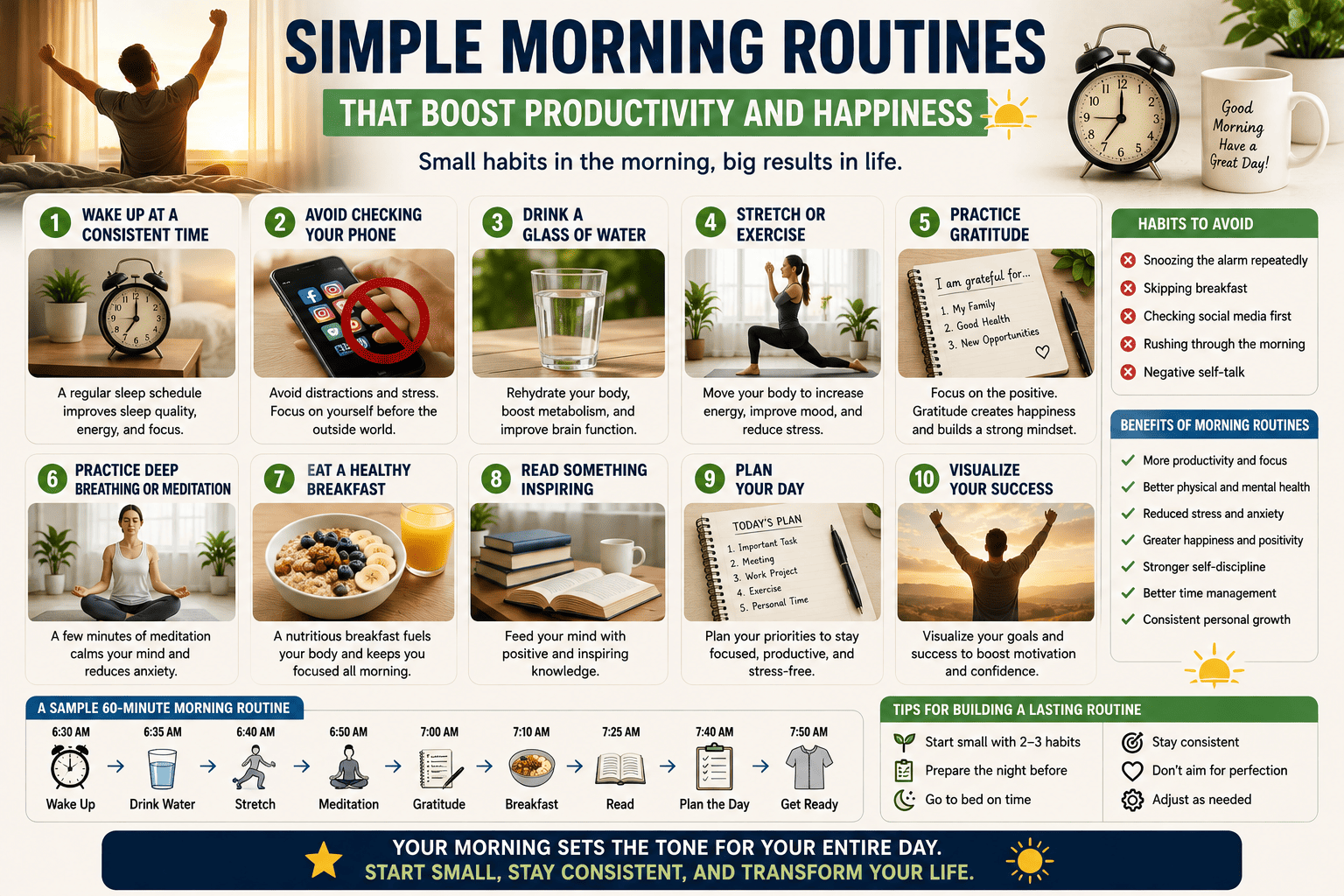
A Sample 60-Minute Morning Routine
Here's an example of a balanced morning schedule:
6:30 AM – Wake Up
- Avoid the snooze button.
6:35 AM – Drink Water
- Rehydrate your body.
6:40 AM – Stretch
- Move your body for 10 minutes.
6:50 AM – Meditation
- Practice mindful breathing.
7:00 AM – Gratitude Journal
- Write three things you're grateful for.
7:10 AM – Healthy Breakfast
- Eat a balanced meal.
7:25 AM – Read
- Spend 10–15 minutes learning.
7:40 AM – Plan the Day
- Write your priorities.
7:50 AM – Get Ready
- Prepare for work, school, or personal projects.
How Morning Routines Improve Happiness
Productivity isn't the only benefit of a morning routine.
Healthy mornings also improve emotional well-being by:
- Reducing daily stress
- Creating a sense of accomplishment
- Increasing confidence
- Building positive momentum
- Improving emotional stability
- Encouraging healthier choices throughout the day
Small morning wins often lead to bigger successes later in the day.
Tips for Building a Lasting Morning Routine
If you're new to morning routines, keep these tips in mind:
- Start with just two or three habits.
- Prepare everything the night before.
- Go to bed on time.
- Stay consistent, even on weekends.
- Don't aim for perfection.
- Adjust your routine as your lifestyle changes.
Remember, consistency is more important than complexity.
Common Challenges and Solutions
"I don't have enough time."
Wake up just 15–20 minutes earlier and begin with one simple habit.
"I'm not a morning person."
Focus on getting enough sleep first. A consistent bedtime makes mornings easier.
"I keep forgetting."
Use reminders, habit-tracking apps, or sticky notes until the routine becomes automatic.
"I lose motivation."
Don't rely on motivation alone. Build a routine that becomes part of your daily lifestyle.
Long-Term Benefits of a Healthy Morning Routine
People who consistently follow healthy morning habits often experience:
- Greater productivity
- Better physical health
- Improved focus
- Stronger self-discipline
- Higher confidence
- Better time management
- Reduced stress
- Increased happiness
- More consistent personal growth
The benefits may seem small at first, but they compound over weeks, months, and years.

You must be logged in to post a comment.