
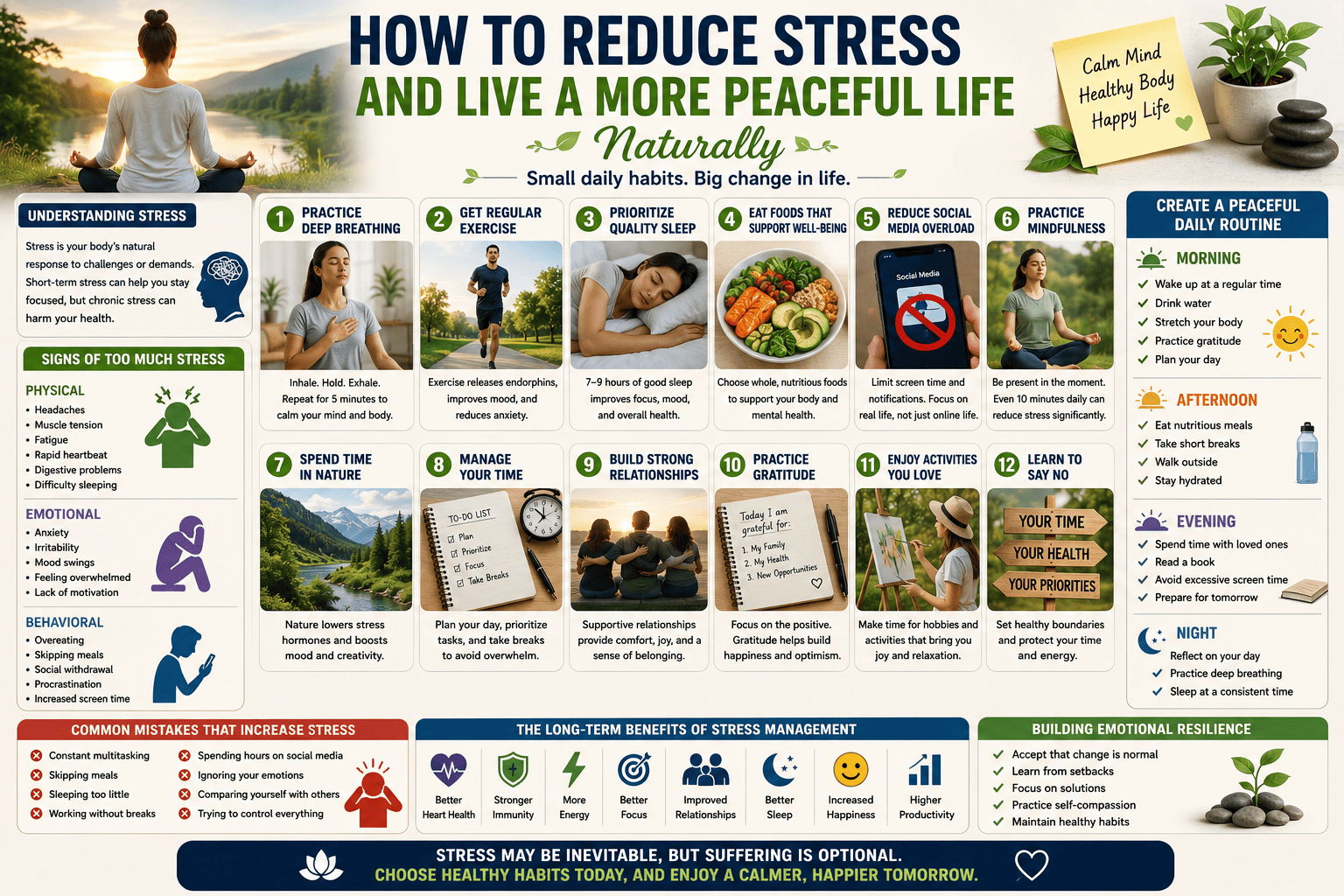
 How to Reduce Stress and Live a More Peaceful Life Naturally
In today's fast-paced world, stress has become one of the most common challenges people face. Whether it's work deadlines, financial responsibilities, family obligations, or the constant flow of information through smartphones and social media, many people feel overwhelmed before the day even begins.
Although some stress is normal and can help us stay motivated, prolonged stress can affect nearly every aspect of our lives. It can interfere with sleep, weaken the immune system, reduce productivity, and even increase the risk of chronic illnesses.
The good news is that reducing stress doesn't require expensive therapies or a complete lifestyle overhaul. Small, intentional habits practiced consistently can help you feel calmer, think more clearly, and enjoy life more fully.
Let's explore practical ways to naturally reduce stress and build a peaceful, balanced lifestyle.
Understanding Stress
Stress is your body's natural response to challenges or demands. When faced with a difficult situation, your brain releases hormones like adrenaline and cortisol, preparing your body for action.
Short-term stress can be helpful because it improves focus and reaction time. However, when stress continues for weeks or months, it becomes chronic and begins to harm your health.
Common causes of stress include:
- Heavy workload
- Financial concerns
- Family responsibilities
- Health issues
- Relationship conflicts
- Poor time management
- Lack of sleep
- Information overload
Recognizing the source of your stress is the first step toward managing it.
Signs You May Be Experiencing Too Much Stress
Stress affects people differently, but common symptoms include:
Physical Symptoms
- Headaches
- Muscle tension
- Fatigue
- Rapid heartbeat
- Digestive problems
- Difficulty sleeping
Emotional Symptoms
- Anxiety
- Irritability
- Mood swings
- Feeling overwhelmed
- Lack of motivation
Behavioral Symptoms
- Overeating
- Skipping meals
- Social withdrawal
- Procrastination
- Increased screen time
Ignoring these signs can allow stress to build over time.
1. Practice Deep Breathing
One of the quickest ways to calm your body is through deep breathing.
Try this simple exercise:
- Inhale slowly through your nose for four seconds.
- Hold your breath for four seconds.
- Exhale slowly through your mouth for six seconds.
- Repeat for five minutes.
Deep breathing lowers your heart rate and signals your nervous system to relax.
2. Get Regular Physical Exercise
Exercise is one of the most effective natural stress relievers.
Physical activity helps:
- Release endorphins
- Improve mood
- Reduce anxiety
- Increase energy
- Improve sleep quality
You don't need intense workouts.
Excellent options include:
- Walking
- Cycling
- Swimming
- Yoga
- Dancing
- Stretching
- Home workouts
Even 30 minutes of movement each day can make a significant difference.
3. Prioritize Quality Sleep
Poor sleep and stress often create a harmful cycle.
When you don't sleep well, your stress increases. Higher stress then makes it harder to sleep.
Improve your sleep by:
- Going to bed at the same time each night
- Avoiding screens before bedtime
- Limiting caffeine in the evening
- Keeping your bedroom quiet and cool
- Reading instead of scrolling through social media
Most adults need between seven and nine hours of quality sleep each night.
4. Eat Foods That Support Mental Well-Being
Nutrition plays an important role in emotional health.
Choose foods such as:
- Fruits
- Vegetables
- Whole grains
- Fish
- Nuts
- Seeds
- Eggs
- Yogurt
Limit excessive:
- Sugar
- Fast food
- Processed snacks
- Energy drinks
A balanced diet helps stabilize energy levels and supports healthy brain function.
5. Reduce Social Media Overload
Constant notifications and endless scrolling can increase anxiety and reduce focus.
Healthy digital habits include:
- Avoiding your phone during the first hour after waking up
- Turning off unnecessary notifications
- Scheduling social media time
- Taking regular digital breaks
- Spending more time outdoors
Reducing screen time creates more space for meaningful experiences.
6. Practice Mindfulness Every Day
Mindfulness means paying full attention to the present moment instead of worrying about the past or future.
Simple mindfulness practices include:
- Meditation
- Deep breathing
- Nature walks
- Journaling
- Quiet reflection
Practicing mindfulness for just ten minutes daily can improve emotional resilience and reduce anxiety.
7. Spend Time in Nature
Nature has a calming effect on both the mind and body.
Consider:
- Walking in a park
- Hiking
- Gardening
- Watching the sunrise
- Sitting near a lake
- Visiting a beach
Fresh air and natural surroundings help lower stress hormones and improve mood.
8. Learn to Manage Your Time
Poor time management often creates unnecessary stress.
Try these strategies:
- Write a daily to-do list
- Prioritize important tasks
- Break large projects into smaller steps
- Avoid multitasking
- Schedule regular breaks
Better planning reduces feelings of overwhelm and increases productivity.
9. Build Strong Relationships
Supportive relationships provide emotional comfort during difficult times.
Spend quality time with:
- Family
- Friends
- Mentors
- Colleagues
- Community groups
Talking to someone you trust can reduce stress and help you gain a fresh perspective.
10. Practice Gratitude
Gratitude helps shift your focus away from worries and toward positive experiences.
Each day, write down:
- Three things you're grateful for
- One success from the day
- Someone who made your life better
This simple habit promotes optimism and emotional well-being.
11. Enjoy Activities You Love
Life shouldn't be only about work and responsibilities.
Make time for hobbies like:
- Reading
- Painting
- Photography
- Cooking
- Playing music
- Traveling
- Gardening
Enjoyable activities help your brain recover from daily stress.
12. Learn to Say No
Many people experience stress because they agree to too many commitments.
Protect your time by:
- Setting healthy boundaries
- Declining unnecessary obligations
- Prioritizing important responsibilities
- Respecting your personal limits
Saying "no" to one thing often means saying "yes" to your well-being.
Create a Peaceful Daily Routine
A peaceful life is built through consistent habits.
Morning
- Wake up at a regular time
- Drink water
- Stretch
- Practice gratitude
- Plan your day
Afternoon
- Eat nutritious meals
- Take short breaks
- Walk outside
- Stay hydrated
Evening
- Spend time with loved ones
- Read a book
- Avoid excessive screen time
- Prepare for tomorrow
Night
- Reflect on your day
- Practice deep breathing
- Sleep at a consistent time
Common Mistakes That Increase Stress
Many daily habits unknowingly add more stress.
Avoid:
- Constant multitasking
- Skipping meals
- Sleeping too little
- Working without breaks
- Spending hours on social media
- Ignoring your emotions
- Comparing yourself with others
- Trying to control everything
Recognizing these habits is the first step toward replacing them with healthier ones.
The Long-Term Benefits of Stress Management
Reducing stress consistently can improve nearly every area of your life.
Benefits include:
- Better heart health
- Improved immune function
- Increased energy
- Better focus
- Higher productivity
- Improved relationships
- Greater emotional resilience
- Better sleep quality
- Increased happiness
- Improved overall quality of life
These positive effects become stronger as healthy habits become part of your daily routine.
Building Emotional Resilience
Stress will always be a part of life, but resilience determines how well you recover from challenges.
You can strengthen resilience by:
- Accepting that change is normal
- Learning from setbacks
- Focusing on solutions instead of problems
- Practicing self-compassion
- Maintaining healthy habits even during difficult times
A resilient mindset allows you to face life's challenges with confidence rather than fear.

You must be logged in to post a comment.