
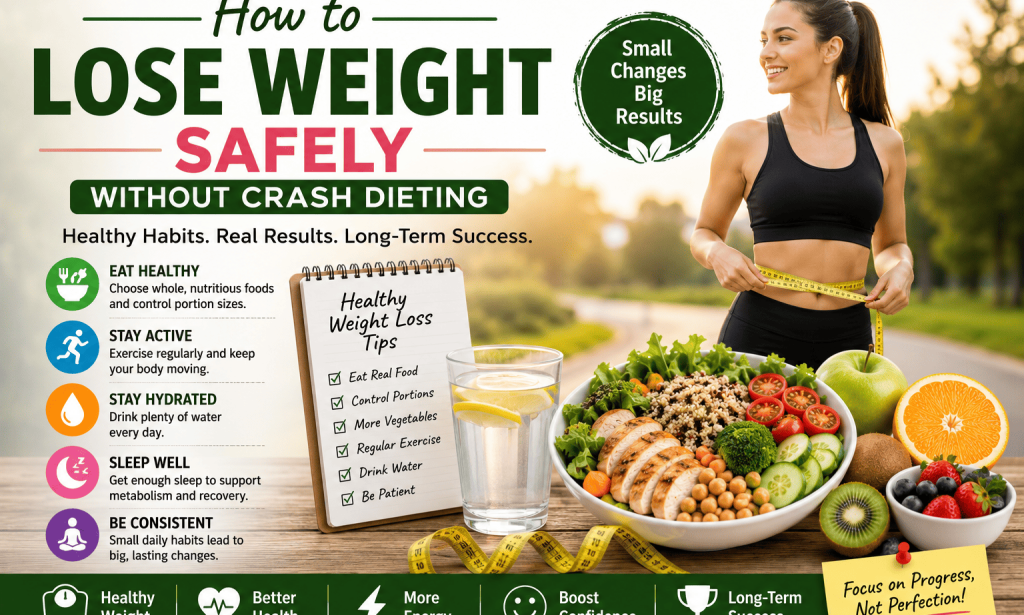
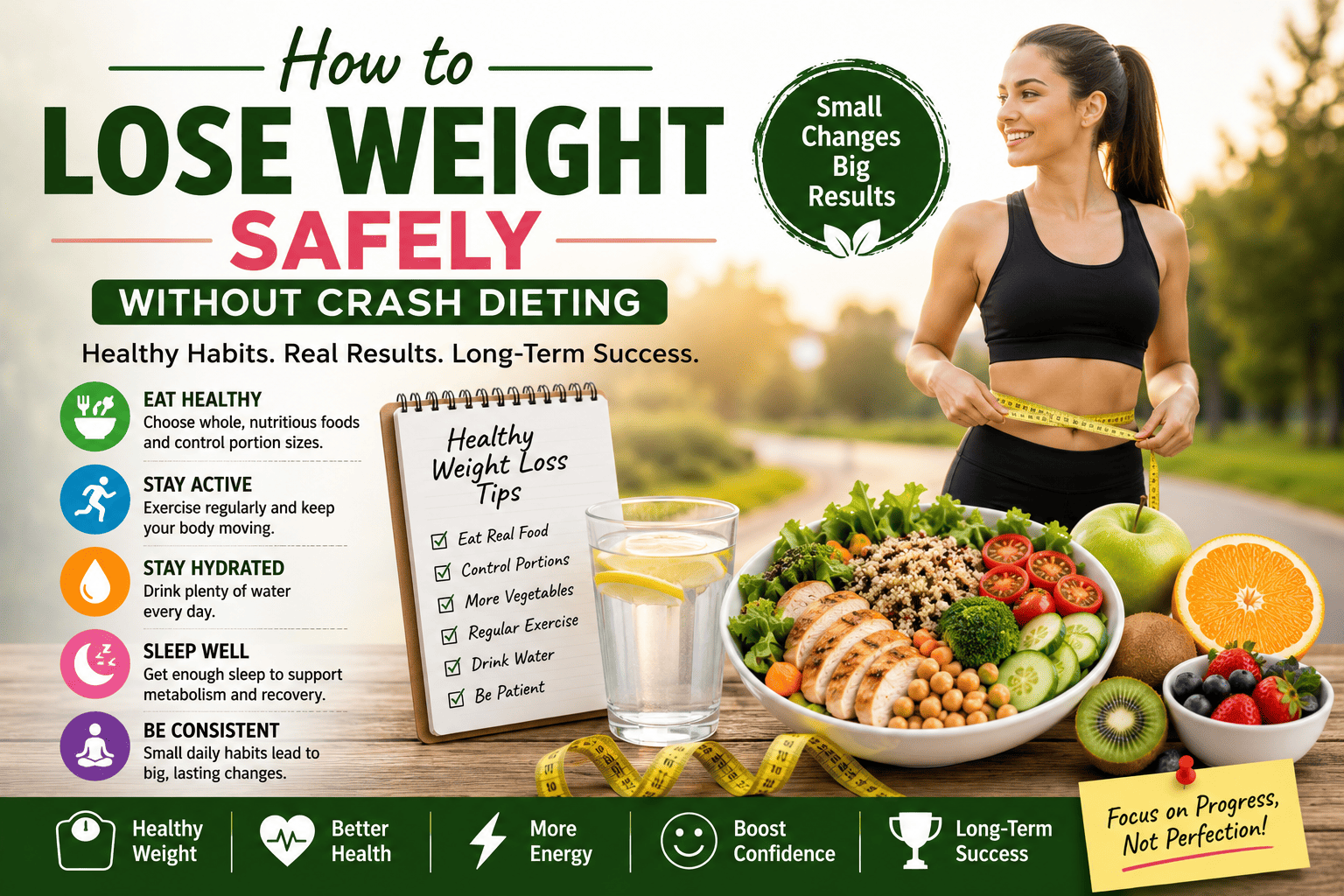
How to Lose Weight Safely Without Crash Dieting
Many people want to lose weight quickly, but extreme diets and rapid weight-loss programs are often difficult to maintain and may not provide balanced nutrition. A healthier approach is to build sustainable habits that support gradual, long-term weight management.
Losing weight safely does not mean starving yourself or eliminating entire food groups. Instead, it involves creating healthy eating patterns, staying physically active, sleeping well, managing stress, and making consistent lifestyle changes.
This guide explains practical, science-based strategies that can help you lose weight safely while supporting your overall health.
What Does It Mean to Lose Weight Safely?
Losing weight safely means reducing body weight gradually while meeting your body's nutritional needs.
A healthy approach focuses on:
- Eating balanced meals
- Controlling portion sizes
- Exercising regularly
- Staying hydrated
- Sleeping well
- Managing stress
- Building long-term habits
The goal is not only to lose weight but also to maintain it over time.
Why Crash Diets Are Not Recommended
Crash diets often involve severe calorie restriction or eliminating major food groups.
Although they may lead to short-term weight loss, they can also:
- Be difficult to maintain
- Reduce energy levels
- Cause nutrient deficiencies
- Increase hunger
- Lead to weight regain after stopping
Instead of quick fixes, gradual and consistent changes are generally more sustainable.
1. Eat a Balanced Diet
Healthy weight loss starts with balanced nutrition.
Include foods such as:
- Fruits
- Vegetables
- Whole grains
- Lean proteins
- Healthy fats
- Low-fat dairy or fortified alternatives
A balanced diet helps you feel satisfied while providing essential nutrients.
2. Control Portion Sizes
Even healthy foods can contribute to excess calorie intake if portions are too large.
Helpful strategies include:
- Using smaller plates
- Eating slowly
- Paying attention to hunger and fullness cues
- Avoiding distracted eating
Mindful eating can help prevent overeating.
3. Increase Protein Intake
Protein supports muscle maintenance and can help you feel full after meals.
Good protein sources include:
- Chicken
- Fish
- Eggs
- Greek yogurt
- Lentils
- Beans
- Tofu
Including protein with each meal may support healthy weight management.
4. Eat More Fiber
Fiber-rich foods promote fullness and support healthy digestion.
Examples include:
- Oats
- Brown rice
- Apples
- Berries
- Broccoli
- Spinach
- Beans
- Chia seeds
Aim to include vegetables or fruit with most meals.
5. Drink Plenty of Water
Staying hydrated is important for overall health.
Water may also help:
- Reduce sugary drink consumption
- Support digestion
- Improve exercise performance
Choose water instead of sugar-sweetened beverages whenever possible.
6. Exercise Regularly
Physical activity supports weight management and overall fitness.
Consider activities such as:
- Brisk walking
- Cycling
- Swimming
- Jogging
- Strength training
- Yoga
Combining aerobic exercise with strength training can be especially beneficial.
7. Get Enough Sleep
Poor sleep may affect appetite, energy, and food choices.
Most adults benefit from 7–9 hours of quality sleep each night.
Create a consistent bedtime routine to improve sleep quality.
8. Reduce Added Sugar
Many processed foods and drinks contain large amounts of added sugar.
Try limiting:
- Soft drinks
- Candy
- Cakes
- Sweetened coffee drinks
- Packaged desserts
Replace sugary snacks with fruit, yogurt, or nuts.
9. Avoid Skipping Meals
Skipping meals can leave you overly hungry later, increasing the likelihood of overeating.
Instead, aim for regular, balanced meals throughout the day.
10. Be Patient and Consistent
Healthy weight loss takes time.
Focus on:
- Small daily improvements
- Consistent habits
- Realistic goals
Sustainable progress is more valuable than rapid results that are difficult to maintain.
Best Foods for Healthy Weight Loss
Include these nutritious foods regularly:
- Leafy green vegetables
- Broccoli
- Carrots
- Apples
- Berries
- Oatmeal
- Brown rice
- Quinoa
- Eggs
- Chicken breast
- Fish
- Greek yogurt
- Lentils
- Chickpeas
- Almonds
- Walnuts
A varied diet helps ensure you get a wide range of nutrients.
Foods to Limit
For better weight management, try to reduce:
- Sugary beverages
- Fast food
- Deep-fried foods
- Processed meats
- Chips
- Cookies
- Pastries
- Highly processed snacks
Enjoy these foods occasionally rather than as everyday choices.
Sample Healthy Weight Loss Meal Plan
Breakfast
- Oatmeal with berries
- Boiled egg
- Unsweetened tea
Morning Snack
- Apple
- Handful of almonds
Lunch
- Grilled chicken
- Brown rice
- Mixed vegetables
Afternoon Snack
- Plain yogurt
Dinner
- Baked fish
- Steamed broccoli
- Sweet potato
Common Weight Loss Mistakes
Avoid these common mistakes:
- Following extreme diets
- Skipping breakfast
- Drinking sugary beverages
- Ignoring portion sizes
- Sleeping too little
- Exercising inconsistently
- Expecting overnight results
Healthy habits are more effective than short-term restrictions.
Tips for Long-Term Success
To maintain your progress:
- Plan meals ahead
- Keep healthy snacks available
- Stay active throughout the week
- Track your habits
- Celebrate small milestones
- Stay flexible rather than aiming for perfection
Long-term consistency is the key to success.
Frequently Asked Questions (FAQ)
What is the safest way to lose weight?
A balanced diet, regular physical activity, adequate sleep, and gradual lifestyle changes are among the safest approaches to healthy weight management.
Can I lose weight without exercise?
Nutrition plays an important role in weight loss, but combining healthy eating with regular exercise provides additional health benefits and supports long-term success.
How much water should I drink?
Your hydration needs depend on factors such as age, activity level, and climate. Drink enough to stay well hydrated throughout the day.
Are carbohydrates bad for weight loss?
No. Whole-grain carbohydrates can be part of a healthy weight-loss plan. The focus should be on portion size and food quality.
How long does healthy weight loss take?
The timeline varies for each person. Sustainable progress is typically gradual rather than rapid.

You must be logged in to post a comment.