
How to Improve Sleep Quality Naturally: 15 Proven Tips for Better Sleep
Getting enough sleep is essential for maintaining good physical and mental health. However, sleep isn't just about the number of hours you spend in bed—it's also about the quality of your sleep. A full night's sleep that is constantly interrupted or restless may leave you feeling tired even after spending eight hours in bed.
Modern lifestyles often make quality sleep difficult. Long working hours, excessive screen time, stress, irregular schedules, and unhealthy eating habits can all interfere with your body's natural sleep cycle.
The good news is that improving sleep quality doesn't always require medication. In many cases, healthy daily habits and a consistent bedtime routine can make a significant difference.
This guide explains why sleep quality matters, what affects it, and practical ways to improve sleep naturally.
Why Is Sleep Important?
Sleep allows your body and brain to recover from the day's activities. During sleep, your body repairs tissues, strengthens the immune system, supports memory, and regulates hormones.
Quality sleep contributes to:
- Better concentration
- Improved memory
- Increased energy
- Stronger immunity
- Healthy metabolism
- Better mood
- Improved productivity
- Reduced stress
Poor sleep, on the other hand, may affect both physical and emotional well-being.
What Is Good Sleep Quality?
Good sleep quality means:
- Falling asleep within a reasonable amount of time.
- Sleeping through most of the night.
- Waking up feeling refreshed.
- Feeling alert and energetic during the day.
It's possible to sleep for many hours but still have poor sleep quality if your sleep is frequently interrupted.
Common Causes of Poor Sleep
Several factors can interfere with healthy sleep.
Common causes include:
- Stress and anxiety
- Excessive screen time
- Drinking caffeine late in the day
- Irregular sleep schedules
- Noise or bright lights
- Heavy meals before bedtime
- Lack of physical activity
- Poor sleeping environment
Identifying the cause is the first step toward improving sleep.
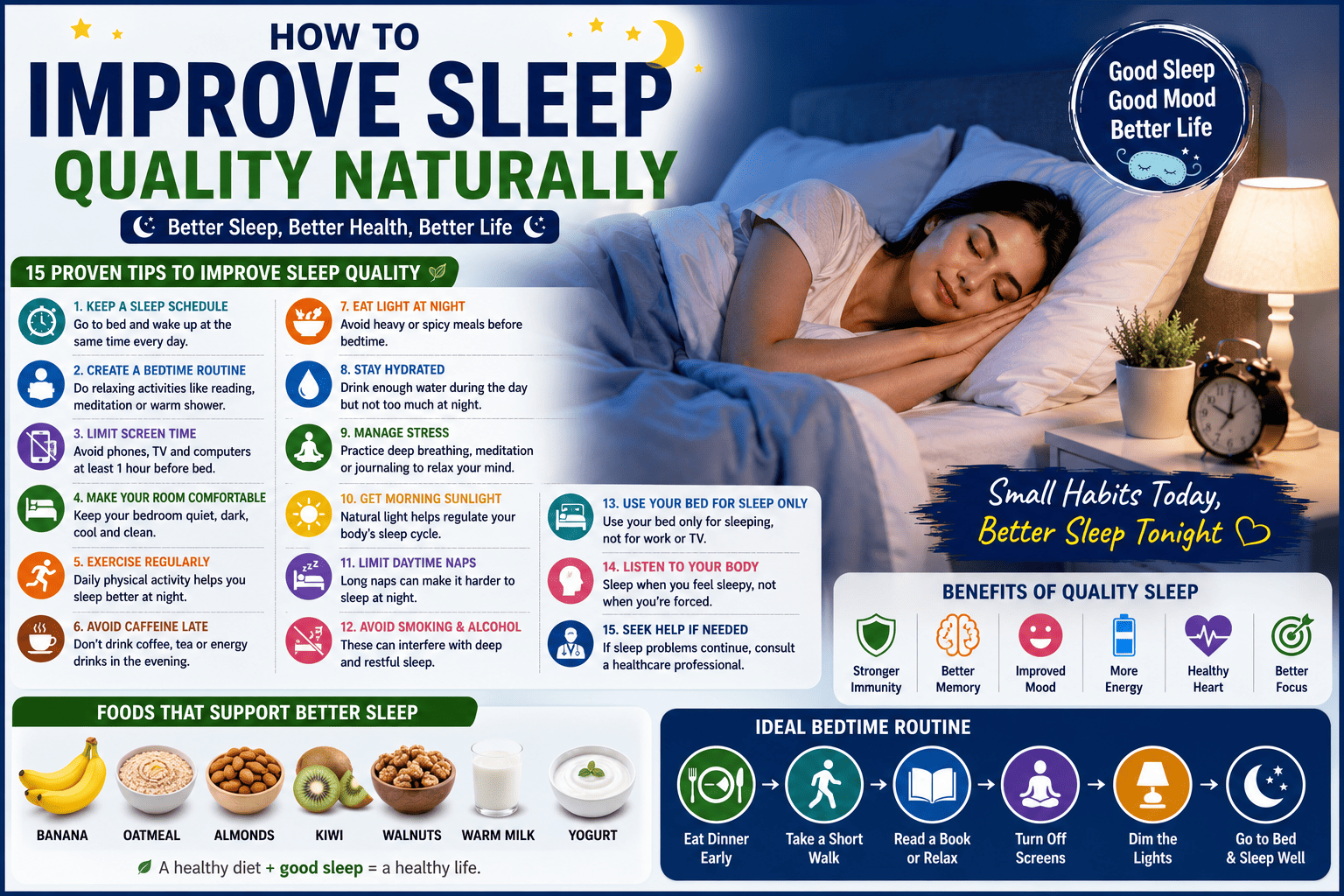
15 Natural Ways to Improve Sleep Quality
1. Follow a Consistent Sleep Schedule
Go to bed and wake up at the same time every day—even on weekends.
A consistent routine helps regulate your body's internal clock.
2. Create a Relaxing Bedtime Routine
Prepare your body for sleep by doing calming activities such as:
- Reading
- Gentle stretching
- Listening to soft music
- Taking a warm shower
- Deep breathing
A relaxing routine signals to your brain that it's time to sleep.
3. Limit Screen Time Before Bed
Phones, tablets, computers, and televisions emit blue light that may delay sleep.
Try to avoid screens for at least one hour before bedtime whenever possible.
4. Keep Your Bedroom Comfortable
Your sleeping environment matters.
A comfortable bedroom should ideally be:
- Quiet
- Dark
- Cool
- Clean
- Comfortable
Good-quality pillows and mattresses can also improve sleep comfort.
5. Exercise Regularly
Regular physical activity supports better sleep.
Activities such as:
- Walking
- Jogging
- Cycling
- Yoga
- Swimming
may help you fall asleep more easily and sleep more soundly.
Avoid intense exercise immediately before bedtime if it makes you feel more alert.
6. Avoid Caffeine Late in the Day
Coffee, tea, energy drinks, and some soft drinks contain caffeine.
If caffeine affects your sleep, try reducing intake during the afternoon and evening.
7. Avoid Heavy Meals Before Bed
Eating large meals close to bedtime may cause discomfort that interferes with sleep.
If you're hungry, choose a light, balanced snack instead.
8. Stay Hydrated
Drink enough water throughout the day.
However, consider limiting large amounts of fluids right before bedtime if nighttime bathroom trips disturb your sleep.
9. Manage Stress
Stress is one of the most common reasons for poor sleep.
Helpful relaxation techniques include:
- Meditation
- Mindfulness
- Journaling
- Prayer
- Gentle breathing exercises
Managing stress during the day often leads to better sleep at night.
10. Get Natural Sunlight During the Day
Exposure to daylight helps regulate your body's natural sleep-wake cycle.
Try spending some time outdoors during the morning or afternoon.
11. Limit Long Daytime Naps
Short naps can be refreshing.
However, long or late-afternoon naps may make it harder to fall asleep at night.
12. Avoid Smoking
Nicotine is a stimulant that may interfere with sleep.
Avoiding tobacco supports both sleep quality and overall health.
13. Use Your Bed Only for Sleep
Avoid working, eating, or watching television in bed whenever possible.
This helps your brain associate the bed with sleep and relaxation.
14. Listen to Your Body
Go to bed when you feel sleepy instead of forcing yourself to sleep.
If you can't sleep after a while, get up briefly and do a quiet, relaxing activity before trying again.
15. Seek Professional Advice if Sleep Problems Continue
If poor sleep persists for weeks or significantly affects your daily life, consult a healthcare professional.
Persistent sleep problems may have underlying causes that require evaluation.
Foods That May Support Better Sleep
Some nutritious evening snacks include:
- Oatmeal
- Bananas
- Almonds
- Walnuts
- Plain yogurt
- Kiwi
- Warm milk (if suitable for you)
These foods can be part of a balanced diet that supports overall health.
Habits That Can Reduce Sleep Quality
Try to avoid:
- Using your phone in bed
- Drinking excessive caffeine
- Sleeping at different times every day
- Eating heavy late-night meals
- Consuming excessive alcohol
- Working late into the night
- Excessive stress
- Loud environments
Replacing these habits with healthier routines often improves sleep quality.
Sample Healthy Bedtime Routine
Evening
- Eat dinner 2–3 hours before bed.
- Take a short walk.
- Reduce bright lights.
One Hour Before Bed
- Turn off electronic devices.
- Read a book or practice mindfulness.
- Prepare your bedroom.
Bedtime
- Go to sleep at the same time every night.
- Keep your room quiet and comfortable.
Morning
- Wake up at a consistent time.
- Open the curtains for natural light.
- Drink water and begin your day.
Benefits of Better Sleep
Improving sleep quality can help:
- Increase energy
- Improve concentration
- Strengthen immunity
- Reduce stress
- Support healthy weight management
- Improve memory
- Boost mood
- Increase productivity
- Support heart health
Quality sleep benefits nearly every aspect of health.
Frequently Asked Questions (FAQ)
How many hours of sleep do adults need?
Most adults generally benefit from about 7–9 hours of sleep each night, although individual needs may vary.
What is the fastest natural way to fall asleep?
Creating a consistent bedtime routine, limiting screen time, and keeping your bedroom comfortable can help many people fall asleep more easily.
Does exercise improve sleep?
Yes. Regular physical activity is associated with better sleep quality for many people.
Can stress cause poor sleep?
Yes. Stress and anxiety are common contributors to difficulty falling asleep or staying asleep.
When should I see a doctor about sleep problems?
If sleep difficulties continue for several weeks, become severe, or interfere with your daily life, it's advisable to consult a healthcare professional.

You must be logged in to post a comment.