
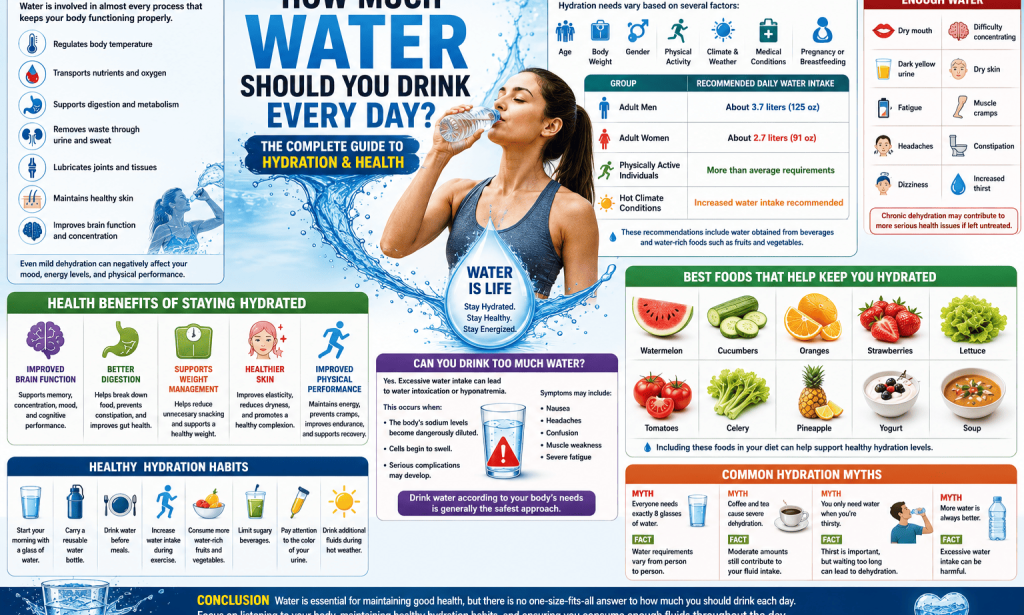
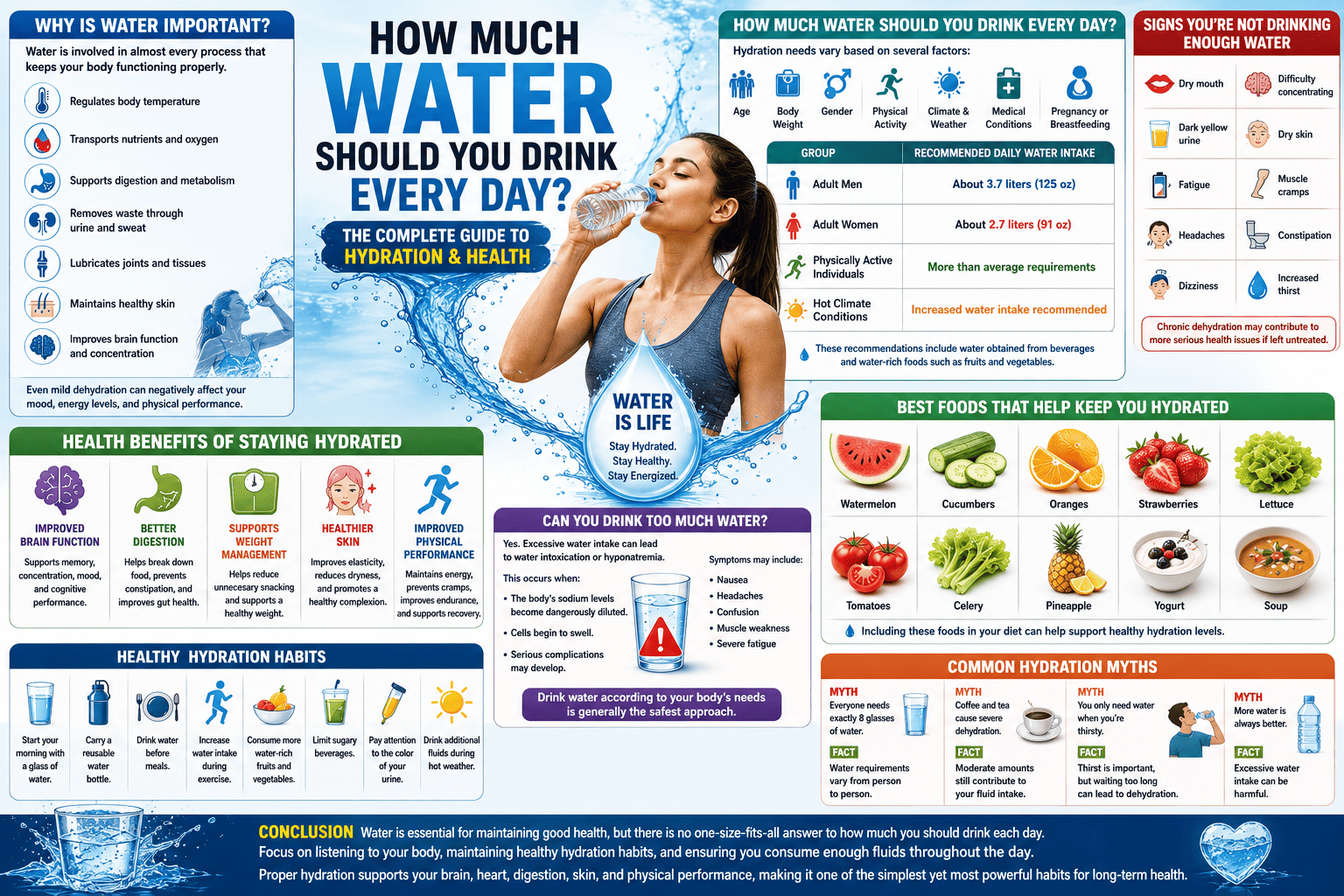
 You've probably heard the popular advice to drink eight glasses of water a day. But is that recommendation scientifically accurate for everyone? The truth is that your daily water needs can vary depending on several factors, including your age, body weight, physical activity level, climate, and overall health.
In this article, we'll explore how much water you should drink every day, common myths about hydration, the health benefits of proper water intake, and the warning signs that indicate you may not be drinking enough water.
Why Is Water Important for Your Body?
Water is involved in almost every process that keeps your body functioning properly. It helps:
- Regulate body temperature.
- Transport nutrients and oxygen.
- Support digestion and metabolism.
- Remove waste products through urine and sweat.
- Lubricate joints and tissues.
- Maintain healthy skin.
- Improve brain function and concentration.
Even mild dehydration can negatively affect your mood, energy levels, and physical performance.
How Much Water Should You Drink Every Day?
There is no universal answer because hydration needs differ from person to person.
Several factors influence your daily water requirements, including:
- Age
- Body weight
- Gender
- Physical activity level
- Climate and weather conditions
- Medical conditions
- Pregnancy or breastfeeding
General hydration guidelines suggest:
| Group | Recommended Daily Water Intake |
|---|---|
| Adult Men | About 3.7 liters (125 oz) |
| Adult Women | About 2.7 liters (91 oz) |
| Physically Active Individuals | More than average requirements |
| Hot Climate Conditions | Increased water intake recommended |
These recommendations include water obtained from beverages and water-rich foods such as fruits and vegetables.
Is Drinking Eight Glasses of Water a Day a Myth?
The "8 glasses a day" rule is one of the most common hydration myths.
While drinking eight glasses of water is a reasonable goal for many people, it is not a scientific requirement for everyone. Your body's hydration needs are highly individual.
Some people may need:
- More water due to exercise or hot weather.
- Less water if they consume water-rich foods regularly.
- Additional fluids during illness or physical exertion.
The best approach is to pay attention to your body's natural thirst signals while maintaining healthy hydration habits.
Signs That You're Not Drinking Enough Water
Your body provides several warning signs when you're dehydrated.
Common symptoms include:
- Dry mouth.
- Dark yellow urine.
- Fatigue.
- Headaches.
- Dizziness.
- Difficulty concentrating.
- Dry skin.
- Muscle cramps.
- Constipation.
- Increased thirst.
Chronic dehydration may contribute to more serious health issues if left untreated.
Health Benefits of Staying Hydrated
Drinking enough water offers numerous health benefits.
Improved Brain Function
Research has shown that proper hydration supports:
- Memory.
- Concentration.
- Mood.
- Cognitive performance.
Even mild dehydration can reduce mental alertness and productivity.
Better Digestion
Water helps break down food and supports the digestive process. Adequate hydration can also help prevent constipation and improve gut health.
Supports Weight Management
Sometimes people confuse thirst with hunger. Drinking water regularly may help reduce unnecessary snacking and support healthy weight management when combined with a balanced diet.
Healthier Skin
Proper hydration contributes to:
- Improved skin elasticity.
- A healthier complexion.
- Reduced dryness.
Although water alone isn't a miracle cure for skin problems, staying hydrated supports overall skin health.
Improved Physical Performance
During exercise, your body loses fluids through sweat. Drinking sufficient water helps:
- Maintain energy levels.
- Prevent muscle cramps.
- Improve endurance.
- Support faster recovery.
Can You Drink Too Much Water?
Yes. Although uncommon, excessive water intake can lead to a condition called water intoxication or hyponatremia.
This occurs when:
- The body's sodium levels become dangerously diluted.
- Cells begin to swell.
- Serious complications may develop.
Symptoms of excessive water consumption may include:
- Nausea.
- Headaches.
- Confusion.
- Muscle weakness.
- Severe fatigue.
Drinking water according to your body's needs is generally the safest approach.
Best Foods That Help Keep You Hydrated
Water-rich foods can contribute significantly to your daily hydration needs.
Examples include:
- Watermelon
- Cucumbers
- Oranges
- Strawberries
- Lettuce
- Tomatoes
- Celery
- Pineapple
- Yogurt
- Soup
Including these foods in your diet can help support healthy hydration levels.
Healthy Hydration Habits
Developing simple daily habits can improve your water intake.
Some practical tips include:
- Start your morning with a glass of water.
- Carry a reusable water bottle.
- Drink water before meals.
- Increase water intake during exercise.
- Consume more water-rich fruits and vegetables.
- Limit sugary beverages.
- Pay attention to the color of your urine.
- Drink additional fluids during hot weather.
Small habits practiced consistently can make a significant difference in your overall health.
Common Hydration Myths
Myth 1: Everyone Needs Exactly Eight Glasses of Water
False. Water requirements vary from person to person.
Myth 2: Coffee and Tea Cause Severe Dehydration
False. Moderate amounts of coffee and tea still contribute to your overall fluid intake.
Myth 3: You Only Need Water When You're Thirsty
Partially true. Thirst is an important signal, but waiting until you're extremely thirsty may indicate mild dehydration.
Myth 4: More Water Is Always Better
False. Excessive water intake can be harmful in certain situations.
Conclusion
Water is essential for maintaining good health, but there is no one-size-fits-all answer to how much you should drink each day. Your hydration needs depend on your body, lifestyle, environment, and activity levels.
Rather than following myths or rigid rules, focus on listening to your body, maintaining healthy hydration habits, and ensuring you consume enough fluids throughout the day. Proper hydration supports your brain, heart, digestion, skin, and physical performance, making it one of the simplest yet most powerful habits for long-term health.
Remember, drinking enough water isn't about reaching a specific number—it's about giving your body what it needs to function at its best.

You must be logged in to post a comment.