
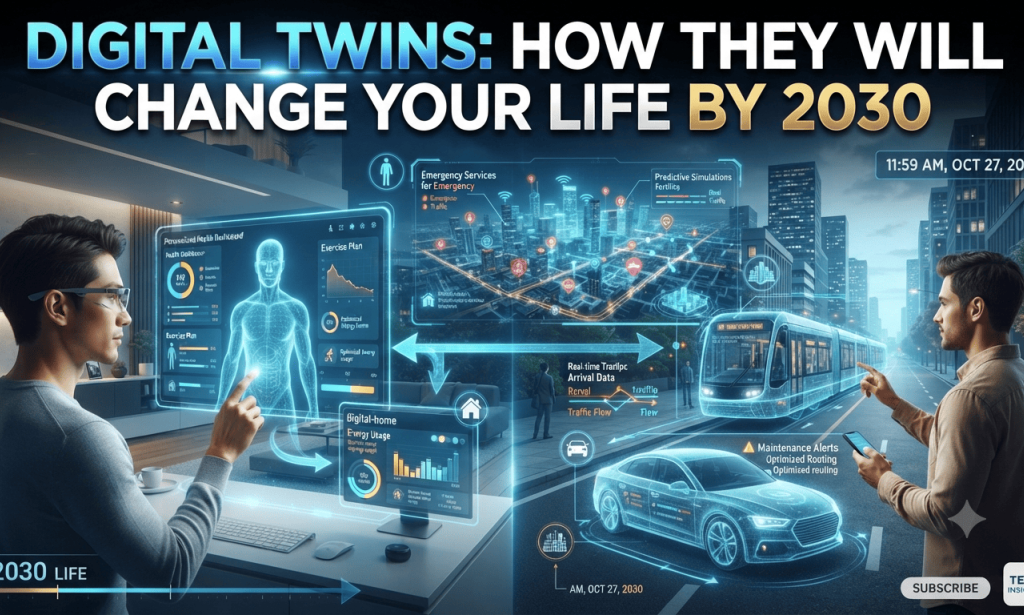
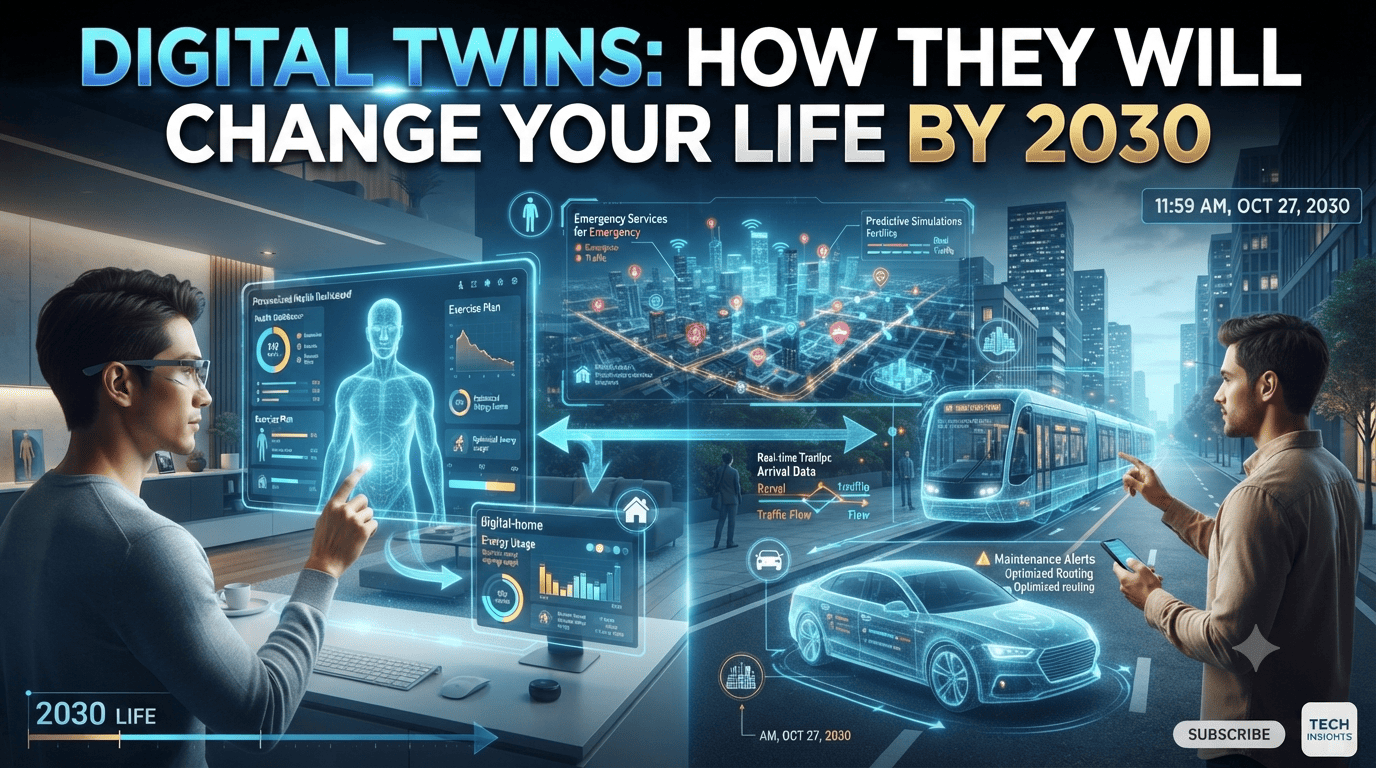
 What Is a Digital Twin?
A digital twin is a virtual representation of a real-world object, system, or person that uses real-time data, artificial intelligence (AI), sensors, and machine learning to simulate and predict behavior.
Simply put:
A digital twin is a living digital copy of something that exists in the real world.
Examples include:
- A digital model of a building
- A virtual copy of a car engine
- A simulation of a factory production line
- A digital version of a human body
- A virtual model of an entire city
Unlike traditional computer models, digital twins continuously receive real-world information and update themselves automatically.
1. Smart Homes Will Become More Intelligent
By 2030, digital twins will completely transform the way we live inside our homes.
Currently, smart devices like smart speakers, thermostats, and security cameras work separately. Digital twins will connect all these devices into one intelligent system.
A digital twin of your home could:
- Predict energy consumption
- Automatically adjust temperature
- Detect maintenance problems
- Improve security
- Reduce electricity costs
For example, your home’s digital twin may notice that your air conditioner is using more energy than normal and predict that it needs maintenance before it breaks down.
Instead of reacting to problems, homes will prevent them before they happen.
2. Healthcare Will Become More Personalized
One of the biggest impacts of digital twins will happen in healthcare.
By 2030, doctors may use digital twins of patients to understand their health conditions better.
A personal health digital twin could include:
- Heart activity
- Blood pressure patterns
- Genetic information
- Lifestyle habits
- Exercise data
- Sleep patterns
Doctors could test different treatments on a digital version of a patient before applying them in real life.
For example:
A doctor could simulate how your body might respond to a specific medicine before prescribing it.
This could lead to:
- Earlier disease detection
- More accurate treatments
- Fewer medical mistakes
- Personalized medicine
3. Digital Twins Will Revolutionize Transportation
Transportation systems will become smarter through digital twins.
Cities will create virtual copies of:
- Roads
- Public transport systems
- Traffic patterns
- Parking areas
- Bridges and tunnels
These digital cities will analyze traffic in real time and find solutions before problems happen.
For example:
If a city’s digital twin predicts heavy traffic in a specific area, traffic signals can automatically adjust to reduce congestion.
Self-driving vehicles will also use digital twin technology to simulate routes, weather conditions, and possible dangers before traveling.
4. The Rise of Digital Twin Cities
By 2030, many cities around the world will use digital twins to improve urban life.
A digital twin city is a virtual copy of a real city that collects information from millions of sensors.
It can help manage:
- Traffic
- Energy usage
- Waste management
- Emergency response
- Climate challenges
Governments can test decisions in a virtual environment before making real changes.
For example:
Before building a new highway, city planners can use a digital twin to predict its effects on traffic, pollution, and neighborhoods.
This will make cities more efficient and sustainable.
5. Workplaces Will Become More Efficient
Digital twins will also change how businesses operate.
Companies will create virtual copies of:
- Factories
- Offices
- Supply chains
- Business processes
These digital models will help companies identify problems, improve productivity, and reduce costs.
For example:
A factory digital twin can predict equipment failures before machines stop working.
Benefits include:
- Less downtime
- Lower expenses
- Faster production
- Better decision-making
Remote workers may also benefit from digital twin technology through realistic virtual offices and collaboration environments.
6. Personal Digital Twins: Your Digital Assistant of the Future
One of the most interesting possibilities is the creation of personal digital twins.
Your digital twin could understand:
- Your daily habits
- Your preferences
- Your goals
- Your schedule
- Your health patterns
It could help you:
- Plan your day
- Make better decisions
- Manage finances
- Improve productivity
For example:
Your digital twin might suggest:
“You usually feel tired after working late. Consider completing difficult tasks earlier today.”
It would act like an intelligent personal advisor based on your own data.
7. Education Will Become More Personalized
Digital twins could transform learning by creating personalized education systems.
Every student could have a learning digital twin that understands:
- Learning speed
- Strengths
- Weaknesses
- Preferred learning style
Teachers could use this information to create customized lessons.
Instead of every student following the same learning method, education could become individually optimized.
Challenges and Privacy Concerns
Although digital twins offer many benefits, they also create challenges.
1. Data Privacy
Digital twins require large amounts of personal information.
Questions will arise:
- Who owns this data?
- How is it protected?
- Who can access it?
Strong privacy regulations will be necessary.
2. Cybersecurity Risks
Because digital twins control important systems, they could become targets for hackers.
Protecting these systems will be a major priority.
3. Technology Costs
Creating advanced digital twins requires:
- Powerful computing systems
- Sensors
- AI technology
- Data infrastructure
Making this technology affordable will be important for widespread adoption.
The Future of Digital Twins Beyond 2030
Digital twins are expected to become a foundation of the future digital world.
They will connect physical reality with artificial intelligence, creating smarter environments and more personalized experiences.
In the future, we may see:
- Digital twins of entire countries
- AI-powered personal health models
- Fully simulated businesses
- Virtual versions of ourselves
The boundary between the physical and digital worlds will continue to disappear.
Conclusion
Digital twins will change everyday life by making the world more predictive, personalized, and efficient.
By 2030, they will influence how we live in our homes, receive healthcare, travel through cities, work in companies, and make personal decisions.
The biggest change will be this:
Instead of waiting for problems to happen, technology will help us predict and prevent them.
Digital twins will not just create virtual copies of the world — they will help us build a smarter future.
SEO Keywords:
Digital Twins Technology 2030, Future Technology Trends, AI Digital Twins, Smart Cities Future, Digital Twin Healthcare, Smart Home Technology, Artificial Intelligence Future, Technology Revolution 2030.

You must be logged in to post a comment.