
 What Is Climate Change?
Climate change refers to long-term changes in Earth's temperature, weather patterns, and environmental conditions.
While Earth's climate has naturally changed throughout history, modern climate change is happening much faster due to human activities.
The main causes include:
- Burning fossil fuels
- Deforestation
- Industrial activities
- Pollution
- Increased greenhouse gas emissions
These activities release gases such as carbon dioxide (CO₂) into the atmosphere, trapping heat and causing global temperatures to rise.
Understanding Global Warming
Global warming is one of the main effects of climate change. It refers to the gradual increase in Earth's average temperature.
The greenhouse effect naturally keeps Earth warm enough for life, but excessive greenhouse gases have strengthened this effect.
Major greenhouse gases include:
- Carbon dioxide
- Methane
- Nitrous oxide
- Water vapor
When these gases increase, more heat remains trapped in the atmosphere, leading to rising temperatures.
Causes of Climate Change
1. Burning Fossil Fuels
Coal, oil, and natural gas are major sources of energy worldwide. However, burning these fuels releases large amounts of carbon dioxide.
Common sources include:
- Cars and transportation
- Power plants
- Factories
- Industrial machines
Reducing fossil fuel use is one of the most important steps in fighting climate change.
2. Deforestation
Forests absorb carbon dioxide and help regulate Earth's climate.
When forests are destroyed:
- More carbon enters the atmosphere
- Biodiversity decreases
- Natural ecosystems become weaker
Protecting forests is essential for maintaining environmental balance.
3. Industrial Pollution
Industries produce greenhouse gases through manufacturing processes and energy consumption.
Scientists are working on cleaner technologies to reduce industrial emissions.
Effects of Climate Change on Our Planet
Climate change affects both nature and human societies.
1. Rising Global Temperatures
Increasing temperatures can cause:
- More heat waves
- Changing weather patterns
- Increased health risks
Extreme heat can affect agriculture, water supplies, and human safety.
2. Melting Glaciers and Rising Sea Levels
Higher temperatures are causing glaciers and polar ice to melt.
This leads to:
- Rising ocean levels
- Coastal flooding
- Threats to island communities
Scientists are monitoring these changes to predict future impacts.
3. Extreme Weather Events
Climate change is increasing the frequency and intensity of:
- Storms
- Floods
- Droughts
- Wildfires
These events can damage homes, infrastructure, and ecosystems.
4. Impact on Wildlife
Many animals and plants depend on specific environments. Climate change can disrupt habitats and threaten biodiversity.
Some species face challenges due to:
- Temperature changes
- Food shortages
- Habitat loss
Protecting nature is an important part of climate solutions.
Climate Change and Human Health
Climate change also affects human health in many ways.
Possible impacts include:
- Heat-related illnesses
- Spread of certain diseases
- Poor air quality
- Food and water shortages
Scientists are studying these risks and developing strategies to protect communities.
Renewable Energy Solutions
One of the most important solutions to climate change is transitioning to clean energy.
1. Solar Energy
Solar power uses sunlight to generate electricity.
Benefits include:
- Clean energy production
- Reduced carbon emissions
- Sustainable power generation
2. Wind Energy
Wind turbines convert wind movement into electricity.
Wind energy is becoming an important alternative to fossil fuels.
3. Hydropower
Hydropower uses moving water to produce electricity.
It is one of the oldest forms of renewable energy.
4. Green Hydrogen
Green hydrogen is an emerging clean energy technology that may help reduce emissions in industries and transportation.
Climate Technology Innovations
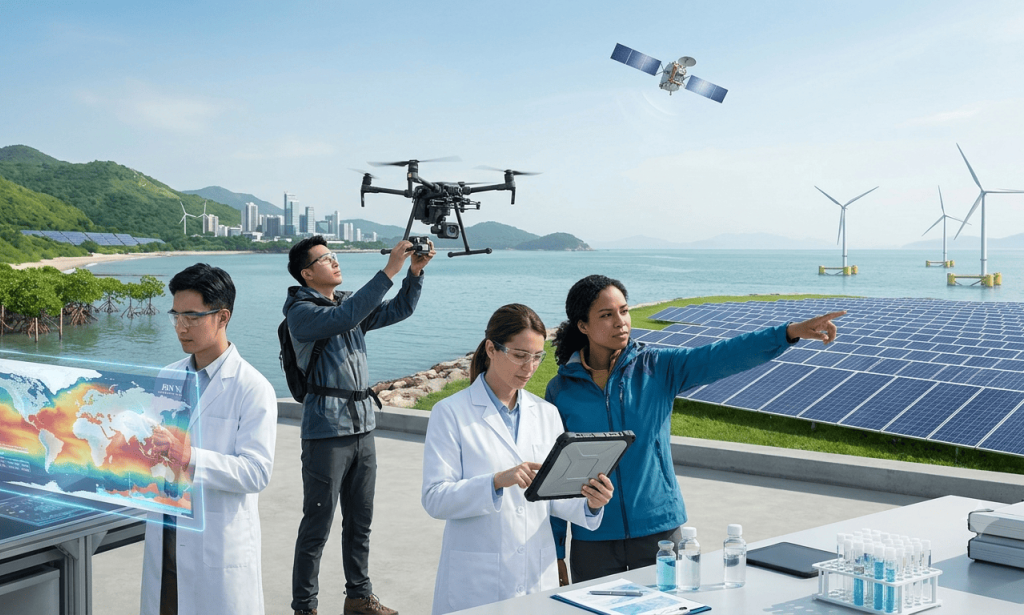
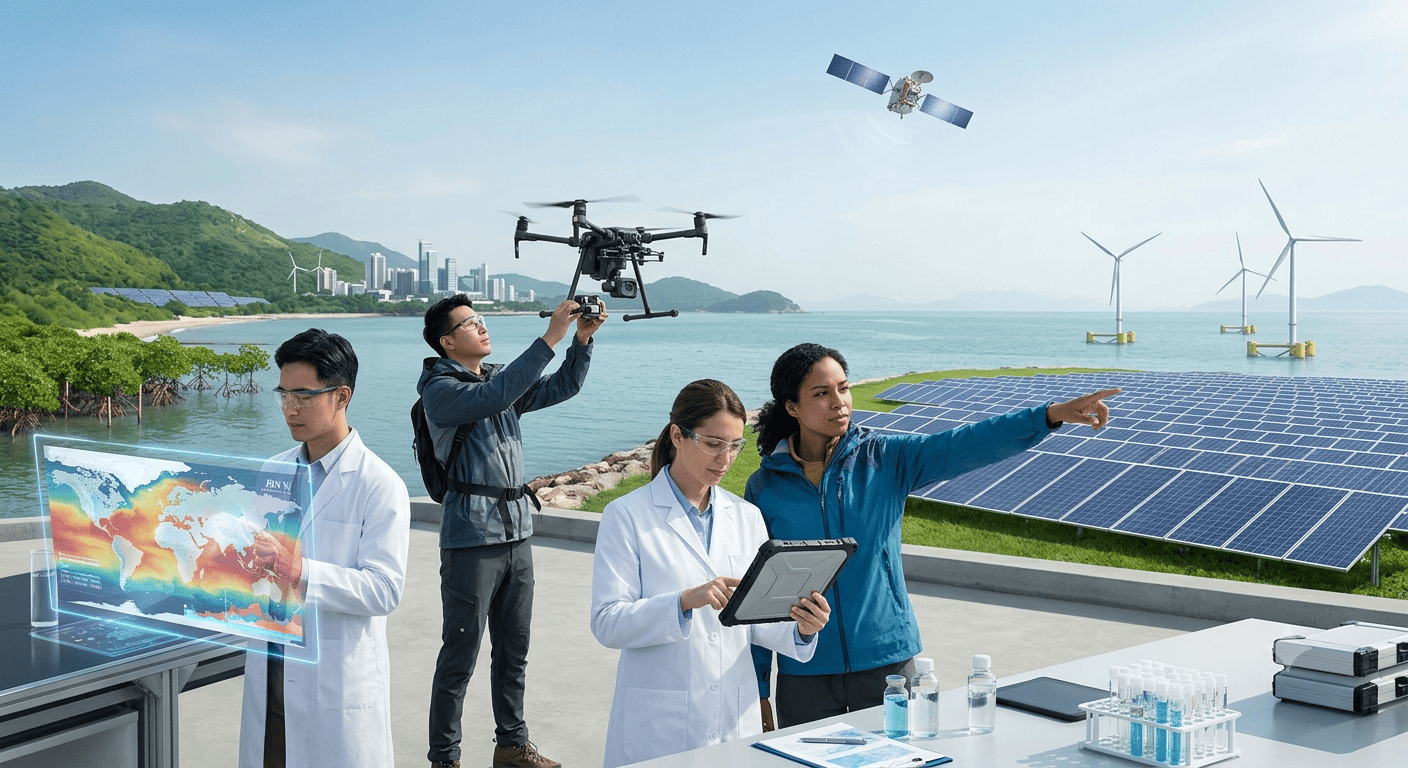
Modern science and technology are creating new solutions to fight climate change.
1. Artificial Intelligence for Climate Research
AI helps scientists:
- Predict weather patterns
- Analyze climate data
- Monitor environmental changes
AI allows researchers to make better climate predictions.
2. Carbon Capture Technology
Carbon capture systems remove carbon dioxide from industrial emissions and store it safely.
This technology may help reduce greenhouse gases.
3. Smart Energy Systems
Smart technology helps improve energy efficiency through:
- Smart grids
- Energy monitoring
- Automated systems
These solutions reduce unnecessary energy use.
4. Sustainable Agriculture Technology
Technology is helping farmers produce food while reducing environmental impact.
Examples include:
- Smart farming systems
- Water-saving techniques
- Precision agriculture
How Science Can Protect the Planet
Science plays a major role in creating solutions for environmental challenges.
Scientists help by:
- Studying climate patterns
- Developing clean technologies
- Protecting ecosystems
- Creating environmental policies
International cooperation between researchers, governments, and organizations is necessary to create long-term solutions.
Individual Actions to Fight Climate Change
Everyone can contribute to protecting the environment.
Simple actions include:
1. Saving Energy
- Turn off unused devices
- Use energy-efficient appliances
- Reduce unnecessary electricity use
2. Using Sustainable Transportation
Choose:
- Public transportation
- Cycling
- Walking
- Electric vehicles
3. Reducing Waste
Practice:
- Recycling
- Reusing products
- Avoiding unnecessary plastic
4. Protecting Nature
Planting trees and protecting forests can help reduce carbon emissions.
Challenges in Fighting Climate Change
Although many solutions exist, several challenges remain.
1. High Costs
Developing clean technologies requires significant investment.
2. Energy Transition Difficulties
Moving away from fossil fuels requires major changes in industries and infrastructure.
3. Global Cooperation
Climate change is a worldwide problem that requires cooperation between countries.
4. Public Awareness
Educating people about climate change is essential for creating meaningful action.
The Future of Planet Earth
The future of Earth depends on the choices humanity makes today.
Future climate solutions may include:
- Advanced renewable energy systems
- More efficient transportation
- Sustainable cities
- AI-powered climate monitoring
- Improved environmental protection
Science and technology will continue playing a major role in creating a healthier and more sustainable planet.

You must be logged in to post a comment.