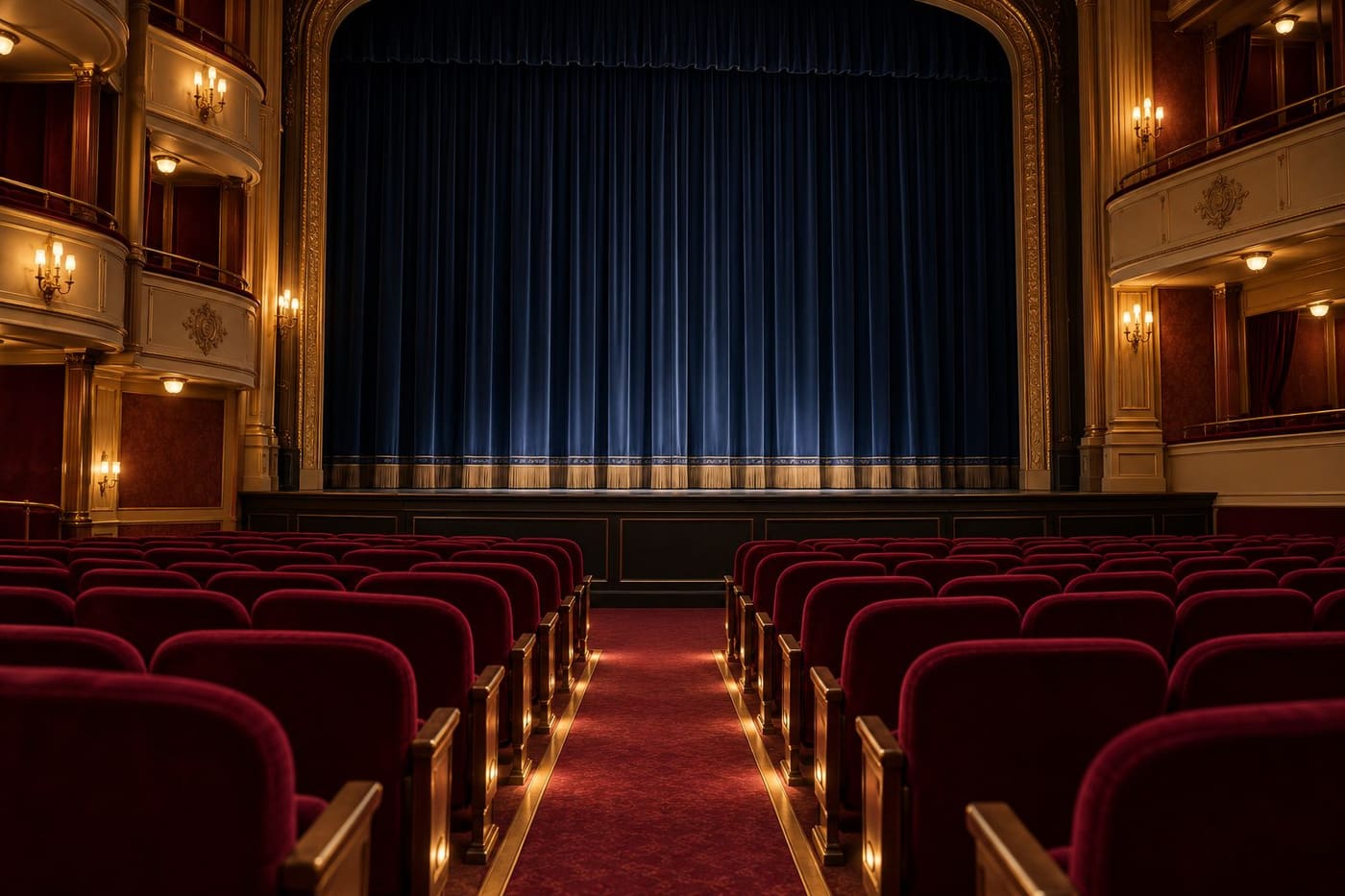
A theatre visit begins well before the curtain rises. You choose a particular performance, a seat and a journey, and those choices affect how comfortably you can enjoy the show. If you have never booked before, the unfamiliar part may be the booking screen rather than the play itself.
You do not need to become a theatre expert to attend. You do need to know which details belong to your chosen venue and date. A useful plan separates confirmed information from assumptions, leaving room for the part of the evening you came for: a live performance shared with an audience.
This guide uses British theatre organisations as examples, with information checked on October 27, 2026. It does not recommend a particular ticket, claim to have attended a production or promise that a facility is available everywhere. The planning exercises are original illustrations. Confirm the current arrangements directly with the theatre before paying or travelling.
Start with the kind of evening you want
Before searching every available show, decide what would make the visit worthwhile for you. You might want a lively musical, a small-scale drama, a familiar story or an unfamiliar work that gives you something to discuss afterwards. None is a required first step. The best starting point is an interest you actually have.
Then add practical constraints. Which dates can everyone attend? How far can you comfortably travel? Do you need a particular performance format or a route without stairs? Would an afternoon performance fit better than a late evening return? These questions narrow the search without pretending that taste can be reduced to a ranking.
Separate a preference from a requirement. Sitting near the centre might be a preference; seeing a caption display clearly may be a requirement. Knowing the difference helps you evaluate a seat that looks attractive on a plan but does not meet the purpose of the visit.
For a group, ask each person about their requirements before one person books. A simple shared note can contain the date options, maximum total cost and essential arrangements. Avoid making someone explain a private condition to the whole group when a practical requirement is enough to plan around.
Read the production page before the seat map
Check the title, venue, performance date and start time together. A production may have more than one location or several performances in a week. Save the particular listing you intend to book so that a later search result does not accidentally replace it with a different date.
Look for the published running time, whether an interval is included, age guidance and content information. If something essential is missing, ask the venue. A familiar title does not tell you every detail of a particular staging, and a cast recording or film adaptation is not a complete description of the live production.
The [Royal Shakespeare Company's first-visit guidance](https://www.rsc.org.uk/your-visit/first-time-visit) illustrates why venue information matters. It says running times differ between plays and directs visitors to its box office or front-of-house team for details. It also welcomes comfortable clothing, including casual clothes, rather than requiring visitors to dress formally.
Treat those points as the RSC's guidance, not a rule for every event. A special occasion or another venue may publish different arrangements. Reading the relevant page is more reliable than treating a general online comment about theatre etiquette as a condition of entry.
Choose a performance format before choosing a seat
Access arrangements can be tied to a specific performance. [Official London Theatre's access page](https://officiallondontheatre.com/access/), operated by the Society of London Theatre, provides routes to audio-described, British Sign Language, captioned and relaxed performance listings. It also distinguishes its performance guide from its venue information guide.
That distinction is useful when planning. The building's facilities and the support offered at a particular show are separate questions. A suitable entrance does not by itself confirm the format of the performance, and an access performance listing does not answer every question about the journey to your seat.
Use the listing to identify a possible date, then read the theatre's description of what is provided. Ask about the details that matter to you rather than relying only on a label. If a viewing position, device, booking process or arrival arrangement is relevant, confirm it before completing the purchase.
You can prepare a short enquiry without disclosing unnecessary personal information: I am considering this date and need to know whether this seating area works with the advertised service. Include the exact production and time so the answer relates to the right performance. Keep the reply with your booking information.
Read a seat description as carefully as its price
A seat map is a starting point, not the whole experience. Look for notes attached to the particular seat: its view, access route and any stated limitation. If a description is unclear, ask the box office to explain it in ordinary language. A lower price can be worthwhile, but only if you understand what you are choosing.
Think about what you need to see. A wide view of the stage, proximity to performers and visibility of an access feature may lead to different choices. There is no universal best row that applies across buildings and productions. A seat that suited a friend at another theatre may tell you little about this one.
For example, imagine two fictional options at the same total price. One is closer to the stage but has a stated view restriction; the other is farther back with a clearer overall view. The useful comparison is not simply which seat is nearer. It is which compromise you understand and prefer for this visit.
If you need to transfer from a mobility aid, use a wheelchair space or avoid particular stairs, confirm the actual route and arrangements. Do not infer them from the floor name. The venue's staff can explain its building; an attractive diagram cannot substitute for those details.
Use a real venue example without generalising it
[Newcastle Theatre Royal's access information](https://www.theatreroyal.co.uk/plan-your-visit/access-information/) describes different routes and facilities within its building. Its page distinguishes step-free stalls seating from upper seating areas reached by stairs, and directs wheelchair-space bookings through its access contact rather than the ordinary online process at the time checked.
The page also provides information about hearing support and assistance-dog arrangements. These are examples of the level of detail worth checking, not a promise that another theatre offers the same facilities or booking method. Availability and suitability still need confirmation for the intended visit.
When comparing venues, write the question in a way that can be answered precisely. Can I reach the selected seat without using stairs is clearer than is the theatre accessible. Likewise, where is the relevant entrance and how do I arrange the advertised equipment are more useful than assuming the general access label covers every step.
Keep the confirmed answer alongside the seat reference. If the venue suggests a different location, compare that option before paying. The aim is to remove an avoidable uncertainty while choices are still open, rather than trying to solve it in a busy foyer immediately before the show.
Compare the total visit cost
Set a total that includes more than the advertised ticket amount. Depending on your plan, relevant items could include booking charges, transport, food or a programme. Check which costs are required and which are optional. You can enjoy a performance without buying every extra offered during the booking process.
Here is a fictional comparison, not a current offer. Two tickets at £28 each total £56. Add an invented £4 booking charge and £12 shared transport cost, and the planned total is £72 before optional spending. If the group has agreed £80, only £8 remains within that plan. The arithmetic makes the trade-off visible.
Now compare a different date with two £24 tickets but £22 transport and the same £4 charge. The total is £74. The cheaper tickets do not produce the cheaper outing in this invented example. Real prices and charges must come from the actual booking and transport providers.
Read the terms attached to the purchase, including any exchange or cancellation conditions, before committing. Do not assume an unused ticket can be refunded or that an offer applies to every seat. If a condition affects whether you can attend, resolve it while you can still choose another option.
Build the journey around the actual performance
Work backwards from the theatre's recommended arrival arrangements. Include time to find the correct entrance, complete any entry checks and reach your seat. Do not turn a general planning suggestion into a universal arrival deadline; use the venue's instructions for the event you booked.
Plan the return journey as well as the outward one. Check the published running time and whether it includes the interval, then allow for leaving the building and reaching your transport. If the last service is close to the expected finish, investigate an alternative before the day rather than hoping the show will end early.
Use a shared meeting point that is specific enough to find. The theatre can be an ambiguous instruction if a building has several entrances. Agree what happens if members of the group arrive separately, and make sure the person holding the tickets understands how admission will work.
Keep the ticket accessible in the format the venue requires. Check the date and performance time again before setting off. If a device is involved, plan for its practical needs without assuming a screenshot is accepted where a provider requires a different format. Follow the actual ticket instructions.
Know whom to ask when the plan changes
If you are delayed, contact or speak to the venue's team rather than assuming you can enter immediately. The RSC's first-visit page directs late arrivals and people who need to leave during the performance to its front-of-house assistants. Their role is to help with the circumstances of that show.
The same page asks audiences not to photograph or record the performance, while permitting photographs before it. It also describes its own food and drink arrangements. Check your venue's rules and announcements; permission in one place does not establish permission elsewhere.
For an unexpected problem, explain the practical issue briefly: you cannot locate the entrance on your confirmation, need help finding the seat or have a question about the arranged service. A staff member can respond more usefully to that than to a guess about what usually happens in theatres.
Leave some room in the plan for ordinary uncertainty. A trip does not become unsuccessful because you needed directions or asked where to go. Preparation should make it easier to get help, not create a private test in which you feel obliged to know everything before arriving.
Enjoy the performance without assigning yourself homework
You can read a short official synopsis if unfamiliar names or a setting would otherwise distract you. You can also choose to discover the story in the room. Decide how much advance information you want, especially if reviews may reveal developments you would prefer to encounter during the performance.
During the show, let your attention move between the performers and the wider staging. You do not need to identify every technical decision or understand every reference. If something puzzles you, it can become a question for later rather than a reason to stop following what is happening.
Afterwards, start a conversation with a concrete moment you remember. Perhaps a scene changed the mood, a design choice surprised you or two people interpreted an ending differently. Personal responses do not have to agree to be worth discussing. Distinguish what you noticed from an assumption about the creators' intentions.
If you write a public comment, avoid presenting a single visit as a universal judgement about every seat or performance. Identify the production and date where relevant, keep spoilers clearly signalled and describe your experience honestly. This guide itself reports no attendance or first-hand assessment of any show.
Conclusion: settle the practical questions, then leave space for the show
A useful first-theatre plan connects the production, the particular performance, the seat and the journey. Confirm requirements early, compare the whole outing cost and keep the venue's instructions with the booking. Those steps make the unfamiliar parts more manageable without prescribing what kind of theatre you should like.
Once the practical questions are answered, you can arrive as an audience member rather than as an expert. Enjoy what interests you, ask for help when needed and use the experience to make your next choice more confidently.
Sources and research note
Checked October 27, 2026: [Royal Shakespeare Company first-visit guidance](https://www.rsc.org.uk/your-visit/first-time-visit), [Official London Theatre access resources](https://officiallondontheatre.com/access/) and [Newcastle Theatre Royal access information](https://www.theatreroyal.co.uk/plan-your-visit/access-information/). Source summaries are brief and venue-specific. The planning exercises and prices are fictional, with no live availability or refund promise. The cover is an original AI-generated conceptual theatre interior, not a photograph of a named venue or production.