Wildwood gives people searching for LAIKA a specific film to look for, rather than another rerelease of an older studio title. The US distributor announced an October 23, 2026 theatrical opening. That date has passed at the time of this guide, but a national release date does not tell you which cinema near you is showing it today. Start with a current local listing before making plans.
This is a researched viewing guide, not a review based on attending a screening. It separates the official premise and creative credits from practical suggestions for choosing a performance, approaching an adaptation and noticing animation. There are no ending spoilers or claims that every viewer will respond in the same way. The aim is to help you arrive with useful context while leaving the film room to introduce its own world.
What Wildwood is, and where LAIKA fits
LAIKA is the studio; Wildwood is the film. Fathom Entertainment's announcement names Travis Knight as director and describes a US theatrical distribution partnership with Fathom, alongside FilmNation Entertainment for international sales. These roles explain why a search may surface several company names. A distributor's booking information and a studio's creative announcement answer different questions, even when both concern the same release.
The official premise follows Prue McKeel after birds take her baby brother into a fantastical forest near Portland. The Little Theatre's synopsis describes a rescue journey among talking animals and competing powers. That is enough context to understand the starting point without reading an account of later revelations. Viewers who prefer minimal advance information can stop at that premise and avoid detailed plot summaries until after watching.
For a first visit, it helps to keep three names distinct:
- LAIKA identifies the company making the film.
- Wildwood identifies the story and the title to search in cinema listings.
- Your chosen exhibitor identifies the actual location, performance and available facilities.
Confusing these levels can lead to an ordinary planning mistake: finding a nationwide announcement and assuming it is a local booking page. Follow the release information to the venue, then check the venue's own details. A studio's previous films may help you recognize the name, but they do not establish the tone, content or accessibility arrangements of this particular screening.
The book connection without a reading assignment
Travel Portland's official guide identifies the source novel as Colin Meloy's 2011 Wildwood, illustrated by Carson Ellis. It also explains the story's relationship to Portland places. Those literary origins are useful context; they are not a requirement to finish a novel before buying a cinema ticket. A film and an illustrated book give an audience different ways to encounter a story.
If you have not read the book, a productive approach is to follow the film's own introductions. Notice what the central character wants, what information she has and what stands between her and that goal. You do not need to pause mentally at every unfamiliar name. A fantasy can explain its rules gradually, and uncertainty can be part of the experience rather than a sign that you missed homework.
If you have read it, consider postponing the checklist of differences until the credits. A changed scene can be discussed in terms of its purpose: does it establish a relationship, clarify a decision or change the pace? That is a more precise conversation than treating every omission as an automatic failure. It also makes space for a reader to dislike a change while explaining why it mattered.
One useful comparison exercise is to choose a single moment after watching. Describe how you remember encountering it on the page, then describe what the film communicated through images or sound. Keep those descriptions separate before judging the result. This is a suggested method for discussing adaptations, not a claim about a particular alteration in Wildwood. No scene-by-scene comparison was performed for this guide.
What stop-motion means
The British Film Institute describes stop-motion as photographing physical objects after small changes in position, then showing the images in sequence to create movement. Puppets and miniature props can therefore become performers through carefully controlled adjustments. The principle is simple enough to demonstrate at home, even though a professional feature involves far more elaborate work than a beginner's experiment.
Knowing that basic process gives you a useful viewing question: how does movement communicate intention? A character turning towards a sound, hesitating or shifting weight can tell you something before dialogue explains it. You can notice those choices without identifying the machinery behind every shot. Appreciation does not require guessing the size of a puppet or how many hours a particular movement took.
It is also sensible to avoid turning a general explanation into an unsupported claim about this production. This guide has not verified a shot-by-shot breakdown of Wildwood's techniques. It does not assert that every visible element was made in one way, that digital tools were absent or that a particular sequence required a specified number of days. Those details would need direct production evidence.
The same caution applies to promotional language. Descriptions of ambition and craftsmanship tell you how a film is being presented, but your response can still depend on story, pacing, sound and character. A labor-intensive process deserves accurate description; it does not oblige an audience to deliver a predetermined verdict. Let the craft inform your attention without deciding your opinion in advance.
Three things to notice while watching
First, watch how the frame directs attention. Ask where your eye goes when a scene begins and what changes when a character moves. Color, contrast and composition can help organize a complicated setting. You do not have to inspect every background detail to enjoy the scene. Sometimes the useful observation is simply that one small movement made a busy image easy to follow.
Second, pay attention to pauses. A hesitation can suggest that a character is uncertain, calculating or listening. Those interpretations depend on context, so treat your first impression as a possibility rather than a fact. After the scene develops, ask whether the performance supported that impression or deliberately changed it. This can make a later conversation about animation more specific than saying only that it looked impressive.
Third, listen to the relationship between sound and space. Does a sound seem close, distant or outside the frame? Does the scene leave room for quiet? These are open viewing prompts, not reports of particular Wildwood sequences. They are useful because they connect technical choices to your experience of a story, without requiring advance spoilers or specialist vocabulary.
You might choose just one of these questions for a first viewing. Trying to evaluate every detail can turn a cinema visit into an examination. If you become absorbed in the story and forget the questions, that is a perfectly reasonable outcome. Afterwards, return to one moment you remember and explain what made it clear, surprising, unsettling or moving for you.
Choose the performance, not just the date
Fathom's October 15 announcement distinguished October 19 fan previews from the October 23 general release. The previews are now in the past. Material advertising an early event can remain visible in search results, so check the date on the actual booking screen rather than assuming every promotional feature applies to a current performance.
The distributor also described selected premium presentations. Availability depends on participating locations. A format mentioned in a national announcement is not a promise that your nearest venue offers it, and a standard performance may be the most practical choice for your group. Compare the actual options by time, location, comfort and cost instead of treating an advertised format as an automatic upgrade for everyone.
Before committing to a plan, check:
- The cinema's address and the selected calendar date.
- The language and any caption or audio information attached to that performance.
- The auditorium or format shown on the booking page.
- The total price and any conditions relevant to changing the booking.
- The travel arrangements that make sense for the likely finish time.
This is a planning checklist, not confirmation of a particular venue's policies. Read the details presented by the cinema you intend to use. If an essential item is unclear, ask that venue directly before paying. A general film page may describe the title while a separate performance page carries the details that determine whether the visit works for you.
Accessibility and duration need local checks
The Little Theatre's Wildwood page lists caption-device and hearing-assistance options for its screenings. That is useful evidence about one exhibitor, not a nationwide guarantee. If you rely on a particular facility, check its availability for the selected showing and how to obtain or use it. A label on a general film listing is a starting point for that conversation.
Runtime also deserves care. The Little lists two hours and twelve minutes, while another exhibitor listing encountered during research displays a different duration. This guide does not resolve that discrepancy by silently choosing one as a universal figure. For practical planning, check your venue's listing and ask about the expected end of the performance if timing is important.
Consider a hypothetical group choosing between two evening shows. One starts earlier but leaves a tight connection for the journey home; the other is closer and has clearly described accessibility arrangements. Comparing only the start times misses the real decision. The better choice depends on the group's needs, the venue's confirmed information and enough room for ordinary delays. This example describes no actual booking or guaranteed travel schedule.
A similar approach helps when someone needs to step out or prefers a particular seat. Discuss the practical need with the cinema rather than assuming all auditoriums are arranged alike. Keep personal requirements separate from the film's advertised qualities. An appealing trailer cannot answer whether a specific performance is comfortable and accessible for the people attending it.
Animation does not decide family suitability
A handmade visual style is not, by itself, an age recommendation. The Little Theatre lists Wildwood as PG-13. That attributed listing is more useful than assuming that talking animals or an illustrated-book connection make the film suitable for every child. Individual reactions to tension, separation and unfamiliar creatures can differ, even among viewers of the same age.
For a family decision, begin with the official premise, the relevant local classification and any content information supplied by the exhibitor or classification authority. Avoid promising a child that nothing will be frightening based only on the animation style. Equally, there is no need to invent troubling scenes that have not been verified. Keep the discussion specific to known information and the child's own preferences.
An adult can explain the starting premise in plain language and ask whether that kind of adventure sounds appealing. The answer may be enthusiasm, hesitation or a request to wait. A useful cinema plan respects that response rather than treating attendance as compulsory because a release is attracting attention. This guide offers no personal assessment of the film's intensity and no substitute classification.
Portland on the page and a real place to visit
Travel Portland connects the novel's imagined geography with places including Forest Park and the St. Johns Bridge. That relationship offers an interesting discussion about how fiction transforms familiar surroundings. A real place can supply an image or a name while the story gives it a different purpose. Recognizing the connection does not mean that every fictional route maps onto a practical walk.
For readers already in Portland, the book connection may encourage a separate look at local history or public spaces. Keep that activity distinct from a cinema visit and consult current official visitor or park information before making an outing. This article has not checked trail conditions, closures, transport services or the accessibility of a proposed route. It supplies literary context rather than a travel itinerary.
A simple after-film activity needs no journey at all: choose a familiar place in your own area and imagine how a story might rename it. Ask which visible feature would survive the transformation and which rule would change. That original discussion exercise can make the difference between a real landscape and an invented setting concrete without revealing additional plot or reproducing the book's illustrations.
Leave room for your own verdict
Wildwood can be approached through its source book, its studio or the immediate attraction of a fantasy adventure. None of those entry points requires borrowing a promotional verdict. The most useful preparation is modest: understand the premise, verify a local performance and decide which practical arrangements matter to your group. Then let the film make its case.
Afterwards, a specific observation is worth more than a borrowed superlative. You might discuss a character choice, the clarity of a setting or how a movement changed your understanding of a moment. Someone else may notice something different. That disagreement can become a worthwhile conversation when it rests on what each person actually saw, rather than what advance publicity said everyone should feel.
Sources and research note
Researched October 26, 2026. Discovery came from the US Google Trends RSS snapshot saved that day, under LAIKA studios. The sources below support release information, literary context, a local exhibitor example and the general animation explanation. Viewing prompts and hypothetical planning examples are original editorial suggestions; no screening attendance, ticket purchase or first-hand film review is claimed.
- [LAIKA and Fathom distribution announcement](https://www.fathomentertainment.com/news/13748-2/)
- [Fathom's dated preview and release announcement](https://www.fathomentertainment.com/news/wildwood-fan-first-screenings-announced/)
- [The Little Theatre's Wildwood listing](https://thelittle.org/wildwood/)
- [Travel Portland's literary-location guide](https://www.travelportland.com/experience-the-real-wildwood-in-portland/)
- [BFI's explanation of stop-motion animation](https://www.bfi.org.uk/lists/10-great-stop-motion-animated-films)
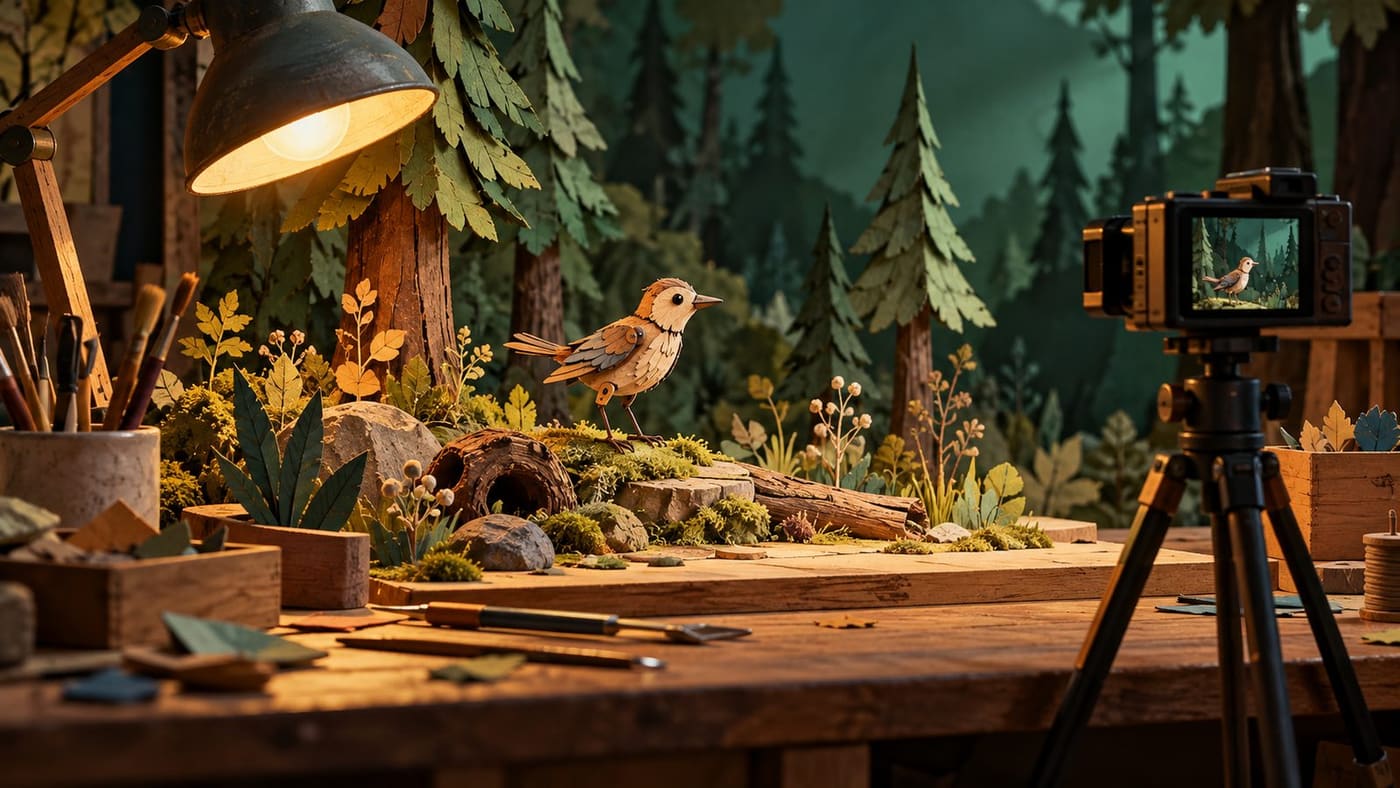
The accompanying original AI-generated conceptual illustration shows an imagined miniature woodland workbench. It is not a Wildwood scene, a LAIKA production photograph or evidence of the film's actual equipment. Local schedules and facilities can change; consult the selected venue before booking.