Taobh Thiar den Roth has a confirmed place on the 2026 Oireachtas shortlist for Television Series of the Year. That makes this a useful moment to discover the Donegal International Rally documentary, but a nomination and a streaming link answer different questions. The award listing confirms recognition; it does not confirm that every episode can currently be played. This guide separates the verified programme information from practical suggestions for watching and discussing a sports documentary.
The nomination, precisely stated
The [official Oireachtas shortlist](https://www.antoireachtas.ie/gradaim-chumarsaide/gearrliosta-2026.html) names Taobh Thiar den Roth with LIGID LÉIRIÚCHÁIN in Sraith Teilifíse na Bliana, the television-series category. It schedules the awards ceremony for 28 October 2026 at the Gleneagle Hotel in Killarney. This article was checked on 26 October, before that ceremony. It describes a shortlisted series, not an announced winner.
There are three dates worth keeping separate when reading coverage: the programme’s announcement, the event depicted on screen and the awards ceremony. A new nomination does not make the original production a new live sporting broadcast. Equally, an older programme announcement is not evidence of a current repeat transmission. Check the relevant source for the particular claim you intend to share.
What the broadcaster has confirmed
TG4’s [29 April 2026 announcement](https://www.tg4.ie/en/information/press/press-releases/2026-2/new-series-on-tg4-of-the-donegal-international-rally/) describes a four-part documentary produced and directed by Sonia Nic Giolla Easbuig of LIGID Léiriúcháin Teo. Its announced subjects include competitors, co-drivers, mechanics, safety crews and organisers. The broadcaster also identifies the production with Gaoth Dobhair and makes a specific claim that it was the first fully commissioned television series produced entirely within that Donegal Gaeltacht community. That is TG4’s attributed production claim, not our independent census of television history.
The indexed official announcement was available during research, although its direct page returned an error. This supports the programme credits and broad premise above. It does not support inventing detailed scenes, dialogue or a personal assessment of the finished episodes. We have not watched and reviewed the series for this article. The viewing questions below are original suggestions, not descriptions of moments that we claim to have seen.
Check access before planning an evening around it
Start with the [official TG4 Player](https://www.tg4.ie/en/player/), and search the Irish title rather than depending on a social-media screenshot. The previously saved series link did not establish working playback in our checks. We therefore cannot promise that all four episodes are available now, in every location or on a particular device. A programme’s existence and its current availability should never be treated as interchangeable facts.
If a listing appears, check whether it is a trailer, a full episode or an extract. Note the title, duration and any displayed availability information. A short promotional video can explain the subject without providing access to the complete programme. If an episode will not play, use the broadcaster’s normal help options rather than unofficial copies or attempts to bypass restrictions.
Before sharing a link with someone, open the actual programme page and confirm what it offers at that time. A useful message might say that you found an official listing and give the date checked. Avoid promising complete access unless you have verified it. Someone using another device or viewing later may encounter a different result, so give them the programme title as well as the link.
Set up subtitles for the person watching
TG4’s [subtitle information](https://www.tg4.ie/en/information/subtitles/) explains its listing symbols and the player’s caption controls. English onscreen subtitles are marked OS; other listings indicate selectable English or Irish options. The broadcaster says Irish subtitles can be selected where available. These general facilities are not a guarantee that every language option exists for this particular series.
Once playback is available, check the controls before the programme gets underway. For a shared viewing, ask which language and text size people can comfortably follow. Do not assume that someone learning Irish needs the same arrangement as a fluent speaker or a viewer who relies on captions for hearing access. The useful setting is the one that supports the actual people in the room.
A learner could choose a small aim, such as recognising a repeated name or phrase, without trying to translate every sentence. Pause only when it helps understanding. Turning an entire documentary into a vocabulary exercise may distract from its story. If you write down a phrase, check its spelling in a reliable language reference before sharing it as an accurate quotation or translation.
Follow responsibilities rather than only personalities
A practical way to approach a motorsport documentary is to ask what each person is responsible for. Keep a short list of roles as they are introduced: competitor, co-driver, mechanic, organiser or another explicitly identified position. This prevents a confident interview from being mistaken for authority over every aspect of the event. One person may explain a team decision without being responsible for the event’s overall arrangements.
For example, imagine an unnamed documentary showing a car in a workshop and then an interview about a difficult day. That sequence might suggest a connection, but it would not establish who diagnosed a problem or when the interview was recorded. This is a hypothetical illustration, not a scene from Taobh Thiar den Roth. Look for narration, captions or direct explanations before turning an impression into a factual account.
The same habit makes less prominent contributors easier to notice. Ask who supplies the information a decision requires, who carries out the work and who checks the result. A story can give a driver most of the screen time while still depending on many other people. Observing those relationships can make a discussion more interesting than simply choosing a favourite personality.
Distinguish chronology from dramatic editing
Documentaries organise material to tell a story. As a viewer, you can enjoy that structure while checking whether the programme makes the timing clear. A reaction shot, a mechanical detail and a result caption may appear close together without proving that all three happened in immediate succession. When the order matters to your understanding, look for an explicit date, stage reference or explanation.
One useful note-taking method is to divide a page into three columns: what is shown, what someone says and what you infer. Write a direct observation in the first column, an attributed explanation in the second and your interpretation in the third. This is an optional viewing aid, not a scoring system or a claim that the programme is misleading.
Suppose a fictional participant says a preparation choice helped them. You can accurately record that as their explanation. To claim that the choice caused a particular result would require more evidence. Other conditions may have mattered. Keeping the wording modest allows you to discuss the participant’s perspective without pretending that a television sequence establishes a controlled comparison.
Read a result separately from a personal story
A sporting documentary can make a difficult finish feel significant even when the participant does not win. That is not a contradiction: an individual’s objective and the event’s official classification are different measures. If you want to discuss a competitive result, find the relevant official result rather than estimating it from the amount of celebration shown on screen.
Use the same event and year when checking. A search result about a later rally may feature familiar names but answer a different question. Write the date alongside a saved result link so you can recognise it later. Where a film focuses on a particular crew, avoid assuming it provides a complete account of every class, entry or decision across the event.
For a companion example of separating a result from its interpretation, our [Cork shinty-hurling score analysis](https://monetizearticle.com/article/scotland-s-late-penalty-stuns-ireland-in-cork-how-the-2026-shinty-hurling-final-was-decided-14d7f7) explains how the scoring structure changes the reading of a close finish. The sport is different, but the useful habit is the same: establish what the result records before drawing a larger conclusion from it.
Consider place without turning it into a stereotype
The production’s Donegal connection offers a reason to pay attention to language, credits and the way places are introduced. A landscape can be visually striking while also being a home, workplace or route used by residents. Ask whether the programme gives those different relationships room to emerge. This is a critical question for viewing, not a claim about how particular episodes answer it.
Avoid treating one contributor as the voice of an entire county or language community. People may have different experiences of the same event. A useful discussion can acknowledge the perspective the programme follows while leaving room for those it does not show. Absence from the screen does not tell us that another experience did not exist.
Credits also deserve attention. A location shown in a film and the organisation that produces it are not the same thing. When recommending the series, include the verified production credit rather than describing it only as footage of cars in Donegal. That gives readers a more accurate route to the work and the people responsible for making it.
Keep television viewing separate from spectator planning
An attractive camera position is not an instruction to stand in the same place at a future event. The [Donegal Rally spectator guidance](https://donegalrally.ie/spectators/) tells visitors to follow officials, marshals and Garda directions and use the designated arrangements. Its indexed official text was available during research; direct access returned an error. Consult the current event information before attending rather than relying on this article for access or route instructions.
Do not use a documentary frame, old map or previous year’s programme as proof that a viewing position is permitted. An image does not show every restriction or operational detail around it. If the current instructions are unclear, ask the organiser through its published channels. A television programme is entertainment and documentation, not personal permission to enter a route or restricted area.
This distinction also matters when posting screenshots. A caption that celebrates a dramatic image should not encourage others to recreate a risky position. Discuss the filmmaking or story without turning the image into informal attendance advice. For a future visit, practical planning begins with current official guidance, not with the most memorable shot.
A simple structure for discussing an episode
If the series becomes available to you, try discussing one concrete point at a time. Start with an observed detail, identify the person or caption that supplies context and then explain your interpretation. Someone else can disagree with the interpretation without disputing the detail. That makes the conversation more useful than broad claims that the programme proves everything about a sport or community.
Four questions can keep a conversation focused:
- Which responsibility became clearer, and what in the programme explained it?
- Which moment needs additional context before you would repeat it as fact?
- How did language, location or production choices affect your understanding?
- What would you want to check in an official result, credit or current listing?
You do not need to answer all four after every episode. Choose the question that matches what interested you. If watching with someone unfamiliar with rallying, allow time for basic questions without turning the evening into an examination. If nobody can verify a detail, leave it open rather than filling the gap with an authoritative-sounding guess.
Conclusion
The confirmed story is the series’ Oireachtas nomination and TG4’s account of its four-part Donegal production. Current playback remains a separate question that readers should check with the broadcaster. Once access is available, following responsibilities, chronology, language and production credits can make viewing more rewarding. Keep your own interpretation distinct from the film’s statements, and treat the nomination as a nomination until the official award result is announced.
Sources and research note
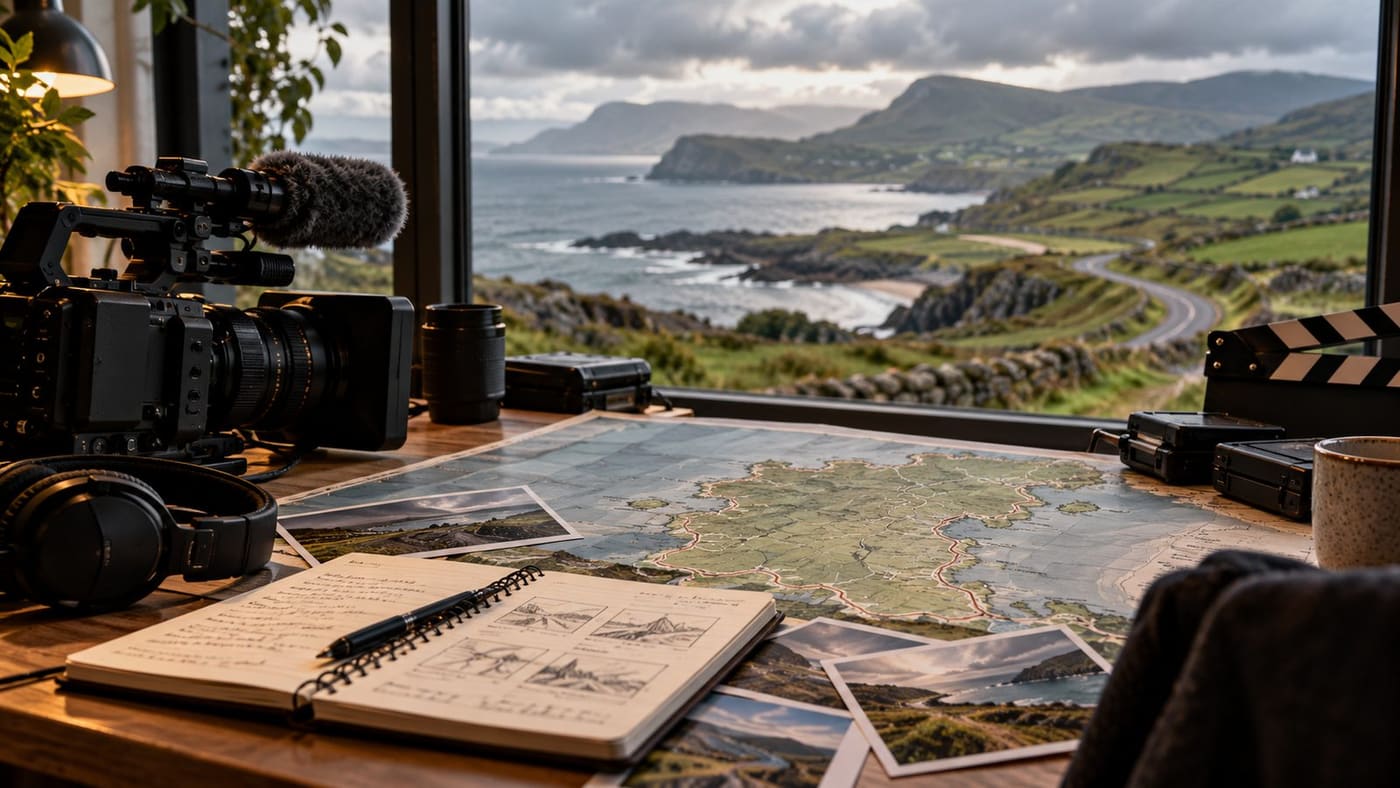
Checked 26 October 2026: the linked Oireachtas shortlist, TG4 announcement and subtitle guidance, and Donegal Rally spectator information. The official announcement and spectator text were retrieved through indexed primary-source results; direct retrieval errors are disclosed above. Episode access, detailed scenes and personal viewing are not claimed. The viewing framework and hypothetical examples are original editorial analysis. Limited phrase searching is not a comprehensive plagiarism scan. The original AI-generated illustration is a conceptual documentary workspace, not a TG4 set, episode still or real rally location. The saved Ireland Trends discovery is historical, not a new live trend measurement.