League of Legends can be an absorbing spectator sport before you know how to play it. The difficulty is choosing where to look. Ten players, several lanes, a moving camera and an excited commentary team can make a first broadcast feel like arriving halfway through a conversation. A useful way in is to follow one decision at a time: what is this team trying to gain, what must it give up, and did the exchange help?
This guide is for Canadian readers encountering LoL Worlds 2026 through a headline or a friend's recommendation. It explains a manageable viewing routine, the tournament's current shape and ways to discuss a game without pretending to understand every interaction. It is a spectator explainer, not a report of a particular match or a prediction of the champion. Tournament information was checked on 25 October 2026; use the official schedule for subsequent changes and results.
Where the tournament stands
Riot's Worlds 2026 primer lists Play-In on 15–18 October, Swiss on 23–31 October and Knockout on 3–14 November. The Swiss stage is in Allen, Texas, with the final scheduled for Brooklyn on 14 November. In Swiss, three match wins qualify a team and three losses eliminate it. After the first round, teams are drawn against opponents with the same record, without a repeat opponent during Swiss. Same-region meetings are permitted from round two. The primer lists both best-of-one and best-of-three competition for Swiss, then best-of-five knockout matches.
Those are the practical foundations. Do not confuse a team's tournament record with the score inside a multi-game match. A broadcast may show both. If a graphic is unfamiliar, listen for whether the commentators are discussing the current game, the series or qualification. They are different layers of the competition.
The official [Worlds primer](https://lolesports.com/en-US/news/worlds-2026-primer) is the starting point for dates and format. The [competition operations hub](https://competitiveops.riotgames.com/en-US/league-of-legends) provides the rules library. This guide deliberately avoids a total participant count because the official pages consulted were not consistent on that detail.
Make the schedule local before making plans
There is no single Canadian viewing time. A friend in Vancouver and a friend in Toronto can watch the same broadcast at different local hours. Rather than copying a time from a social post, open the official listing, identify the timezone attached to it and save the event in a calendar configured for your location. Check the converted date as well as the hour. This matters especially when someone shares a screenshot from another country.
For a watch party, send one message containing the matchup, the broadcast link, your local date and time, and the timezone. Ask guests elsewhere to confirm their own conversion. A sentence such as “join ten minutes before the listed start” is more useful than assuming everyone lives on the host's clock. Treat a start time as a planning reference, not a promise that the whole programme will finish at a particular minute.
Decide whether you want to watch live or catch up. Live viewing gives you the shared reaction; a replay lets you pause explanations and fit the match around work or family. Neither is a lesser way to follow the tournament. If avoiding spoilers matters, go directly to the replay you want instead of browsing results or a social feed first. Tell friends whether you are watching live before opening their messages.
Learn the objective, then stop memorising
Riot's beginner guide describes League as a game between two teams of five, with victory achieved by destroying the opposing Nexus. Turrets and inhibitors stand along the routes into a base. Gold buys items, experience develops champions, and neutral objectives such as Drakes and Baron provide advantages. The familiar role labels are top, jungle, mid, bot and support. These basics give you enough vocabulary to begin; you do not need an encyclopaedia of champions beside the screen.
The [official how-to-play guide](https://www.leagueoflegends.com/en-us/how-to-play/) is useful when a term interrupts your understanding. Read a small portion, then return to watching. Trying to learn every ability during a live match can leave you understanding less of the overall contest.
For your first game, choose a simple question: which team is making progress toward the other base? When something dramatic happens, ask how it changes that progress. An exciting fight is part of the story, but the reason it matters is what becomes possible afterwards. Following that question connects the action on screen to a purpose you can recognise.
A three-pass method for a crowded screen
Start with the broad situation. Look at the score display and the map before trying to identify individual spells. Ask where the teams are gathering and where the broadcast is directing your attention. Then focus on the immediate action. Finally, once it ends, look again at the wider picture. What changed while the camera was following the fight?
This is a viewing technique rather than a formula for evaluating professional play. You may miss something, and the replay may show why your first impression was wrong. That is useful. A replay is a chance to connect an outcome with its setup, not merely to see the loudest moment twice. Notice where a player was positioned before the action and which options seemed available.
Keep the technique light. You can follow one sequence carefully and enjoy the next without analysing it. If you find yourself constantly looking up terms, narrow the task further: track one player for a few minutes, or listen for the explanation of one objective. Understanding grows more reliably from a few connected observations than from a long list of disconnected definitions.
Watch the exchange, not only the celebration
Imagine a hypothetical sequence in which one side gathers around an objective while the other advances elsewhere. The immediate question is not simply who appeared more active. Ask what each side gained, what it risked and whether it could have contested the other action in time. This example is a way to organise your attention, not a description of a Worlds match that has been independently reviewed here.
A useful notebook has three short columns: intention, outcome and open question. You might write “wanted pressure,” “opponent backed away,” and “what made that threat credible?” The final column prevents a guess from hardening into a fact. Later commentary may answer it. If not, you can leave it unresolved rather than invent an explanation.
This habit also improves conversations with more experienced viewers. “Why did they choose that exchange?” invites an explanation. “That was obviously terrible” shuts one down before you have understood the options. You can have a preference or be disappointed without presenting a first impression as a technical verdict. The same restraint is useful when a short clip circulates without the minutes that preceded it.
Give the draft a question of its own
The period before a game is an opportunity to hear what the commentators expect the teams to attempt. Rather than memorising every selection, note one proposed strength and one possible difficulty. During the game, see whether those expectations become relevant. You are testing an interpretation, not collecting proof that the commentators were right or wrong.
Rules and available choices can differ between competitions and formats. Do not assume a drafting explanation from an older event applies unchanged to this one. If a broadcast refers to a restriction you do not recognise, consult the current event rules or listen for the explanation. This article does not assert an unverified 2026 draft restriction merely because it appeared in previous-year coverage.
Keep separate what the screen shows, what the analyst predicts and what you infer. A selection is observable; the reason behind it may not be fully known. Coaches and players can have information or priorities that the audience does not hear. A good discussion leaves room for that uncertainty while still exploring the strategic possibilities that make the pre-game phase interesting.
Follow one team without losing the wider event
Choosing a team gives a long tournament a manageable thread. You might follow a familiar player, a region you already watch or a team whose games you enjoyed. The choice does not need to be permanent. Write down its current match record and the next confirmed opponent, then update those notes from the official results after each match.
At the same time, watch an occasional game outside that team's path. It gives context to the comparisons made on the broadcast and keeps the tournament from becoming only a sequence of wins and losses for one favourite. You may discover a style of play or a player you would otherwise overlook. There is no need to turn that discovery into an instant ranking.
Be careful with historical comparisons. A famous name, an earlier title or a strong domestic season does not establish what happened in today's game. If you discuss a current performance, identify the match and the specific sequence you mean. That makes your comment useful to someone who wants to revisit it, and avoids treating reputation as a substitute for observation.
A watch party that welcomes beginners
For a small gathering, the most important preparation may be agreeing on how much explanation everyone wants. Some people enjoy commentary between every sequence; others want to hear the broadcast. Set a simple expectation: brief questions during quieter moments, longer discussion between games, and no obligation to understand everything immediately.
Keep the official programme easy to hear and subtitles enabled if the chosen player offers suitable ones. Put a short glossary in the group chat instead of answering every question with another unfamiliar abbreviation. Give guests the link to the official beginner guide so they can explore at their own pace. Avoid turning a social evening into an examination of who knows the most.
A practical host checklist is short:
- Confirm the official stream and the local start time before sending invitations.
- Tell guests whether results or other ongoing matches may be discussed.
- Keep food and drink away from equipment and leave comfortable viewing space.
- Plan breaks and allow people to leave before a long programme ends.
- Make room for questions without speaking over every explanation on the broadcast.
The aim is a shared evening people would choose again. You do not need elaborate decorations, merchandise or a paid prediction game to make it feel like an event.
Use highlights for discovery, replays for understanding
A highlight can tell you which moment attracted attention. It cannot always tell you why the teams arrived there. If a clip interests you, find the full sequence in a replay and watch the lead-up as well as the aftermath. Look for the decision that made the visible outcome possible. That is often more instructive than replaying only the final seconds.
When sharing a clip, preserve its context: the teams, the event and the relevant game or timestamp. Distinguish your reaction from an account of what occurred. “I did not expect that outcome” is an honest response. Claims about a player's intentions, a private team disagreement or misconduct require evidence that a crowd reaction does not provide.
For your own notes, a timestamp and one sentence are enough. A page of instant commentary can become a distraction from the match itself. After watching, select one moment you understand better and one question you would like answered. This creates a useful trail through the tournament without requiring you to become a full-time analyst or repeat the broadcast's language as your own expertise.
Your first full match: a simple plan
Before starting, check the date, teams and format. Open the beginner guide in a separate tab, then leave it alone unless you need it. During the opening portion, concentrate on recognising the teams and the broad objective. In the middle, choose one exchange to follow carefully. Near the end, ask which earlier decisions seem relevant to the position now on screen.
Afterwards, verify the result before updating your tournament notes. If you watched a replay, remember that later matches may already have changed the standings. Keep your reaction tied to the game you actually saw. There is no need to pretend you followed the entire event because you enjoyed one match, and no reason to wait until you understand everything before enjoying the next.
Editorial conclusion
Worlds becomes easier to follow when you replace the demand to understand every detail with a few useful questions. What is the objective? What is each team trying to exchange? Which part of the result is visible evidence, and which part is interpretation? Those questions give a new viewer a route into a complex contest without flattening it into a single score.
For Canadian viewers, start by making the schedule local, then choose a live session or replay that fits your day. Follow one team if it helps, stay curious about the rest, and use official sources when details matter. The pleasure is not passing a knowledge test. It is gradually seeing more of the decisions inside a game that initially looked too fast to read.
### Sources and illustration note
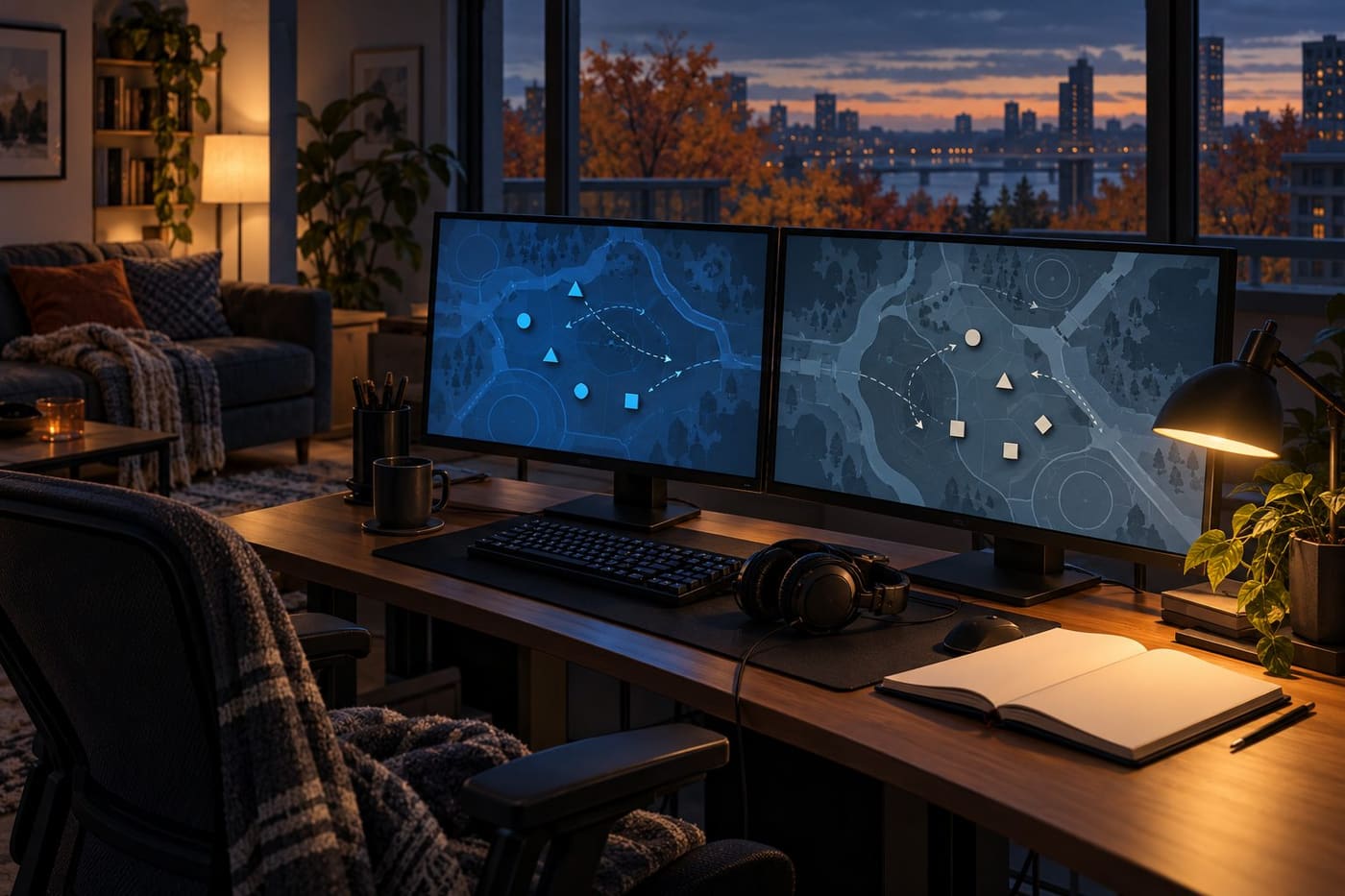
Researched 25 October 2026 using Riot Games' Worlds 2026 Primer, competition operations hub and League of Legends how-to-play guide linked above. The viewing routines and hypothetical examples are editorial suggestions, not claims of interviews or first-hand attendance. The accompanying original generated illustration is a conceptual home-viewing scene, not an official game screenshot, tournament photograph or depiction of a particular player. This independent guide is not affiliated with Riot Games.