
 Amazing Facts About the Human Body That Sound Impossible (But Are True!)
The human body is often described as nature's greatest masterpiece. It contains around 37 trillion cells, hundreds of bones and muscles, thousands of miles of blood vessels, and a brain capable of processing enormous amounts of information every second. Despite centuries of scientific research, researchers continue to uncover new insights into how our bodies function.
Many everyday processes—such as breathing, thinking, digesting food, and healing wounds—are so automatic that we rarely stop to appreciate how extraordinary they really are. Let's explore some of the most fascinating facts about the human body that highlight the incredible complexity and efficiency of our biology.
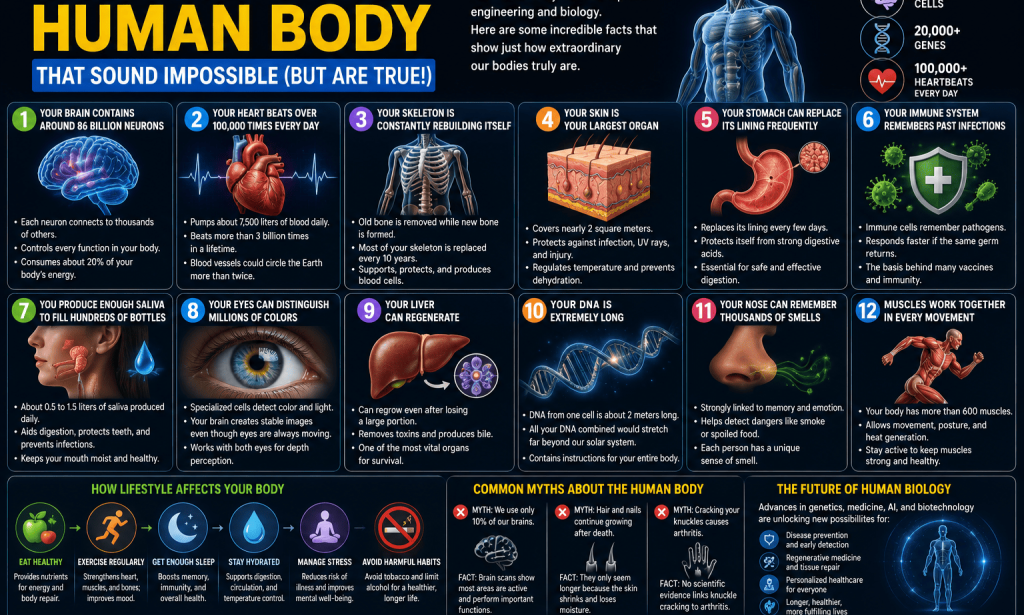
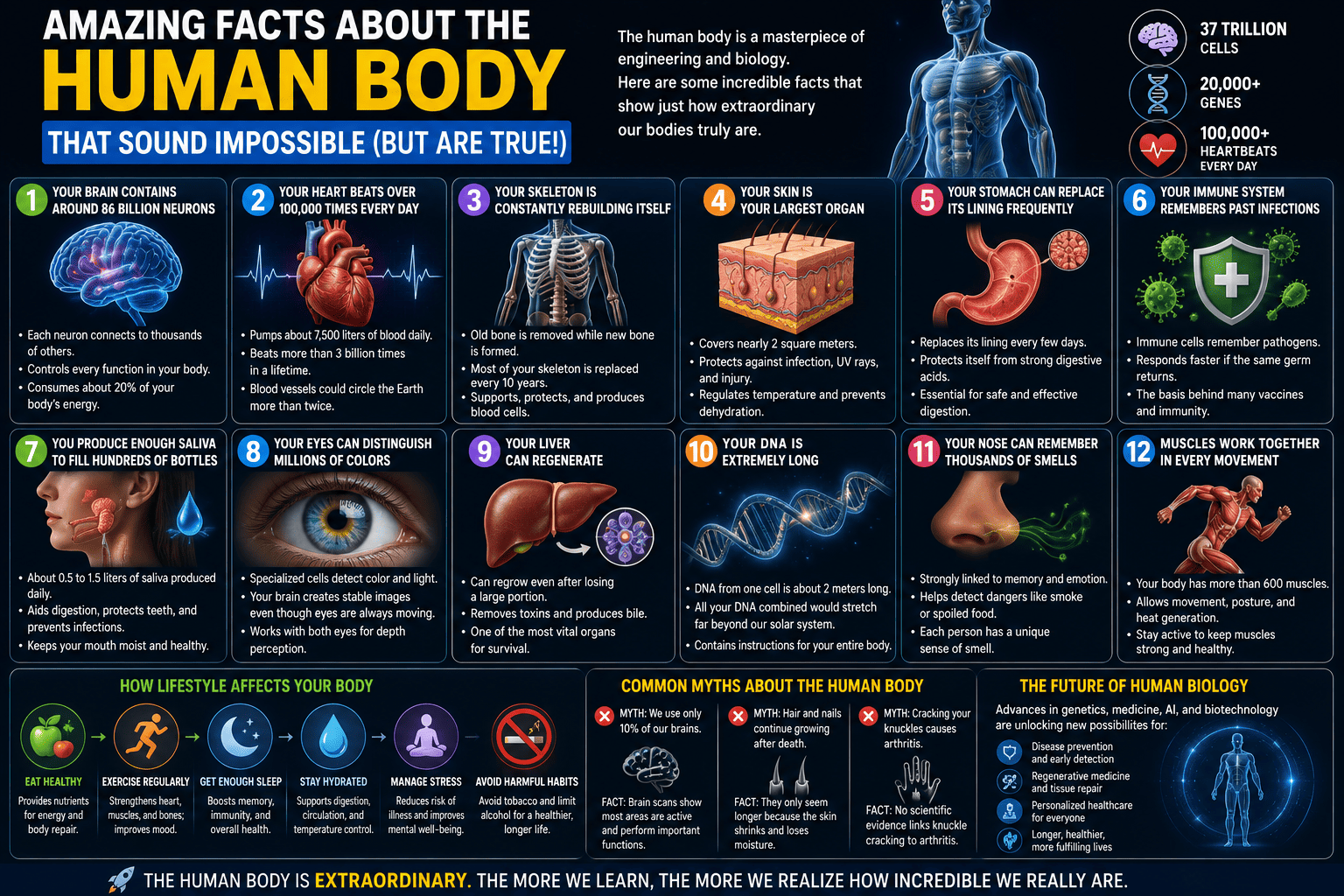
1. Your Brain Contains Around 86 Billion Neurons
The human brain is the control center of the body. It contains approximately 86 billion neurons, each connected to thousands of other neurons through tiny junctions called synapses.
These networks allow us to think, learn, remember, solve problems, and experience emotions.
Although the brain accounts for only about 2% of body weight, it consumes roughly 20% of the body's energy, making it one of our most energy-demanding organs.
Why It Matters
- Controls every body function
- Enables memory and learning
- Processes sensory information
- Supports creativity and decision-making
2. Your Heart Beats Over 100,000 Times Every Day
The heart works continuously throughout your lifetime without taking a break.
An average adult heart beats around 100,000 times per day and pumps approximately 7,500 liters of blood daily.
Over the course of a lifetime, the heart may beat more than 3 billion times.
Amazing Fact
If all the blood vessels in an adult body were placed end to end, they would stretch for approximately 100,000 kilometers (60,000 miles)—enough to circle the Earth more than twice.
3. Your Skeleton Is Constantly Rebuilding Itself
Although bones appear solid and permanent, they are living tissues that constantly repair and renew themselves.
Specialized cells remove old bone while others build new bone.
In fact, most of your skeleton is gradually replaced approximately every 10 years.
Benefits
- Repairs tiny fractures
- Maintains bone strength
- Stores essential minerals
- Produces blood cells
4. Your Skin Is Your Largest Organ
Many people don't realize that the skin is actually the body's largest organ.
Adult skin covers nearly 2 square meters (22 square feet) and protects us from bacteria, harmful chemicals, UV radiation, and injury.
The outer layer constantly sheds dead cells and produces new ones.
Functions
- Regulates body temperature
- Prevents dehydration
- Protects against infection
- Provides the sense of touch
5. Your Stomach Can Replace Its Lining Frequently
The stomach contains powerful acids capable of breaking down food.
To prevent the stomach from digesting itself, it regularly replaces its protective lining.
Without this remarkable process, stomach acid could damage internal tissues.
Why It's Important
- Protects stomach walls
- Supports digestion
- Reduces tissue damage
6. Your Immune System Remembers Past Infections
One of the body's most impressive abilities is its immune memory.
After fighting many viruses or bacteria, certain immune cells "remember" those pathogens, allowing the body to respond much faster if they return.
This principle is also how many vaccines help protect us from disease.
Benefits
- Faster immune response
- Better disease protection
- Long-term immunity in many cases
7. Humans Produce Enough Saliva Every Year to Fill Hundreds of Bottles
Saliva is often overlooked, yet it plays a vital role in digestion and oral health.
An average person produces roughly 0.5 to 1.5 liters of saliva per day, which adds up to hundreds of liters over the course of a year.
Saliva helps:
- Digest food
- Protect teeth
- Prevent infections
- Keep the mouth moist
8. Your Eyes Can Distinguish Millions of Colors
The human eye is an incredibly sophisticated sensory organ.
Under good lighting conditions, it can detect millions of different color variations thanks to specialized cells called cones.
The brain combines information from both eyes to create depth perception and detailed vision.
Interesting Fact
Although your eyes constantly move, your brain stabilizes the image so the world doesn't appear to shake.
9. Your Liver Can Regenerate
Unlike most organs, the liver has an extraordinary ability to regenerate.
Even if a significant portion of the liver is removed, healthy liver tissue can grow back over time.
This unique capability makes liver transplants possible in certain situations where a living donor provides only part of the organ.
Main Functions
- Removes toxins
- Produces bile
- Stores nutrients
- Helps regulate metabolism
10. Your DNA Is Extremely Long
Every cell in your body contains DNA carrying your genetic instructions.
If the DNA from a single human cell were stretched out, it would measure about 2 meters (6 feet) in length.
Because the body contains trillions of cells, the combined length of all your DNA would extend an unimaginable distance—far beyond our solar system if laid end to end.
Why DNA Matters
- Determines inherited traits
- Guides cell function
- Supports growth and development
11. Your Nose Can Remember Thousands of Smells
Humans can recognize and distinguish thousands of different odors.
Smell is closely connected to memory because the brain regions involved in processing scents are linked to areas responsible for emotions and long-term memories.
This explains why certain smells can instantly remind us of childhood experiences or specific places.
12. Muscles Work Together in Every Movement
Even simple actions like smiling, walking, or typing require many muscles to work together.
The human body contains more than 600 muscles, which allow movement, maintain posture, and generate heat.
Regular physical activity helps keep muscles strong and healthy throughout life.
How Lifestyle Affects the Human Body
Although the human body is incredibly resilient, daily habits have a major impact on long-term health.
Healthy lifestyle choices include:
- Eating a balanced diet rich in fruits, vegetables, whole grains, and lean proteins.
- Exercising regularly to strengthen the heart, muscles, and bones.
- Getting enough sleep to support memory, immunity, and recovery.
- Staying hydrated throughout the day.
- Managing stress through relaxation techniques and social support.
- Avoiding tobacco and limiting excessive alcohol consumption.
These habits help the body function efficiently and reduce the risk of many chronic diseases.
Common Myths About the Human Body
Many popular beliefs are inaccurate or oversimplified. Here are a few examples:
- Myth: Humans use only 10% of their brains.
Fact: Brain imaging shows that most regions of the brain have important functions and become active at different times. - Myth: Hair and nails continue growing after death.
Fact: They only appear longer because the skin loses moisture and shrinks. - Myth: Cracking your knuckles always causes arthritis.
Fact: Current scientific evidence does not support a direct link, though excessive force may cause temporary discomfort in some people.
Understanding the science behind these myths helps us make informed decisions about our health.
The Future of Human Biology
Scientists continue to make remarkable advances in medicine and biology. Research into genetics, regenerative medicine, artificial intelligence, personalized healthcare, and biotechnology is opening new possibilities for diagnosing diseases, repairing damaged tissues, and improving overall health.
As scientific knowledge grows, our understanding of the human body will continue to expand, leading to better treatments and healthier lives.

You must be logged in to post a comment.