A winter storm headline is a reason to check local information, not a complete description of conditions at your door. A broad story can cover several provinces, while the decision you face concerns one household, a particular road or an essential appointment. Preparing well starts by narrowing the information to the place, time and people involved.
This guide was researched on 25 October 2026 after winter storm searches appeared in Canada's Google Trends feed alongside reports about the Prairies. It explains how to turn official information into a practical preparation plan. It is not a live forecast or permission to travel. For immediate decisions, consult current local alerts and follow instructions from the relevant authorities.
What the dated warning tells us
An Environment Canada bulletin inspected for this guide was issued at 19:09 CST on 23 October 2026. It covered Wollaston Lake–Collins Bay and Southend–Brabant Lake–Kinoosao in Saskatchewan. The yellow winter storm warning described snow, blowing snow and wind, with hazardous travel and possible disruption to utilities and property.
That is a dated, location-specific example. It does not establish conditions everywhere in Saskatchewan, let alone across Canada. Nor should its forecast totals be presented as measured snowfall after the event. Use the [official alert map](https://weather.gc.ca/index_e.html?layers=alert) to locate the current message for your area. The [bulletin inspected here](https://ecalertme.weather.gc.ca/warning-latest_en.php?alert_code=WSW&alert_id=93425&m_id=458527&ualert_id=4857) may be updated or superseded.
The distinction matters because a screenshot can continue circulating after its useful decision window has passed. Before sharing one, check the location, issue time and whether a newer notice exists. A message can be authentic and still be the wrong message for today's decision.
Read beyond the colour
Environment and Climate Change Canada explains that its alerts are impact-based. Warnings and advisories call for action, while watches indicate the need to prepare for potential severe weather. The full message describes the hazard, timing, location, expected impacts and protective actions. Its [weather alerts guide](https://www.canada.ca/en/services/environment/weather/severeweather/weather-alerts.html) also explains the yellow, orange and red presentation.
Do not reduce the message to a coloured banner. A person making a long road journey and someone staying at home may have different practical concerns under the same alert. Read the actual instructions and impacts, then identify what they mean for your planned activity. A label alone cannot answer whether a particular journey is appropriate.
Our suggested reading note has four short entries: affected location, relevant time, main disruption and next official update to check. This is an organisational aid, not a substitute for the alert. It helps you avoid remembering only the dramatic number in a headline while overlooking the conditions attached to it.
Turn the forecast into household questions
Start with what must continue to function: communication, essential care, food, water, warmth and access to help. Then identify what normally supports each need. A household that relies on an elevator has a different access question from a household with a ground-floor entrance. Someone using powered medical equipment needs an established backup plan suited to that equipment.
This guide cannot design those specialised arrangements. Discuss medical or accessibility needs with the appropriate provider and local support services before a disruption. Do not improvise changes to treatment or equipment because a general checklist mentions backup supplies. The useful preparation question is who can give you the specific instructions you need.
For ordinary tasks, assign a named person rather than leaving a vague intention. One person can confirm the official information channel; another can locate supplies already in the home. A small shared list prevents two people repeating the same errand while an essential task remains untouched. Keep the list realistic for the time and resources available.
Begin with supplies you already own
Public Safety Canada's [emergency kit checklist](https://www.canada.ca/en/services/policing/emergencies/preparedness/get-prepared/emergency-kits/get-kit.html) recommends preparing for at least three days and tailoring supplies to household members, pets and local circumstances. It includes food, water, lighting, communication equipment, important records and essential personal items. Consult the complete official checklist and any additional local guidance rather than relying on a shortened article list.
Our suggested first step is an inventory, not a shopping trip. Put existing useful items in one accessible place and identify genuine gaps. Check whether the flashlight works, whether its batteries are the correct size, and whether the power bank has been charged. Possessing a device is different from having it ready to use.
A household can organise the inventory into three columns: available and ready, available but needs attention, and missing. This distinguishes a small task, such as finding a charger, from a purchase. It also helps avoid buying duplicates while overlooking something essential that was assumed to be working.
Make the kit understandable to everyone who needs it
A neatly packed bag is useful only if people know where it is and can reach it. Explain the arrangement to household members. Where appropriate, use labels that are easy to read and keep frequently needed items accessible. Avoid packing a bag so heavily that the person expected to move it cannot manage it.
Think through a hypothetical evening when the normal room lights are unavailable. Which item would you need first, and could you find it without emptying every container? This is a planning exercise, not an instruction to turn off essential equipment or stage an unsafe drill. Simply reviewing the arrangement can reveal an inconvenient storage choice.
Keep private documents protected. A contact sheet can be useful without being displayed publicly or circulated through a neighbourhood group. Decide who needs access to sensitive information and store it accordingly. Preparation should improve access for the right people, not create a new privacy problem.
Prepare a communication plan that is easy to follow
Public Safety Canada's [winter storm preparation guidance](https://www.canada.ca/en/services/policing/emergencies/preparedness/get-prepared/hazards-emergencies/winter-storms/how-prepare.html) points readers to WeatherCAN, official weather information and local broadcasts. It also highlights the needs of older relatives and neighbours who may have difficulty obtaining supplies. Establish the information routes you will use before they are urgently needed.
Our suggested household note identifies one local official update source, a way to contact each other and a person outside the immediate household who should know about a change of plans. Keep it brief enough to use. A long document that nobody can locate is less helpful than a short, accessible record with current details.
When checking on someone, ask a concrete question: do they have what they need, is there a task they would like help arranging, and how would they prefer to stay in contact? Do not assume that age alone tells you what assistance is wanted. Respect privacy and independence while taking an expressed need seriously.
Separate weather information from road information
A weather alert and a road-condition report answer related but different questions. The forecast describes weather and likely impacts. Road authorities provide information about the network you intend to use. Neither an old photograph nor the appearance of the street outside your window establishes conditions along an entire route.
Saskatchewan's SGI driver handbook directs motorists to the Highway Hotline and advises staying home when travel is not recommended. Its [winter driving guidance](https://sgi.sk.ca/handbook/-/knowledge_base/drivers/winter-driving) also explains the effect of snow, ice and poor visibility. Consult the relevant official road service for your province and route, and obey closures and restrictions.
Our planning recommendation is to identify which journeys can be postponed before an appointment becomes a source of pressure. Contact the relevant organisation through its normal channel to discuss alternatives. An event remaining on a calendar does not certify that travelling to it is safe. This article does not offer vehicle-handling instruction or a judgement on any individual road.
Avoid creating an indoor hazard during an outage
Cold weather can make an improvised heating arrangement seem tempting. Do not bring fuel-burning outdoor equipment indoors. Nova Scotia's official [power outage guidance](https://emergencyinfo.novascotia.ca/power-outages) warns against indoor use of barbecues, generators and camp stoves. It recommends battery-powered lighting and preparing communication and essential supplies in advance.
Follow appliance instructions and local safety guidance. Do not improvise electrical connections or treat an open window as a substitute for proper equipment use. Specialised installation, electrical work and emergency accommodation decisions need appropriate professional or official advice. A general preparation article cannot verify that a particular setup is safe.
The practical task before a storm is to know where reliable instructions and help can be found. If your normal arrangements may become unsafe, make that concern explicit in the household plan. Do not wait until a device or room has become unusable to start asking which authorised alternative is available.
Keep plans specific without pretending to predict the outcome
Here is a hypothetical example. Two adults are due to make a non-essential visit the next day. They check their local alert, consult the road service, contact the host about postponing and confirm that they have essential supplies at home. They agree when to check official information again. Nothing in that sequence requires predicting the exact snowfall total.
Now consider a different household with an essential care appointment. Its useful next step may be contacting the provider to discuss the situation and available arrangements. Copying the first household's plan without considering that need would miss the point. Preparedness is about connecting the information to the actual dependency, not applying one person's itinerary to everyone.
Both examples are invented planning scenarios. They are not reports about residents affected by the October weather event. Their purpose is to show how a short list of concrete questions can be more useful than an argument about whether a headline sounds sufficiently alarming.
Use a small decision record
For each important decision, note what you checked, when you checked it and what action followed. For example, record that you consulted the official road service at a particular time and postponed a journey. Do not write a general conclusion such as “all roads safe” when you only checked one route or one source.
This record can also distinguish completed tasks from intentions. “Will charge phone” and “phone charged, charger packed” are different states. Clear wording prevents a household member from assuming that a task has already been done. Keep the record short; it is there to support action, not become an administrative project of its own.
If circumstances change, add the new information rather than silently editing away the earlier decision. That makes it easier to explain a changed plan to someone joining the conversation later. There is no need to defend an old choice after the underlying information has changed; the purpose is to respond to the current situation.
Be careful with forwarded updates
A message in a group chat can omit the time or location that made the original warning meaningful. Before forwarding, open the official source and check those details. If you cannot verify a claim, do not strengthen it with confident wording. Sharing a route to current official information is often more useful than sharing another cropped image.
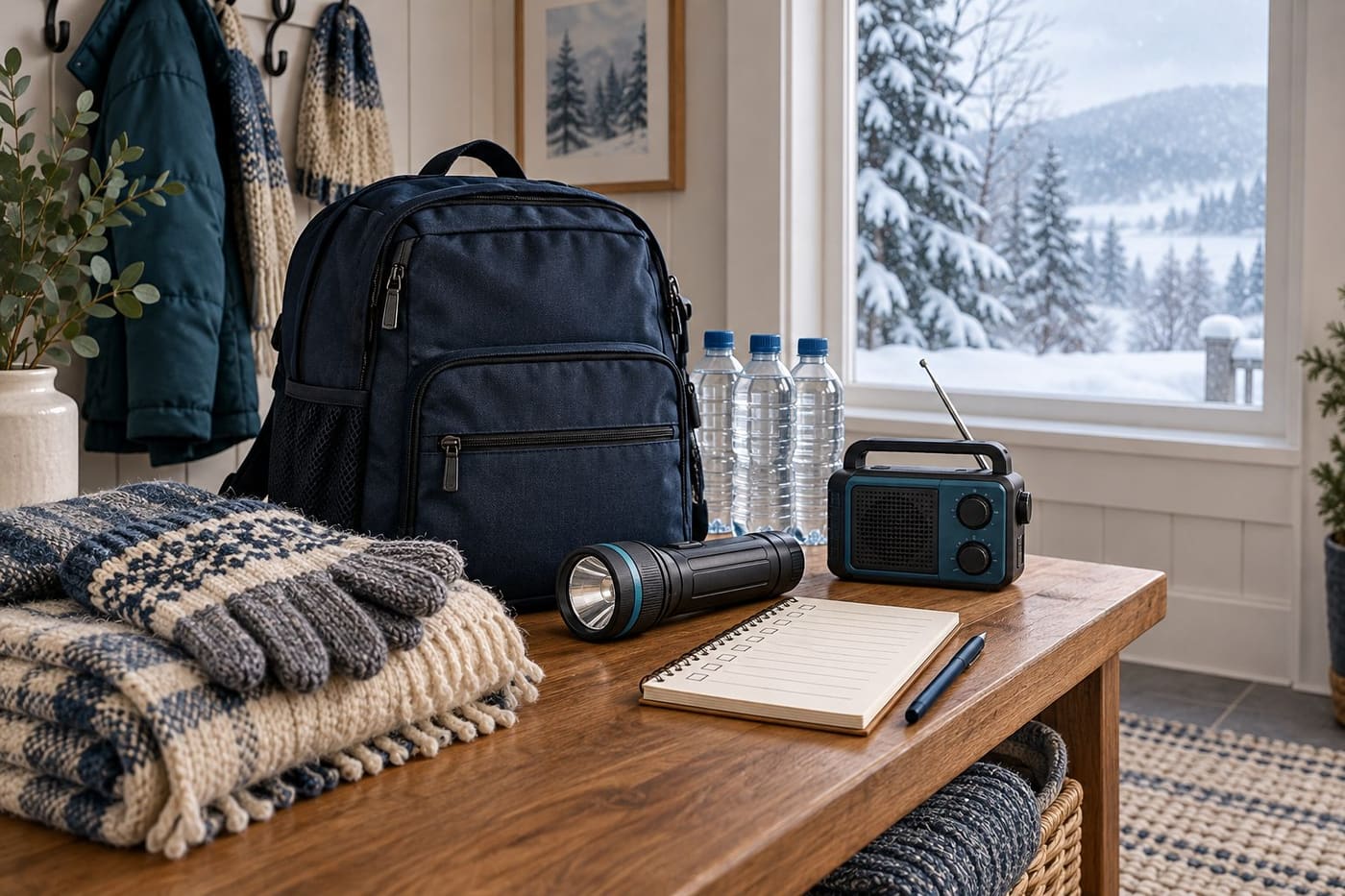
Avoid presenting generated illustrations as evidence of conditions. The picture accompanying this guide is an original conceptual preparedness scene, not a photograph of the Prairies storm, a particular home or a current road. It deliberately does not show damaged infrastructure or residents who could be mistaken for actual participants in the event.
Likewise, an article's research date is not a continuous update service. This guide can help you organise the process, but it cannot tell you whether a warning has been cancelled since you opened the page. Return to the official source for decisions that depend on the latest conditions.
A short review before conditions deteriorate
- Read the current alert for your location, including its timing and instructions.
- Identify essential household needs and any arrangements requiring specialist advice.
- Check existing supplies and make them accessible to the people who need them.
- Agree on communication and check-in arrangements.
- Consult official road information before considering a journey.
- Follow safe equipment use and local emergency instructions.
- Record the next information check and any task still unfinished.
This is a planning summary, not a replacement for the official emergency checklist. Adapt it to your circumstances and the instructions in force. If an authority issues a direct instruction, follow that instruction rather than an older plan saved from this article.
After the disruption, improve the plan
When it is safe to review what happened, note one item that was hard to find, one arrangement that worked and one unanswered question to resolve before the next event. Restock used supplies and check anything that needs replacement according to the relevant guidance. Keep the useful parts of the plan instead of rewriting everything from memory.
A good preparation routine does not depend on an impressive collection of equipment. It depends on current information, accessible essentials and clear decisions that fit the people involved. Read the alert carefully, connect it to your actual needs and keep checking the official sources as the situation develops.
Editorial note: Researched on 25 October 2026. This AI-assisted guide uses Canadian government and SGI sources with original planning examples. The 23 October bulletin is a dated illustration, not a current forecast guarantee. No local road, outage or snowfall outcome is asserted. Selected web phrase checks provide only a limited similarity review, not comprehensive plagiarism certification.