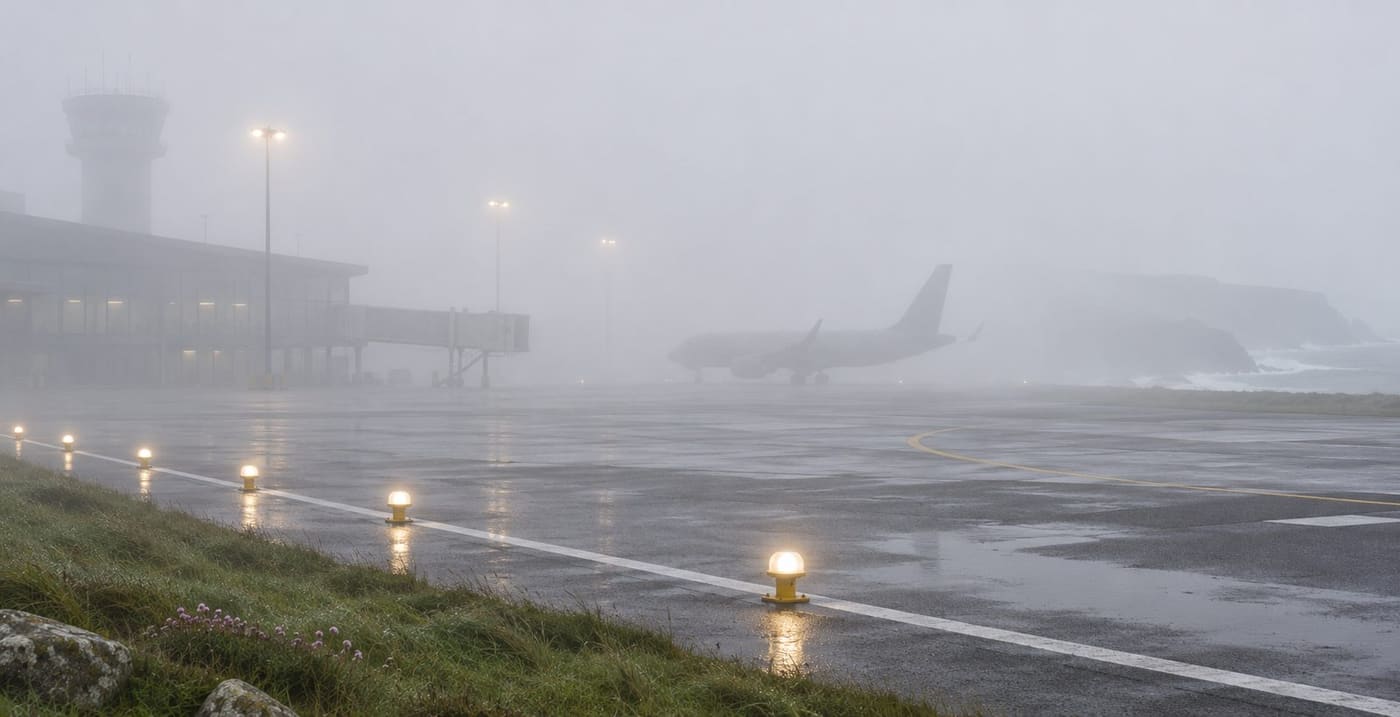
If you are meeting a flight at Shannon Airport, check the operating airline's flight status before leaving for the terminal. Open Shannon's arrivals board in a second tab and match the flight number, origin and date. In fog, a flight may still be headed for Shannon, may be waiting for conditions to improve or may have landed at another airport. Those situations call for different pickup plans. A weather forecast can tell you when to check more frequently, but the flight record is the place to check where a particular aircraft is expected to arrive. Shannon Airport live flights.
What the 7 November forecast showed
The UK Met Office's dated forecast for Shannon Airport showed fog changing to overcast by late morning on Saturday, 7 November 2026. Its observation page is a separate product, showing conditions measured at an observation station. Forecasts are estimates for a time and place. Observations describe conditions at the station and time shown. Neither product lists the airline's decision for a particular flight, so a forecast showing fog should never be treated as an arrivals board. Met Office airport forecast and Met Office airport observations.
When reading the forecast, look at the airport name and the local date first. A fog symbol for the morning can sit next to an overcast symbol for a later hour. That sequence gives you a reason to compare the estimated arrival with the forecast window. It cannot tell you when a flight delayed elsewhere will take off. It also cannot show whether the aircraft is already airborne. Keep the forecast as context and take any trip decision from the flight record and the airline's instructions.
Weather and flight pages also update on different schedules. The weather page can roll forward to a new day while a screenshot retains yesterday's date. An airline notification may refer to a previous estimate if it was delivered late. When two sources appear to disagree, compare their timestamps and the specific flight date before deciding there is an error. Keep the dated forecast separate from the live arrivals screen so the two can be used for their respective purposes.
Find the right flight on the arrivals board
Start with the flight number from the passenger's booking confirmation. On Shannon Airport's website, choose Arrivals, then search by flight number or origin. If the number does not appear, try the city and look for the operating carrier. A booking may carry a marketing airline's number alongside a number used by the airline actually flying the route. Check the origin and planned arrival as well as the number before concluding that a row belongs to the passenger you are meeting. Shannon Airport live flights.
For an overnight journey, use the scheduled arrival date in Ireland. A passenger may give you the date shown beside their departure overseas. The corresponding Shannon arrival can fall on the next calendar day. If the flight runs late around midnight, check the row for the original scheduled date and then look for the updated arrival information. That prevents you from confusing the late service with the next regularly scheduled flight on the same route.
Save the flight number in a message you can search quickly. A useful pickup note includes the operating flight number, original origin, expected arrival date and passenger's agreed contact method. Keep the booking reference with the passenger. A driver generally only needs the public flight details and a reliable way to hear about the onward plan.
Read the difference between delayed, landed and diverted
A delayed arrival means the schedule has slipped. Read the latest estimated time and check whether the destination still shows Shannon. If the board has an estimate but the airline's status gives only a delay notice, keep the pickup flexible. An estimate can move again while the aircraft is waiting to depart or is still en route. The scheduled time is useful for identifying the flight and comparing changes, while the estimated time is the number to monitor for the next check. Shannon Airport live flights.
A landed status tells you that the aircraft has touched down at the airport named in the status. There can still be time between touchdown and a passenger being ready to meet a driver. The aircraft has to reach its stand, and travellers may have to wait for bags or pass through border formalities. Agree in advance whether the pickup message means touchdown, baggage collected or standing outside at the meeting point. That small distinction can save a long wait.
A diversion means that the aircraft has gone to a different airport from its planned destination. Look for the named airport and then look for a separate onward instruction. Landing at an alternate airport and finishing the journey are two different events. The passenger may have to stay with the aircraft, wait in the terminal or follow directions from the operating airline. A driver should wait for a clear pickup plan before setting off for the alternate airport.
If the status shows cancellation, check the airline's notice for the booking rather than attempting to infer the replacement from another board entry. A different service to the same airport can have a different flight number. When a passenger receives a new itinerary, begin the status check again with the new flight number and confirm the airport before updating the pickup.
What to ask the airline after an alternate landing
The useful questions are practical and specific. Ask where the passenger is now, whether checked bags will be returned there, and what onward arrangements the operating carrier has communicated. If the airline expects passengers to continue on the same aircraft, ask whether they should stay at the gate or on board. If ground transport is announced, ask where it ends and how the airline will identify passengers entitled to use it. Any alternative made independently should be discussed with the carrier if the passenger expects it to cover the expense.
A traveller with an onward coach, train or separate flight should identify which arrangements are on the same booking. A separate ticket may require contacting a separate operator. Keep the original itinerary, the message showing the changed arrival and any new booking information together. These records help when speaking to a carrier because they distinguish the original plan from the point at which it changed.
When the situation is still developing, one clear message can be more useful than a series of partial updates. A passenger might tell a driver that the airline has confirmed the alternate airport and that the next update will come when the onward plan is issued. Once the plan is known, send the final meeting location and the best estimate for getting there. The driver can then decide whether a Shannon pickup still makes sense.
What to check if the boards disagree
Check the route, the local date and the last updated time on both sources. Consider a hypothetical New York flight that left the previous evening and was scheduled to reach Shannon in the morning. The airport row may continue to show the original arrival while the airline status adds a notice about an alternate landing. A passenger who sees the newer carrier notice should check whether it specifies an onward plan, while a driver should avoid treating the original Shannon estimate as a promise.
Conversely, a passenger may forward an old message that shows a revised time, then discover the airport board has changed since the message was sent. Open the original status page instead of relying on the screenshot. If a contact cannot access the same site, share the source, the exact time and the relevant line. An update such as “Shannon still listed, checked at 08:10 Irish time” carries more information than “it says delayed.”
If the operating airline gives passengers instructions at the gate or on board, those directions are the immediate operational guidance for the people travelling. A public board is especially helpful for people meeting the flight, who may not receive the same announcements. The passenger and driver can use the two views together when deciding when to leave or where to meet. Shannon Airport live flights.
Build a pickup plan that can change
Choose an initial plan with a check before departure and another before the final approach to the airport. If you live far from Shannon, the first check matters more because changing direction after starting the drive can cost time. If you are nearby, an update after the passenger has reached baggage reclaim may be sufficient. For a passenger whose phone cannot connect after landing, agree on a backup contact and meeting point before the trip.
If visibility is poor on roads as well as at the airport, keep the driving decision separate from the flight decision. The arrival update can help decide whether a trip is needed, while the local road conditions determine how long and safely it can be made. A driver who cannot read the screen safely while travelling should pull over in a suitable place or let another person check it. An earlier arrival estimate is a reason to communicate, not a reason to hurry.
A pickup plan also needs an endpoint. If the passenger is continuing by airline-arranged coach, confirm where the coach is expected to drop people off rather than assuming it goes to the arrivals doors. If the carrier confirms the aircraft will continue to Shannon, switch the pickup plan back to the flight and monitor the updated estimate. A named endpoint is more useful than an informal guess based on the first alternate airport mentioned.
Why Shannon appeared in Irish search
At 00:16 UTC on 8 November 2026, the Ireland Google Trends Trending Now table displayed “shannon airport fog flight diversions” at 10K+ and marked it Active. It was third in the displayed past-24-hour list, with all categories and all trends selected and the list sorted by descending search volume. The higher football row already had coverage. The higher estate-related query lacked current primary documentation sufficient for a separate story. The search entry measures interest in the phrase and supplies no passenger list or tally of diverted aircraft. Google Trends Ireland.
The dated forecast and live board play separate roles in this guide. The forecast shows why people might have been checking Shannon on a foggy morning. The board offers a way to see the current status of a specific flight. Neither can retrospectively establish how many flights diverted in the reported period. Any count would need confirmation from a source that can identify the actual flights and the time window used. Met Office airport forecast and Shannon Airport live flights.
Keep a record of a long wait
Save the airline notice and note when it appeared. If you need help while waiting, ask what arrangements the carrier is making and when the next update is due. The Irish Aviation Authority's long-delay page explains when a carrier should provide written information. It also distinguishes assistance during a wait from compensation after travel. Check which circumstances the guidance describes before applying it to a specific itinerary. Keeping the notice, boarding pass and receipts gives you a clear account to refer back to if you need to speak to the airline later. Irish Aviation Authority long-delay guidance.
For the wider weather context, see Ireland's November fog forecast. Use the airport board for the individual flight.
The final check before you leave
Use the scheduled arrival date in Ireland and the operating flight number to open the correct row. Compare the latest time and destination on the airport and carrier views. If the flight still shows Shannon, check again before leaving and wait for a passenger-ready message. If it shows another airport, confirm the onward arrangement and the final meeting point first. Those checks resolve the practical question behind the search: where the passenger is actually expected to finish the journey.
Sources consulted 8 November 2026, Bangladesh time. The illustration depicts a generic airport in fog.