Sanne Wevers has ended her elite gymnastics career, according to TeamNL's announcement dated 20 October 2026. Her final appearance came on balance beam at the World Championships in Rotterdam, where she did not advance to the apparatus final. For readers encountering her name through the farewell coverage, the most useful introduction is more than a medal list: it is a way of understanding the distinctive skill of a beam specialist.
The Dutch gymnast won Olympic beam gold in Rio in 2016. A decade later, the retirement announcement provides a reason to return to that achievement without treating her last result as a verdict on everything that preceded it. TeamNL also records her world silver in Glasgow in 2015 and European beam titles in 2018 and 2023. [TeamNL retirement announcement](https://www.teamnl.org/artikelen/2026/10/sanne-wevers-beeindigt-turncarriere).
This retrospective was researched on 25 October 2026 after her name appeared in the Netherlands Google Trends feed. It combines a small set of verified career milestones with a viewing guide for readers who do not follow gymnastics every week. It is not an eyewitness report from Rotterdam or a technical judging assessment of her final routine.
Begin with the apparatus, not the medal
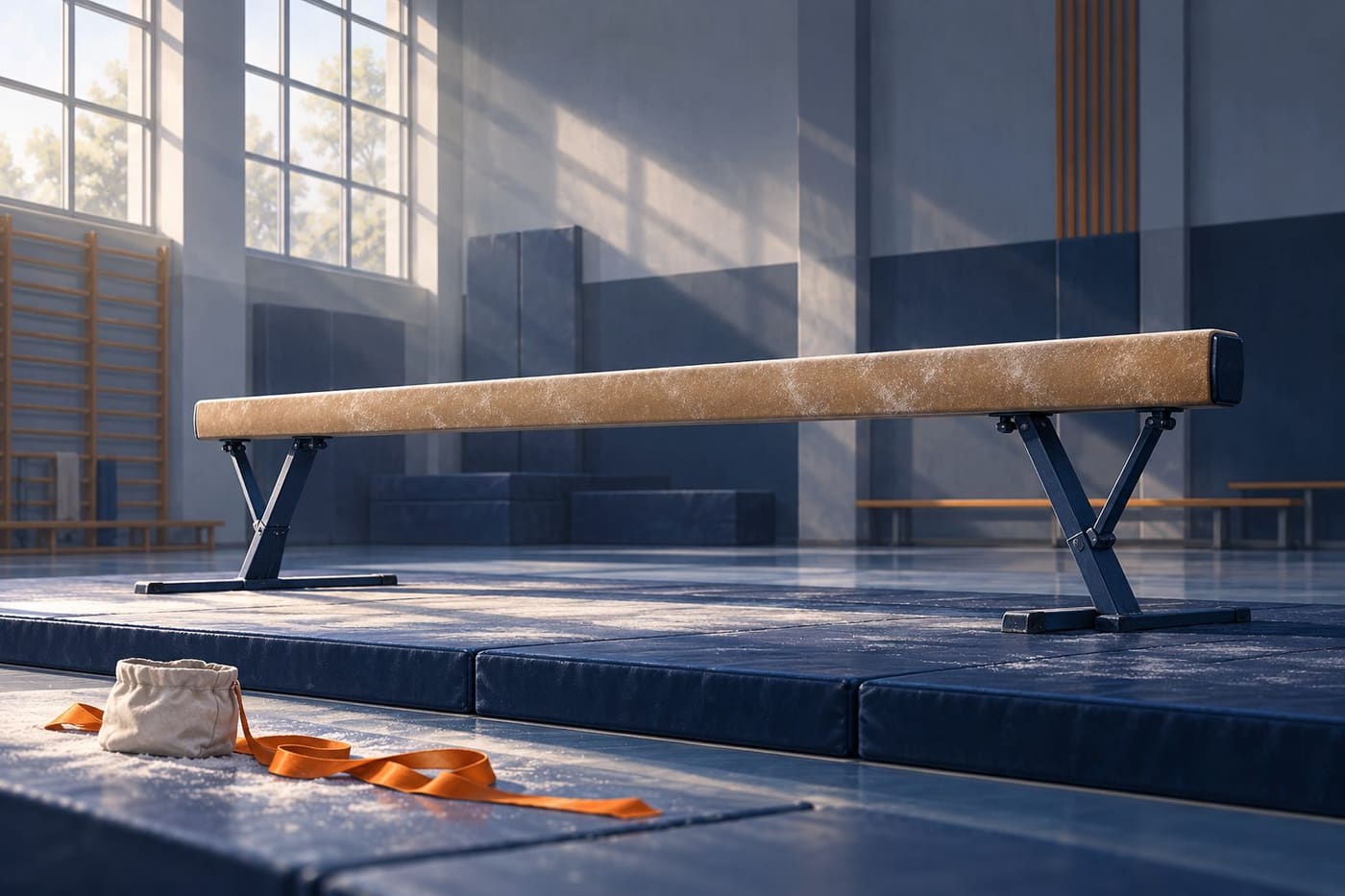
Balance beam brings several kinds of movement into a very restricted space. World Gymnastics describes an apparatus five metres long, ten centimetres wide and 1.25 metres high. Routines combine acrobatic and dance elements, including turns, leaps and balance work. That variety matters when watching a gymnast whose reputation is closely associated with pirouettes. [World Gymnastics apparatus guide](https://www.gymnastics.sport/site/pages/disciplines/app-wag.php).
For a new viewer, a spectacular airborne element may be the easiest moment to remember. A turn can be less immediately legible: the athlete stays close to the apparatus, and the challenge is not necessarily obvious from a distant camera. Yet those are different forms of difficulty, not a division between real gymnastics and decoration.
An accessible way to watch is to ask what changes from one movement to the next. Where does the gymnast begin facing? Where does she finish? Does the next movement follow immediately, or is there a visible reset? These observations do not require you to assign a difficulty value. They simply give the routine a structure beyond the question of whether someone falls.
The name attached to a movement
The international federation's athlete biography records that Wevers had a beam element named after her following the 2010 World Championships in Rotterdam: a double turn with the free leg held horizontal. The same profile identifies her as the first Dutch woman to win an individual Olympic gymnastics gold medal. [World Gymnastics athlete profile](https://www.gymnastics.sport/site/athletes/bio_detail.php?id=20532).
A named element is a different kind of sporting record from a place on a podium. A medal tells you where an athlete finished in a particular competition. A named movement gives future viewers a reason to encounter that athlete's name while discussing the sport itself. Both matter, but they answer different questions about a career.
TeamNL devoted a short feature in March 2020 to the precision of her pirouette, describing the patience involved in performing the movement. That contemporary emphasis is useful context: the association between Wevers and turning technique was not invented for a farewell headline. [TeamNL pirouette feature](https://www.teamnl.org/artikelen/2020/03/sanne-wevers-de-precisie-van-de-pirouette).
There is no need to reproduce the movement yourself to appreciate it. This is a guide to looking, not a home-training lesson. Gymnastics skills belong in an appropriately equipped environment with qualified supervision.
Rio 2016: read the result carefully
The Olympic final result provides a concrete example of why a gymnastics score needs more than one column. Olympedia records Wevers first with 15.466, Laurie Hernandez second with 15.333 and Simone Biles third with 14.733. Wevers's listed components were 6.600 for difficulty and 8.866 for execution; Hernandez's were 6.400 and 8.933. [Rio beam final results](https://www.olympedia.org/results/353694).
From those published figures, the difference between the first two totals is 0.133. Wevers's difficulty component was 0.200 higher, while Hernandez's execution component was 0.067 higher. This is arithmetic from the recorded result, not a fresh judging opinion. It shows why the highest execution component in this comparison did not produce the highest combined total.
That distinction makes the final more interesting than a simple story about a mistake deciding everything. A complete result is the product of the scoring structure applied to the routines in that competition. Reducing it to one athlete's error can obscure what the winner actually presented.
It is equally important not to turn this small comparison into a general rule that difficulty always wins. These two rows explain this result. They do not establish how every future beam final will unfold, or how an older routine would be assessed under a later code.
A career has more than one peak
European Gymnastics's official nomination material for its 2023 awards highlights Wevers's beam title in Antalya at her first international competition since the Tokyo Olympics. The material is a nomination announcement, not evidence that she subsequently won that particular award. [European Gymnastics announcement](https://www.europeangymnastics.com/news/european-gymnastics-proudly-launches-fourth-edition-its-gymnast-year-election).
Placed beside the Rio result, that milestone offers a useful perspective on sporting longevity. A famous Olympic performance can become the only clip circulated whenever an athlete's name returns to the news. Looking at later achievements prevents the intervening years from disappearing into a caption.
At the same time, a retrospective should not manufacture a smooth upward path. A sequence of selected medals is not a complete record of training, selection, setbacks or everyday experience. The public results can establish achievements; they cannot tell us everything the athlete felt while reaching them.
The distinction is especially important at retirement. It is possible to recognise a long and accomplished career without guessing at private motivations, future employment or whether a farewell will eventually be reconsidered. The current confirmed fact is the published retirement announcement. Claims about the next chapter need their own evidence.
Watch once for the whole routine
If you find an authorised replay, begin by watching it at normal speed without stopping after every element. The purpose of this first pass is to understand the sequence as a performance. Notice its beginning, changes of direction, pace and ending. Let the routine finish before deciding which moment you want to revisit.
An uninterrupted viewing protects against a common problem with short clips: a movement can become detached from the preparation before it and the transition after it. A highlight is useful for finding an athlete, but a full routine is more useful for understanding how the parts relate.
Write a single sentence afterwards. For example, you might say that the changes of direction held your attention, or that you found yourself watching the transitions rather than the dismount. These are personal observations, not claims about the official score. Keeping the two separate makes discussion more accurate and more welcoming to newcomers.
Avoid assuming that the commentator's excitement identifies the highest-value element. Commentary helps explain a broadcast, but it is not a replacement for the relevant result sheet or rules when the question is specifically about scoring.
Watch again with one question
For a second pass, choose one feature rather than trying to judge everything at once. The following questions are original viewing prompts:
- How does the gymnast prepare for a turn, and what movement follows it?
- Where does the routine change direction along the beam?
- Which transitions appear continuous to you, and which include a pause?
- What information becomes easier to see from another camera angle?
- Which detail did you miss when watching the first time?
Do not confuse a question with an accusation. A pause you notice may need technical context; a camera angle may conceal a position; a replay may omit part of a sequence. “I would like to understand this transition” is more useful than confidently declaring a deduction you have not verified.
If you compare two routines, record the event, year and round for each. A qualification routine and an apparatus final are different performances even when the athlete, venue and clothing look similar. That simple labelling habit prevents a surprising number of mistaken comparisons.
Use a small score-reading exercise
Return to the Rio numbers and cover the final-total column. Add the two listed components for each of the leading athletes yourself. Then compare your sum with the recorded total. The exercise is intentionally modest: it teaches you to read those rows, not to reproduce the work of an international judging panel.
For Wevers, 6.600 plus 8.866 gives 15.466. For Hernandez, 6.400 plus 8.933 gives 15.333. Now describe the comparison in words without using “better” as a shortcut. One gymnast had the higher listed difficulty component; the other had the higher listed execution component. The resulting total placed Wevers first.
This wording leaves room for both precision and appreciation. It does not require diminishing the runner-up, and it avoids suggesting that the winner simply benefited from another person's failure. A result can be close and still be a clear result under the scoring used that day.
When looking at another event, read its own documentation rather than assuming these examples explain every adjustment or penalty. If a total does not match the two components you have copied, investigate the missing information before deciding that the published result is wrong.
Read farewell coverage with dates attached
Search results can place a preview, a live listing, a retirement report and an older profile beside one another. They are not interchangeable. A preview says what was expected before competition. A later announcement can establish what happened after the athlete's participation ended. An archived biography may retain ambitions written years earlier.
For this article, the dated TeamNL retirement announcement provides the current career-status information. Older federation material supplies selected historical details. Those roles should remain visible rather than being blended into a timeless biography that accidentally presents a past goal as a future plan.
The same care applies to photographs and video captions. An image from Rio does not document Rotterdam, even when it accompanies a current farewell story. A generated illustration cannot document either event. Readers deserve to know whether an image records an occasion or simply represents the subject.
You can apply a short check before sharing a farewell post: who published it, when was it published, which event does it describe, and is the photograph from that event? If one answer is missing, retain the uncertainty instead of filling it with a confident assumption.
What a specialist leaves viewers
The lasting value of a specialist's career is not confined to the number of medals a reader can remember. It can also change what a viewer notices. After learning why Wevers is associated with turns, someone watching beam for the first time may pay attention to control and transitions that previously passed unnoticed.
That is an editorial interpretation of her significance, not a claim to know how every spectator experienced her performances. It is supported by the contrast between the documented named element, the Olympic result and the attention her pirouette received during her career. Together, those facts invite a more detailed kind of watching.
There is no need to settle an all-time ranking to appreciate that contribution. Rankings often combine achievements across different periods, rules and circumstances without explaining the weighting. A more useful conversation begins with a specific routine, a verified result and a detail someone can actually point to.
For a young fan, the lesson need not be that a champion's exact path should be copied. It can be the simpler idea that a sport contains multiple kinds of excellence. Enjoying that variety is possible without making promises about talent, training outcomes or future medals.
A farewell worth looking beyond
Wevers's retirement closes a competitive chapter whose defining records include Olympic beam gold and a movement bearing her name. The final appearance is part of that story, but it does not replace the earlier achievements. Reading the dates and watching a complete routine gives the farewell more substance than a single dramatic headline.
Start with the verified announcement, then revisit the Rio result and an authorised replay if available in your region. Watch the turns, follow the transitions and keep the official score separate from your own impressions. The reward is not becoming an instant judge. It is seeing more of the sport that made her career distinctive.
### Editorial note
Research checked on 25 October 2026. Historical facts are linked to federation, TeamNL and Olympic-results sources; the viewing exercises and interpretation are original editorial material. No interview, eyewitness attendance or independent technical rescoring is claimed. The original AI-generated header illustration depicts a symbolic empty training hall, not Wevers or the Rotterdam venue. Proofreading and limited web phrase searches were completed; these are not a comprehensive plagiarism scan. Future career plans and later competition outcomes are outside this article's verified scope.