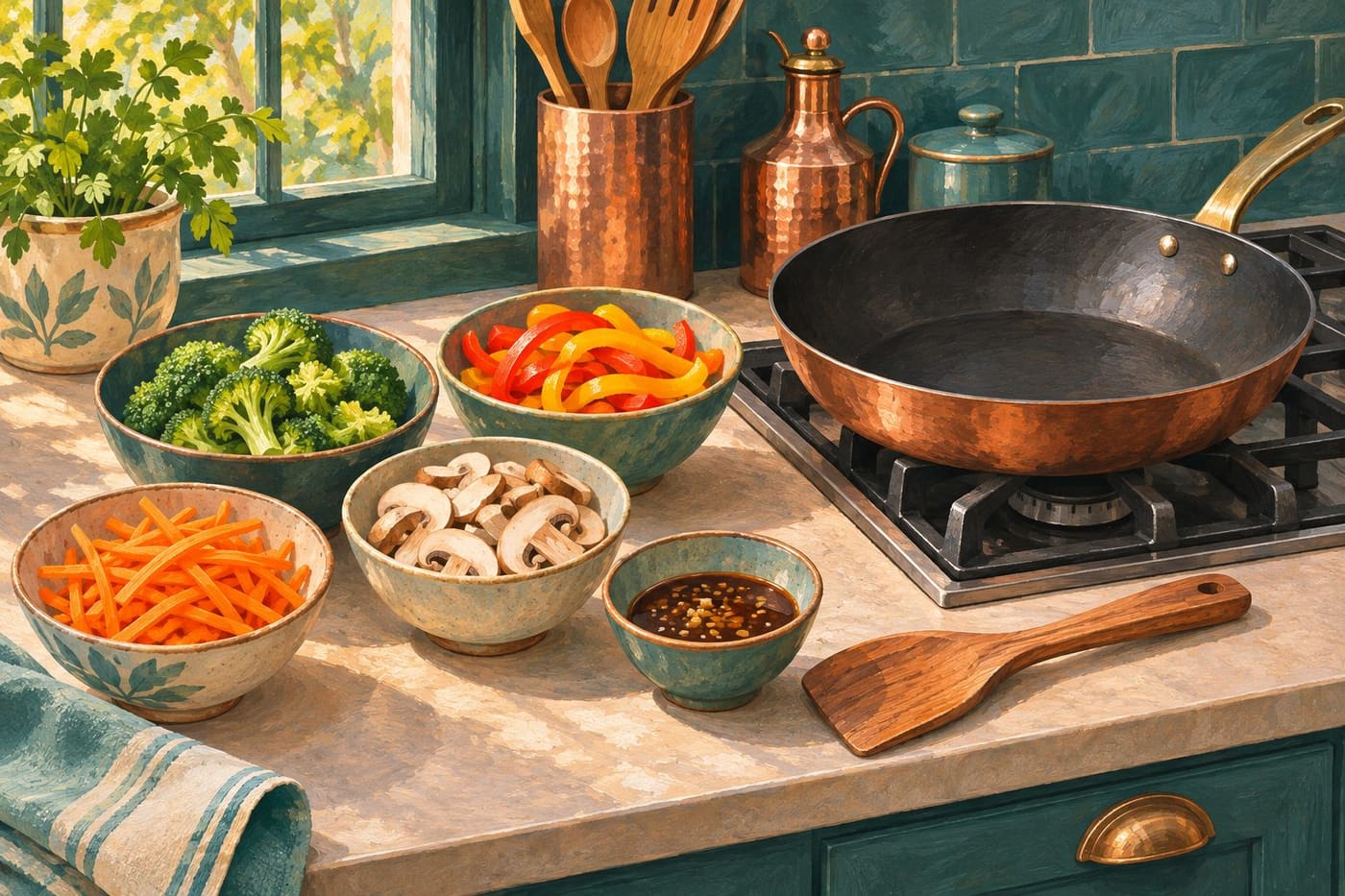
A carrot is still on the cutting board while mushrooms are already in the pan. The sauce needs mixing, the serving bowl is somewhere in a cupboard and the first ingredients are cooking faster than expected. A stir-fry can feel hurried when preparation and cooking compete for the same pair of hands.
The solution begins before the heat goes on. Choose a manageable combination of vegetables, cut them with their cooking behavior in mind and arrange them in the order you plan to use them. This guide focuses on a vegetable-only preparation workflow. It offers an illustrative sequence rather than a fixed recipe or a promise that every stove will cook the same ingredients in the same number of minutes.
Choose the vegetables and the serving plan together
Start by deciding what the stir-fry will accompany. If it will go over rice or noodles, plan those separately so they can be ready when the vegetables are finished. A pan of cooked vegetables should not become an improvised holding area while you begin a long second task.
For a first attempt, choose a few vegetables whose differences you can recognize. Carrot strips, small broccoli florets, sliced mushrooms and pepper strips provide a useful example. They differ in thickness and moisture, so keeping them separate gives you options during cooking. A bowl containing a dozen mixed vegetables makes it harder to adjust the order once the heat is on.
Check the recipe you are using for quantities and sauce. Nebraska Extension’s Easy Stir Fry provides one example of combining prepared vegetables with sauce mixed separately. Its recipe includes optional protein, so follow the full recipe if you choose that version. This article’s vegetable-only example does not transfer cooking times from meat to vegetables.
Set out the serving bowl or plates before you start. If rice or noodles are part of the meal, make sure the utensil and space for serving them are also ready. That small decision prevents the last minute from becoming a search through cupboards while the food continues to cook.
Wash and dry before cutting
Begin with clean hands, a clean board and a suitable knife. The FDA’s produce guidance advises washing produce under running water and does not recommend soap or detergent for that purpose. It also advises removing damaged areas and discarding produce that looks rotten. For packaged produce labeled ready-to-eat or prewashed, follow the label.
Let washed vegetables drain and dry them as appropriate with a clean towel. You want to know whether water entering the pan is part of the planned cooking liquid or simply water left from washing. A bowl full of dripping vegetables changes that balance before the sauce is added.
Keep prepared produce separate from raw meat, poultry or seafood and from equipment used for them. Even though this example is vegetable-only, a shared kitchen may be preparing other food at the same time. Clean the work surface and tools between tasks so the vegetable preparation starts from a clear setup.
Use a stable cutting surface and take the time needed for the knife work. There is no benefit in starting the pan early to make the preparation feel faster. A prepared bowl of vegetables can wait briefly while you finish arranging the work area. A hot pan already containing food creates a deadline you may not need.
Cut for a similar result, not an identical shape
Uniform pieces within each vegetable group are easier to cook consistently. If half the carrot pieces are thin strips and the rest are thick chunks, their centers will be ready at different times. Choose a cut you can repeat comfortably and inspect a few pieces beside one another before continuing.
Different vegetables do not need to have exactly the same shape. A broccoli floret and a pepper strip are different structures. The practical aim is to avoid a combination in which one piece requires a long cook while another is already soft. Small florets and thinner dense-vegetable pieces can be easier to coordinate than large uneven chunks.
Kentucky Extension’s Stir-Fry Cookery guide emphasizes preparation before cooking, similar-sized pieces and an order that accounts for different cooking needs. It is an older teaching resource, so use those technique principles alongside your current recipe and cookware instructions.
If you use broccoli stems, prepare them separately from the florets and assess their thickness. A tough outer layer and a thick central piece can behave differently from the tender tips. Keep the groups identifiable until you have decided how they fit into the cooking sequence. You can always combine them later, while separating them after mixing is inconvenient.
Group ingredients by when you expect to add them
Arrange the prepared vegetables in a few bowls or groups. Dense pieces that need a head start belong together. Faster-cooking pieces can wait in another group. Keep delicate additions, such as sliced spring-onion greens or leafy ingredients, identifiable if your recipe adds them late.
For the hypothetical carrot, broccoli, mushroom and pepper combination, the carrot’s thickness is a major planning choice. Very thin strips can be closer in cooking time to other small pieces than thick slices would be. The order should follow the actual cuts in front of you, with adjustments as you observe them in the pan.
Kansas State University’s essential food and cooking skills material discusses cutting stir-fry ingredients into similar sizes and beginning with vegetables that take longer. That principle is more useful than memorizing one universal list of vegetables.
Place the bowls in their expected order along the counter, away from the heat and without blocking the pan handle. A quick look can then tell you what comes next. You are reducing the number of decisions needed while cooking, while keeping enough flexibility to pause and inspect a piece before adding another group.
Mix the sauce and read its labels
Use a tested recipe for the sauce when you are learning. Measure it into a separate bowl and read the method before the pan is hot. If the recipe uses cornstarch or another starch, follow its directions for mixing it with liquid. You should know when the sauce is added and what change signals that it has cooked as intended.
A sauce may separate while standing. If the recipe uses a starch mixture, stir it again just before adding so the settled material is distributed. Otherwise, pouring the thin liquid first and leaving the starch in the bottom of the bowl can make the result different from the measured recipe.
Read ingredient labels for allergens and dietary needs, including the labels on prepared sauces and stock. The name of a sauce is not enough to establish whether it contains wheat, soy or another ingredient someone needs to avoid. If cooking for another person, establish their requirements before choosing substitutes.
Keep seasoning separate from assumptions about how much sauce the vegetables will need. A small amount of a strongly flavored sauce can behave differently from a large volume of a lighter mixture. Adding more to fix dryness can also change saltiness or sweetness. Use the recipe’s liquid guidance and make any adjustment deliberately rather than pouring without checking.
Match the batch to the pan
A roomy pan gives you space to move the food. The suitable amount depends on the pan, heat source, ingredients and the result you want. If the vegetables are piled deeply and hard to turn, consider cooking in smaller batches instead of relying on more heat to solve the crowding.
Before cooking, decide where a finished batch will go. Set out a clean bowl for it. If the recipe brings everything together for the sauce at the end, that bowl allows you to manage the vegetables in stages. It also stops the first group from staying in the pan throughout every later step by default.
Follow the pan manufacturer’s guidance for heating and suitable utensils. A traditional wok method is not automatically the right heating instruction for every nonstick skillet. Keep the handle positioned safely and have the utensil you will use beside the stove. The preparation plan should fit the actual cookware in the kitchen.
The University of Tennessee Extension stir-fry recipe is another example of preparing vegetables and a flavoring sauce before combining them. Compare complete recipes when choosing a starting method. Avoid taking the heat instruction from one and the quantity from another without checking how the whole method fits together.
Watch the vegetables rather than racing a timer
Once cooking begins, follow the recipe’s sequence and inspect the food as it changes. A timer can remind you to check, but piece size, pan loading and stove performance affect what you will find. Look at the actual vegetables and test an appropriate piece for the texture you want.
For a vegetable-only stir-fry, a useful tasting sample comes from a piece that is representative of the thicker cuts. Use a clean utensil and allow the sample to cool enough to taste safely. The smallest pepper strip may be ready while a thicker carrot piece still needs more cooking. That is information about the preparation as well as the elapsed time.
If one group is ready before another, consider the next step in the recipe. Removing ready vegetables to the waiting bowl may be more useful than continuing to cook them while a dense group catches up. Keep track of what is in each bowl so the final combination is deliberate.
Use the first attempt to learn about one setup. Write down whether the carrot strips were thin enough, whether the pan felt crowded and whether the sauce was prepared in time. These observations give you specific changes for the next meal. They are more useful than a general verdict that stir-frying is either easy or difficult.
Diagnose a watery or uneven result
If there is more liquid than expected, trace where it came from. The vegetables may have entered wet, a particular ingredient may have released moisture or the sauce quantity may have been too large for the batch. Frozen vegetables can also come with preparation instructions that differ from fresh ones. Check the package and recipe rather than assuming the same method applies.
A deeply crowded pan can make it difficult to reach the texture you intended. On the next attempt, reduce the batch and compare the result with the same ingredient cuts. Changing both the cut size and the quantity at once makes it harder to identify which change helped.
If some pieces are soft while others remain too firm, compare their thickness and entry times. A simple note such as “carrot slices thicker than the pepper strips” gives you a concrete preparation change. You might cut the dense vegetable thinner or give it a separate head start, depending on the recipe.
If the sauce is uneven, check whether it was mixed thoroughly before pouring and whether the vegetables were combined at the intended stage. A recipe’s sauce method is part of its structure. Treat a change to the thickener, liquid or batch size as a change worth recording rather than expecting the original result to remain the same.
Make the next meal easier to prepare
A small written plan can list the vegetables, cuts, group order, sauce and serving arrangement. Keep it beside the recipe while you prepare. The plan can be short because its job is to organize the work you are actually doing, not to become another set of instructions competing with the recipe.
Our guide to making a vinaigrette explores another way to prepare a measured mixture before serving. For a stir-fry, the same habit of measuring and mixing ahead lets you focus on the food already in the pan.
After cooking, clean and store food according to the relevant recipe and official food-safety guidance. Keep any storage instructions with the finished dish if someone else will handle it later. The preparation workflow is complete when the tools, remaining ingredients and food have a clear next step.
Before turning on the heat next time, look across the counter. The vegetables should be ready, the groups identifiable, the sauce mixed and the serving space available. That arrangement gives you time to notice what the food is doing and make the small adjustments that a particular pan and batch require.
Sources consulted 5 November 2026. The vegetable combination and troubleshooting examples are illustrative. This article reports no personal cooking test, nutritional analysis or universal cooking time.