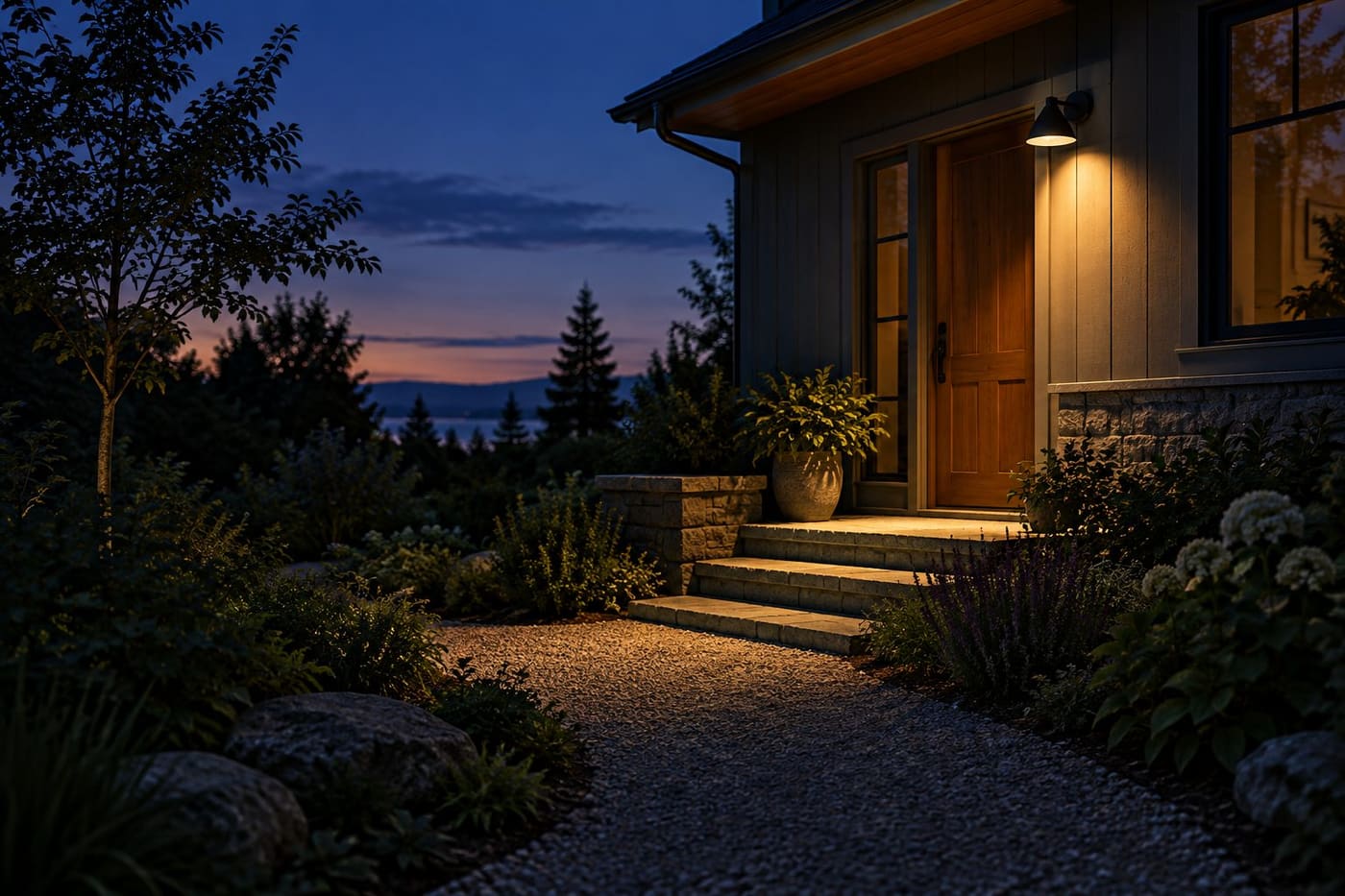
A porch light can help someone find a key without lighting the tree across the street. A path light can show the edge of a step without shining through a neighbour's window. Thinking about those separate jobs is a useful starting point for reducing unnecessary outdoor light. The question is not simply whether a lamp is on, but what its light reaches and when that light is useful.
Begin with an observation of the space you actually use. Identify entrances, routes and tasks, then look for light that goes elsewhere. This guide offers a planning and review routine, with fictional examples. It does not specify an electrical installation, certify a safe design or replace local requirements and qualified advice for changes to fittings or wiring.
Start with a task rather than a brighter lamp
A useful lighting plan starts with an actual task. Someone might need to recognise a doorstep, read a door number or move between an entrance and a gate. These are more specific needs than making the entire front of a property bright. Describe the task and the people who use the space before considering a replacement product.
Write a short note for each existing light: location, purpose, usual operating time and places it illuminates unintentionally. A lamp that once served a frequently used side entrance may now illuminate an unused corner. That does not automatically mean it should be disconnected. It means its current purpose deserves review by the person responsible for the property.
Use the principles as a connected set
DarkSky and the Illuminating Engineering Society's outdoor-lighting principles combine purpose, direction, restrained brightness, appropriate timing and warmer colour where possible. Read them together. Replacing a cool-coloured light with a warm one does not resolve an unnecessary all-night beam aimed into another home.
An efficient lamp can still illuminate the wrong place. Equally, switching off a needed entrance light without considering access would not be a thoughtful improvement. Use the principles to ask better questions about an actual space. They are a framework for responsible decisions, rather than a single product feature that makes every installation appropriate.
Make a simple map of useful and unwanted light
Sketch the entrance, paths, windows and neighbouring boundaries. Mark the area people need to see, then separately mark where the current light appears to fall. This is an informal observation drawing, not a measured lighting design. Its value is showing a mismatch that can otherwise disappear into a vague impression that a place is bright.
For example, a fictional household might discover that its side-wall light illuminates a hedge but leaves the turn towards the door difficult to recognise. Buying a more powerful version of the same fitting may not answer that problem. The useful question for a competent installer is how to serve the route while limiting illumination beyond it.
Observe from ordinary viewing positions
Look from the places people normally stand or walk. A fitting can seem unobtrusive when viewed from directly below but shine towards someone approaching along a path. Consider neighbouring windows and seating areas without entering another property or photographing private interiors. Stay on a safe, familiar route and avoid inspecting equipment at height.
Record observations in ordinary language: the exposed lamp is visible from the gate, the beam crosses the boundary, or the door number remains difficult to read. Do not convert these impressions into invented measurements. If the project requires a formal assessment, ask for appropriate professional evaluation rather than treating a phone photograph as a calibrated lighting survey.
Discuss direction before increasing output
Shielding and careful aiming are central to the published principles. The practical aim is to serve the intended area rather than spill light beyond it. This does not mean improvising a cover from household materials. A modification can affect a fitting's suitability, ventilation or weather protection and should follow the manufacturer's requirements and qualified advice.
When discussing a change, show the installer your task map. Ask where the light is expected to fall, whether the source will be visible from approaching routes and how neighbouring spaces will be considered. A picture of the product alone cannot show how it will perform at the proposed location and mounting position.
Keep brightness tied to the actual need
The principles recommend no more light than is necessary and note that surfaces can reflect light. A pale wall or paving surface is part of the setting, not just a background to the fitting. Review the whole scene rather than deciding that a particular lamp rating must be right for every doorway.
Avoid copying a brightness figure from an unrelated property. A shared entrance, a private path and a workplace exit may have different users and requirements. This article does not prescribe a universal output. Ask the responsible professional to explain the proposed level in relation to the task, the surroundings and any applicable standards.
Match the operating time to use
A light used briefly to reach a door need not automatically operate on the same schedule as a required shared access light. List the times when each task actually occurs. Consider visitors, deliveries, people returning late and any access needs before assuming that a household's usual bedtime is the end of every legitimate use.
Timers, motion detectors and dimming can be useful where suitable. They still need appropriate selection and adjustment. A sensor that reacts to passing traffic may operate far more often than intended. One that fails to recognise the normal approach may not serve the user. Review the behaviour after installation instead of assuming the control's presence proves success.
Treat colour as one decision among several
DarkSky's guidance favours warmer-coloured lighting where possible and limiting shorter-wavelength light. Use that as a reason to discuss suitable alternatives, not as permission to ignore direction or duration. A warm-coloured fixture shining continuously into an unused garden still raises questions about purpose and spill.
This guide does not set one colour-temperature number for every environment or claim that a particular colour is harmless to all wildlife. Habitat, species and the actual installation matter. Ask for the product's specifications and relevant local advice where environmental constraints apply. Marketing words such as gentle or natural do not establish a measured environmental outcome.
Understand why wildlife enters the discussion
The U.S. Fish and Wildlife Service's explanation of nighttime lighting and bird collisions describes how artificial light can attract and disorient night-migrating birds and increase collision risk. It recommends reducing unnecessary light and considering timing, direction and light spilling from windows. This is a reason to include the surrounding environment in the review.
Do not turn that guidance into a claim that changing one household lamp will produce a known number of surviving birds. Nor should migration dates from a United States example become a universal calendar for every country. Seek locally relevant information if seasonal action is being planned. A general principle can travel more easily than a specific migration timetable.
Include light that comes from indoors
An outdoor review can miss illumination passing through windows. Consider whether blinds or curtains can reduce unnecessary spill when they are appropriate for the room and its occupants. This is a separate decision from altering an exterior fitting. It may involve ordinary household routines rather than buying new equipment.
Avoid treating closed curtains as a complete wildlife protection plan. The bird-lighting guidance addresses an important risk, but buildings and habitats present other issues too. If you keep wildlife notes, distinguish observations from explanations. Our guide to a birdwatching checklist explains why recording effort and uncertainty matters when describing what you actually saw.
Work through a fictional entrance review
Imagine a small house with a front door, a short path and a decorative light on a garden wall. The household's notes identify two useful tasks: finding the door and seeing the route from the gate. Nobody regularly uses the decorative area after dark. The existing wall light also appears bright from a neighbouring bedroom's direction.
The household does not immediately buy three replacement lamps. It first asks the property owner and a qualified installer to review whether the entrance and path can be served with better-targeted illumination and appropriate controls. The decorative light's purpose is reconsidered separately. These are planning questions, not a claim that a particular number or arrangement of fittings will suit a real home.
Ask for a proposal that answers your observations
A useful proposal should connect the equipment to the needs you recorded. Ask what the fitting is intended to illuminate, how operating times will be managed and how unwanted spill will be checked. Request clear information about operation and maintenance so that the household can use the controls as intended.
Do not ask only which product has the strongest output or the longest list of features. A cheaper purchase can still create an unsuitable result, and an expensive fitting does not guarantee a good design. Compare the proposed function and installation requirements. Preserve any necessary access and required lighting while qualified people assess changes.
Check the result without inventing a performance claim
After an authorised change, revisit the same safe viewing positions and tasks. Can a person use the intended route? Does light still appear to cross the boundary? Does the control behave as expected when someone approaches normally? Record any unresolved concern and return it to the responsible installer or property manager.
A before-and-after photograph may help a discussion, but camera exposure can change the apparent brightness. Do not present it as proof of a precise reduction in light pollution. A practical review can establish that a specific problem remains visible or that a control is working differently. Quantified performance claims require appropriate methods and evidence.
Keep a record another household member can use
Record the purpose of each light, its normal settings and who handles maintenance. Include where operating instructions are kept and what to do if a timer loses its settings. A control nobody understands may eventually be bypassed or left permanently on. Clear instructions help preserve the intended use over time.
For a shared property, agree who can request adjustments and who is authorised to make them. A resident's useful observation does not automatically confer permission to alter communal equipment. Keep routine reports separate from emergency concerns and follow the building's existing process when lighting or access needs attention.
Revisit the plan when the use changes
The right questions may change when a path is rerouted, a new neighbour moves in or an entrance is used at different times. A review is not a one-time declaration that the property can never create unwanted light again. Include lighting when considering changes to outdoor space rather than waiting for a complaint.
Avoid adding decorative lights simply because a new outdoor feature has appeared. Decide whether the feature needs illumination at night and what purpose that would serve. If no useful task can be identified, that is information worth considering before spending money or introducing another source of night lighting.
Conclusion: improve the job the light does
Responsible outdoor lighting begins with a specific need and follows through to the place, time and amount of illumination. Observe the space, identify unwanted spill and ask for changes that address the actual mismatch. Direction, output, timing and colour work together; none is a complete answer by itself.
Start with a short list of existing lights and their purposes. Use it to discuss suitable, authorised improvements while maintaining necessary access and complying with local requirements. The useful result is a space whose lighting has been considered carefully, with clear operating instructions and a way to check concerns after changes.
Sources and research note
Research checked on 2 November 2026 using the joint responsible-lighting principles published by DarkSky and the U.S. Fish and Wildlife Service's nighttime-lighting guidance. The practical entrance scenario and record-keeping examples are original and fictional. No electrical installation, security guarantee, wildlife outcome measurement, universal brightness specification or certified lighting assessment is claimed. The image is an original conceptual illustration, not a real property or an approved installation drawing.