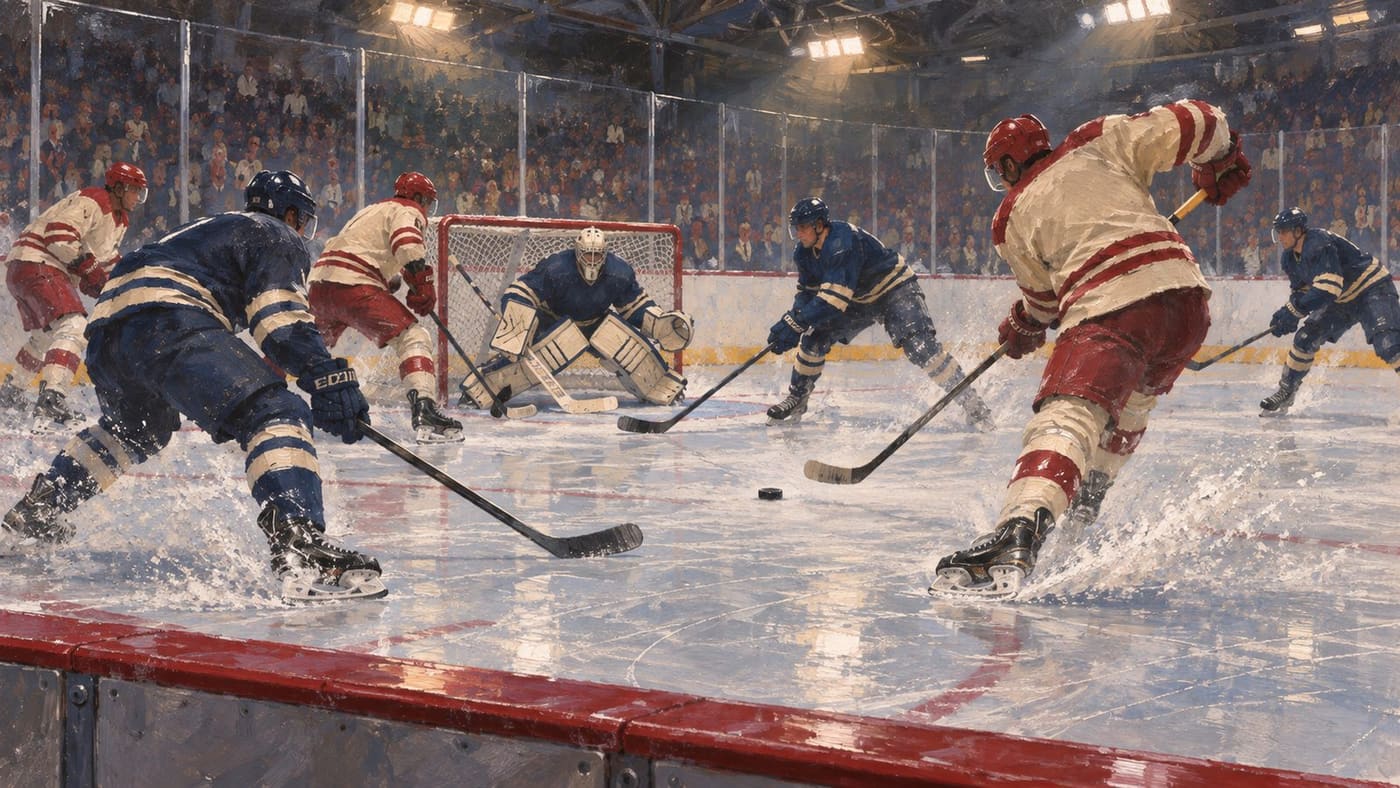
Montreal led Winnipeg 4–0 late in the third period at Bell Centre on November 3, 2026. Tyrel Bauer scored at 17:21 to give the Jets their first goal. Morgan Barron followed 42 seconds later. Kyle Connor scored twice, first at 19:00 and then at 19:27, and Dylan Samberg won the game 5–4 at 3:30 of overtime. The four goals that saved regulation took just two minutes and six seconds from Bauer's first to Connor's second, according to the elapsed times in the NHL's official game data.
The comeback looks even more unusual when you separate the situations in which Winnipeg scored. The first two were at ordinary five-on-five strength. The next came with Winnipeg's goaltender out for another skater. The equaliser came with the extra attacker still on and Montreal down a skater because of a penalty. The winner came in three-on-three overtime. Each goal changed the next problem both teams faced, and the final score alone cannot show how quickly those problems changed.
Montreal had built a real four-goal lead
The Canadiens' game report records two goals in the first period, from Owen Beck and Josh Anderson, and two power-play goals by Cole Caufield. The first Caufield goal came four minutes into the second period. His second, 46 seconds into the third, made it 4–0. This was a regular-season game in Montreal. A recent meeting between the same clubs was the Heritage Classic in Winnipeg, which the Jets' pregame report distinguishes from the Bell Centre rematch.
Montreal's scoring was spread across three periods. That matters because Winnipeg were trying to undo a deficit built over most of the game, with only a few minutes of regulation left. Jacob Fowler made 42 saves for Montreal, according to the club's report. A goaltender can make that many saves and still give up five goals when the opponent sends enough shots on net. The two figures describe different parts of the same performance. If you are looking at the box score, read saves with goals allowed and the timing of those goals before deciding what the goaltender's night was like.
There is a similar distinction between the game as a whole and the late stretch. Winnipeg did not score until well into the third period. The fact that the Jets eventually had five does not turn their earlier chances into goals or change Montreal's actual lead. To understand the sequence, begin with the scoreboard as it stood before each goal. That keeps the comeback from feeling inevitable just because you already know who won.
Bauer's first NHL goal opened the sequence
Bauer scored his first NHL goal at 17:21 of the third. The NHL recap describes a dump-in by Dylan DeMelo taking an unusual bounce off the boards. The puck became available and Bauer made it 4–1. The league data and the team reports agree on the goal time. Subtracting 17:21 from 20:00 gives 2:39 remaining when the comeback began.
A dump-in often starts a contest for possession rather than a direct shot. The puck may come around the boards or stop where a defender can collect it. When it comes off the wall differently than expected, players have to react to a new path. That is the useful detail here. A play that initially sent the puck into the attacking end turned into a chance because of where it came out. The bounce made the puck available and Bauer still had to put it in.
At 4–1, Winnipeg had scored once and still needed three more to tie. The first goal matters partly because of what happened immediately after it. If the next two minutes had passed without another goal, it would have stood as the only Winnipeg score. Instead, Bauer also picked up an assist on the next goal, and the gap shrank while the clock still left room for an extra-attacker decision. The two scoring entries make it possible to see the difference between a first step and the rapid sequence that followed it.
Barron changed the problem with a two-on-one
Barron scored at 18:03. The NHL recap describes a two-on-one and says he chose to shoot from the right circle. The Montreal report credits Bauer and DeMelo with the assists. The result was 4–2 with 1:57 left. Both of the opening Winnipeg goals were recorded at even strength, and the league's situation data show five skaters and a goaltender on each side for those goals.
A two-on-one puts two different questions in front of the lone defender. Can the puck carrier get a clean shot, and can the teammate receive a pass for a chance on the other side? A defender who closes too hard on one option can expose the other. A goalie reading the rush has to be ready for a shot while tracking the potential pass. Barron's choice gives the viewer something precise to watch. Follow the defender first and see where the shooting lane opens, then follow the puck and compare the angle before the release with the goalie's position.
The two-on-one is different from Bauer's opportunity even though the first two goals are both tagged even strength. That label says something about the numbers of skaters available. It does not describe the local numbers at a particular moment. A five-on-five game can still produce a two-on-one rush if two attackers reach a dangerous space before enough defenders can get back. In the scoring record, the strength label and the description of the play complement each other.
Connor scored twice with the goaltender out
Winnipeg replaced goaltender Stuart Skinner with an extra skater late in regulation. Connor cut Montreal's lead to 4–3 at 19:00 and tied it at 19:27. The league recap describes both as one-timers from the right circle and says the tying shot deflected off Noah Dobson's stick. A one-timer is an attempt made directly from the incoming pass. When it works, the puck changes direction quickly and the goaltender has less time to settle into the new angle.
The first Connor goal is marked even strength in the scoring feed. The same entry records Winnipeg without a goaltender and with six skaters, while Montreal still had its goaltender and five skaters. Connor's tying goal is marked as a power-play goal. The situation data show six Winnipeg skaters against four Montreal skaters and a goaltender on that one. A reader looking only at the labels could miss the extra attacker on the first goal or assume the two attempts came under identical conditions. The goaltender and penalty information explains the difference.
The decision to pull the goaltender exchanges protection for another passing or shooting option. The potential reward is a better chance to get a goal before time expires. The cost is an undefended net if the opponent gets control and can send the puck down the ice. A second skater advantage from a penalty can open additional passing lanes, but it still takes puck movement and a finish to make use of the space. The first Connor goal cut the deficit to one. The second, 27 seconds later by the elapsed times, changed the next objective from chasing an equaliser to getting to overtime.
If you find a recap that describes the time left differently by a second, use the elapsed time from the scoring record when comparing the goals. The important relation is clear from the event entries. Connor scored at 19:00 and 19:27 in a 20-minute period. A reader can reproduce the time between those events without reconciling a countdown from a broadcast graphic or a differently expressed recap.
Overtime was a separate task
Samberg scored at 3:30 of overtime, with Adam Lowry and Gabriel Vilardi credited with assists in the league record. The situation data show three skaters and a goalie on both sides. There was no continuation of the six-skater attack that had tied the game. Winnipeg needed to create a winning chance in a different format, with more open ice and fewer players in the immediate area of the puck.
Three-on-three makes possession particularly valuable because an unsuccessful attack can leave open ice in the other direction. It can also create room for a defenceman to join the play when teammates have control. Samberg's overtime goal counts as the fifth unanswered Winnipeg goal, while only the first four were scored in regulation. Distinguishing the two segments helps explain both the comeback and the finish. Connor's tying goal prevented a regulation loss. Samberg's goal gave Winnipeg the win.
You can see the same distinction in the standings consequences. The NHL recap describes Winnipeg ending a nine-game winless stretch and Montreal extending its point streak despite the loss. Those statements can coexist because an overtime loss in the regular season earns a standings point. A winning streak can end while a point streak continues. Before comparing headlines, check which streak they count and whether the result was settled in regulation, overtime or a shootout.
A useful way to replay the final minutes
Use the official Montreal highlight package alongside the goal list if you want to follow the game without mixing up the different situations. Start at Bauer's goal and look at the puck's path off the boards. At Barron's goal, watch the defender on the two-on-one. On each Connor attempt, look for the skater who has replaced the goaltender and the space the attacking side can use. In overtime, count the skaters again before watching where Samberg joins the play.
The game record can answer questions about time and credited scorers. The video can help you examine the puck's path and the players' options. Neither a brief highlight package nor a goal list can establish how often the teams tried a tactic over the full game. That takes a longer look at the shifts where the tactic produced no goal. Here, the record and reports already show a useful distinction between an unusual bounce, a rush, two shots with the goaltender out and the overtime finish.
Montreal's first four goals also belong in that review. In particular, Caufield's two power-play goals and Connor's later equaliser all carry power-play labels, but they occurred with different skater counts. The official record gives more detail than the summary word. A simple replay note beside each goal, with the score, time and situation, lets you see which opportunities resembled each other and which asked the players to solve different problems.
Keep the two clock readings separate
The official game summary lists goals by period and elapsed time. In the third period, an entry at 18:03 means the clock has run for 18 minutes and three seconds in that period. A broadcast countdown at the same moment would have just under two minutes showing. In overtime, 3:30 means three minutes and thirty seconds have passed in that period. It does not belong on the third-period clock. Those conventions matter when a recap uses a countdown for one goal and elapsed time for another.
The same distinction explains two descriptions of the late rally that can sound like competing claims. The comeback began with 2:39 left in regulation. The four goals took 2:06 from first to fourth. One measures the remaining time when the first goal went in, while the other measures the interval between that goal and the equaliser. For a reader trying to reconstruct the sequence, both numbers are useful, as long as each keeps its starting and ending point.
Conclusion
The Jets turned 4–0 into 4–4 in the closing minutes of the third period and then turned the tie into a 5–4 win in overtime. Bauer and Barron made it possible to chase the game with the goaltender out. Connor used that situation twice, with a penalty adding to Winnipeg's advantage on the second goal. Samberg finished the comeback under the different conditions of overtime. To understand how it happened, follow the puck and the scoreboard together, then check how many players were available for the next decision.
Canada Google Trends selection followed an already covered US election cluster and a broad media outlet query without a distinct verified event.
For the earlier fixture, see the Heritage Classic result and goaltending analysis.
Sources consulted 4 November 2026 include NHL game data, the NHL recap, the Montreal report and the Winnipeg report.